2 April 2015 by Ben Howard
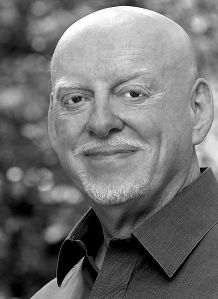
Allan Lokos
In the Parable of the Burning House, a revered text in the Zen tradition, a grand but dilapidated mansion catches fire. At the time, the wealthy owner is standing outside the gate, but inside the mansion, his three sons are playing with their toys, oblivious of the encroaching conflagration. Rushing into the house, their father implores them to get out, but they ignore his admonitions. To entice them, he promises to give them jeweled, ox-drawn carts if they will leave. By these “expedient means” he achieves his purpose, and his sons escape “the burning house of the threefold world.” Soon afterward, their father presents them with magnificent carriages adorned with gold, silver, and pearls and drawn by stalwart, pure-white oxen. Released from the burning house and their former attachments, his sons enjoy safety and freedom.
I was reminded of this parable while reading Allan Lokos’s new book Through the Flames, which recounts Lokos’s experience of a horrific plane crash and his near-miraculous survival and recovery. In December, 2012, Lokos and his wife, Susanna Weiss, were enjoying a ten-day holiday in Mynanmar. On Christmas Day, they boarded a short flight from Mandalay to Inle Lake. As their low-flying plane approached its destination, it struck electrical wires, burst into flames, and crashed in a rice field. Susanna jumped to safety from a side exit, but Allan, who was just behind her, caught his foot on something and suffered burns to a third of his body before he could escape. In the anguished days that followed, doctors in Myanmar, Bangkok, and Singapore informed Susanna that her husband, whose burns were massive and bone-deep, could not possibly survive, let alone recover. Continue Reading »
Posted in 1 | Tagged Allan Lokos, Burning House, Burning House Parable, Community Meditation Center, Lotus Sutra, Survival, Tan Bien Keem, Through the Flames | Leave a Comment »
5 March 2015 by Ben Howard
 Browsing the Internet one summer afternoon, I learned that Baltimore Orioles relish grape jelly. Cut an orange in half, my source instructed me, and place a dollop of grape jelly at the center of each half. Hang the halves from a branch, and you will soon have those beautiful birds in your own backyard.
Enticed by that prospect, I put grape jelly on our grocery list. And before long, I found myself in Aisle 10B at Wegman’s Supermarket, searching for that elusive product.
“What are you looking for?” asked a petite, white-haired lady standing nearby, as she deposited a jar of Bonne Maman Apricot Preserves in her cart.
“Grape jelly,” I replied. “Baltimore Orioles like it.”
“They do?” she asked, giving me a wary, quizzical look, as though I had just said something very strange. “I never heard that. I used to live in Baltimore.”
Realizing what had just occurred, I hastened to explain. “I mean the birds, not the baseball team.”
“Oh,” she sighed, visibly relieved. Meanwhile, I was imagining the Orioles in their dugout, passing around a jar of Welch’s Grape Jelly. Perhaps that image had crossed her mind as well. Continue Reading »
Posted in 1 | Tagged Baltimore Orioles, Cool Hand Luke, Maisie at Dawn, michael longley, Richard Rohr, silence, zen | Leave a Comment »
4 February 2015 by Ben Howard
 I have a friend by the name of Janet, who regularly consults what I call the Book of Janet, especially when she’s feeling blue or vexed or insecure. If she makes some trivial error, like misplacing her car keys, the Book of Janet reminds her that she is not well-organized. If she enters a competition and receives a letter of rejection, the Book of Janet informs her that her work is not all that good. And if she’s feeling less than beautiful on any given morning, the Book of Janet confirms her worst fears. On all three counts, the Book of Janet is wide of the mark. It is out of touch with the present reality. Unfortunately, that makes little difference to Janet, who swears by her Book as if it were her Bible. Continue Reading »
Posted in 1 | Tagged impermanence, interdependence, Martin Luther King, network of mutuality, norman fischer, self, zen | 3 Comments »
17 December 2014 by Ben Howard

Cortical Columns
Greg A. Dunn
It’s no great mystery, my friend used to say. He was a gifted mechanic and a natural handyman. How do you replace and properly gap the spark plugs on a ’63 Ford pickup? It’s no great mystery. Just read the manual. How do you fix a leaking toilet? Rewire an electrical outlet? No problem. And no great mystery either.
In practical terms, my friend may have been right, but in ultimate terms, he was wide of the mark. O Magnum Mysterium (“O Great Mystery”), a responsorial chant in the Roman Catholic Christmas Mass, celebrates the mystery of Jesus’ birth in a lowly manger. In its reverence for the ineffable, as manifest in humble environs, that sacred text shares common ground with Zen teachings, which enjoin us to hearken, in a spirit of “not-knowing,” to the hidden, unknowable, and indescribable dimension of ordinary life. Continue Reading »
Posted in meditation, Mystery, neuroscience, Zen | Tagged alison gopnik, christmas mass, Cortical ColumnsGreg A. Dunn, greg dunn, hakuin, jerome groopman, king's college choir, larry abbott, morten lauridsen, mystery, o magnum mysterium, Shunryu Suzuki Roshi, zen, Zen teachings | 3 Comments »
3 December 2014 by Ben Howard
 Here in the village of Alfred, New York, those of us who like to walk can often be found on the Alfred State College track. Situated on a high elevation , the track affords a panoramic view of the surrounding wooded hills. Designed though it was for athletic competition, the track is also an excellent venue for walking meditation.
On a windy day last summer, I took a walk on that firm but forgiving track. Above the line of trees, the blades of the college’s wind turbine were revolving briskly. And on the tall flagpole near the entrance, the American flag was flapping audibly. I was reminded of an old Zen story, which features a pair of quarrelsome monks and the enlightened master Eno, the Sixth Patriarch of Zen. Continue Reading »
Posted in 1 | Tagged atta dipa, awareness, enlightened mind, falling leaf sangha, jon kabat-zinn, Katsuki Sekida, kosho uchiyama, Sixth Patriarch, thich nhat hanh | 4 Comments »
5 November 2014 by Ben Howard
 “Up!” implores my granddaughter, looking up at me and raising her arms. Allegra is fifteen months old. Up was one of her first words.
I gladly pick Allegra up, and for the next few minutes I take her for a walk on my shoulder, making rhythmic noises in her ear. This seems to please her, but eventually she decides that she has indulged her grandfather long enough. “Down,” says she, and I reluctantly comply.
Up and down, down and up. Over the next year and beyond, Allegra will learn other pairs of words and other dualities: left and right, inside and outside, high and low. Through the medium of language she will learn not only to speak but also to think in dualistic terms. Soon enough, I suspect, she will enlist the duality yours and mine, with a pronounced emphasis on the latter.
As do we grown-ups, every day of the year. Dualistic thinking is so familiar and so necessary for navigating the world, it goes unnoticed and unexamined much of the time. Yet, as the Zen master Thich Nhat Hanh observes, our familiar dualities are relative in nature and impede our apprehension of reality: Continue Reading »
Posted in 1 | Tagged Eihei Dogen, Non-duality, stephanie kaza, thich nhat hanh, whole earth, zen, Zen teachings | Leave a Comment »
8 October 2014 by Ben Howard
 “Put it in neutral, Bud,” my father said, quietly but firmly. It was the summer of 1958, and I was learning to drive. The car was a 1950 Chevrolet sedan with a three-speed transmission and the gearshift lever on the steering column. “Three on the Tree,” it was called. Learning to put the lever and the Chevy itself into neutral was my first lesson.
It might also be the first lesson for the Zen practitioner. Wherever else it might lead, the practice of Zen meditation begins with finding, establishing, and maintaining a neutral center, both for the body and the mind. Neutrality may well be the body-mind’s most natural condition, but for many people it is far from habitual. In a culture as competitive as ours, neutrality is often not an option, much less a state to be cultivated and explored. To do so requires training and sustained attention Continue Reading »
Posted in 1 | Tagged 1950 Chevy, ichigo ichie, jan chozen bays, mindfulness, neutral center, neutral spine, neutral state, neutrality, posture of meditation, zazen, zen meditation | Leave a Comment »
10 September 2014 by Ben Howard

Luca Giordano, A Cynic Philosopher
“I think most people would lie to get ahead.”
“It is safer to trust nobody.”
“Most people will use somewhat unfair reasons to gain profit or an advantage rather than lose it.”
If you would tend to agree with those statements, your outlook on life and human nature might fairly be described as one of cynical distrust. And while you might be well established in that outlook–and even take pride in being a curmudgeon–a recent Finnish study might give you pause. Continue Reading »
Posted in 1 | Tagged cynical distrust, cynicism, senile dementia, thich nhat hanh, three poisons | 1 Comment »
13 August 2014 by Ben Howard
 In his poignant essay “The Old Order,” the Irish-American writer James Silas Rogers recalls his conversation on an Amtrak train with a young Amish man named Johann, who was crossing Wisconsin with his extended family. Curious about Amish faith and belief, Rogers inquired as to the significance of Johann’s distinctive attire: his plain shirt, suspenders, and broadfall trousers. “People ask us,” Johann replied, “if we think that wearing these clothes will get us into heaven. We absolutely do not. . . . But I do know that if I wear these clothes, it will keep me out of places where I should not go.”*
Reading Johann’s explanation, I was reminded of formal Zen practice, which also employs special clothes to remind practitioners of their moral commitments. In Japanese Zen, one of the most conspicuous of those clothes is the rakusu, a bib-like garment worn (and often hand-sewn) by those who have “taken the precepts,” which is to say, have publicly affirmed a set of ethical guidelines. Known as the “jukai precepts,” those guidelines differ from sect to sect, but in essence they enjoin the Zen disciple to refrain from harmful behaviors, particularly killing, stealing, engaging in false or injurious speech, using sexuality in hurtful ways, and abusing intoxicants. The unadorned rakusu, viewed as a miniature monastic robe and inscribed on the back with its wearer’s “dharma name,” signifies a commitment to that fundamental code of conduct. Continue Reading »
Posted in 1 | Tagged Amish clothing, habits, ichigo ichie, James Silas Rogers, jukai precepts, norman fischer, rakusu, zen meditation, Zen practice | 2 Comments »
2 July 2014 by Ben Howard
 For more than four decades Joseph Goldstein, an internationally known teacher of Buddhist meditation, has practiced mindfulness of the body and mind. First as a monk in the Thai forest tradition and later as a Western practitioner, he has trained himself to be aware of what is occurring, within and without, in any given moment. Yet one afternoon, while walking along a river in northern New Mexico, Goldstein slipped on a wet rock and hyper-extended his knee. At the time, he was conducting a retreat, and later on that day, after giving a talk in the cross-legged position, he found himself unable to stand or walk. For the next few hours he berated himself and worried that he would not be able to complete the retreat. But in the midst of his anguish, he reports, a “sort of mantra” arose in his mind: Anything can happen anytime. To his surprise, that “mantra” provided a great sense of relief. Since then, he has found it “amazingly helpful in accepting change with a deepening and easeful equanimity.”* Continue Reading »
Posted in 1 | Tagged chance, ichigo ichie, insight meditation, Joseph Goldstein, mantra, sunyata, vipassana | Leave a Comment »
« Newer Posts - Older Posts »