
Charlotte Joko Beck
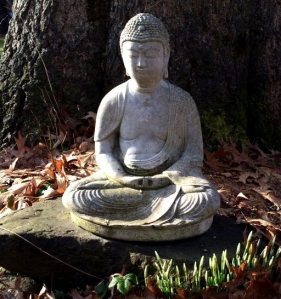
In the popular imagination, Zen practice consists of sitting cross-legged, preferably on a mountain or within the confines of a monastery, in a state of perfect calm. His hands positioned in the “cosmic mudra” and a beatific smile on his face, the Zen Buddhist practitioner sits at a comfortable remove from the petty conflicts and mundane concerns of ordinary life. In a word, he is detached. He has transcended the human fray.
This stereotypical image of Buddhist practice has widespread currency, even among the intellectual elite. A recent manifestation may be found in the Swedish philosopher Martin Hägglund’s book This Life: Secular Life and Spiritual Freedom (Pantheon, 2019), where the author defines the general aim of Buddhism as “a detachment from everything that is finite.” Reviewing this book in The New Yorker (May 13, 2019), staff writer James Wood endorses Hägglund’s view, alluding vaguely to “those doctrinal aspects of Buddhism which insist on detachment.” “Everything that is finite,” one might note, is a very large category. Not only does it include buildings and boulevards, mountains and rivers, rocks and trees. It also includes one’s family, friends, and loved ones generally. Why on earth would anyone wish to be so detached? If that is what Zen is about, one might conclude, so much the worse for Zen. Continue Reading »


 One afternoon not long ago, my five-year-old granddaughter taught the basics of sitting meditation to her red-haired doll, Pippi Longstocking. Being a rag doll, Pippi is not very good at sitting upright, so after repeated attempts, Allegra allowed her to lie down. “I know you can do this,” she explained to Pippi, “but since this is your first day, I want you to be a little comfortable with what it feels like instead of what it looks like.” With Pippi lying flat on her back, Allegra proceeded with her lesson. “You just have to listen to your breathing,” she advised.


 One Time, One Meeting