Feeds:
Posts
Comments

111. Noble silence

In Philip Larkin’s celebrated poem “Church Going,” a secular Englishman, out for a ride on his bicycle, stops at a local parish church. After making sure that “there’s nothing going on,” he steps inside, casting a cool but observant eye on what he encounters:

             Another church: matting, seats, and stone,

            And little books; sprawlings of flowers, cut

            For Sunday, brownish now; some brass and stuff

            Up at the holy end; the small neat organ;

            And a tense, musty, unignorable silence,

            Brewed God knows how long. Hatless, I take off

            My cycle-clips in awkward reverence . . . [1]

As can be seen from these perceptions, Larkin’s narrator is ill at ease in his surroundings. They are musty and make him tense. Yet, as he will inform us later on, he was drawn to this “cross of ground” and its “unignorable” silence. And though he summons an ironic phrase (“up at the holy end”) to bolster his resistance, he attempts a gesture of respect. Continue Reading »

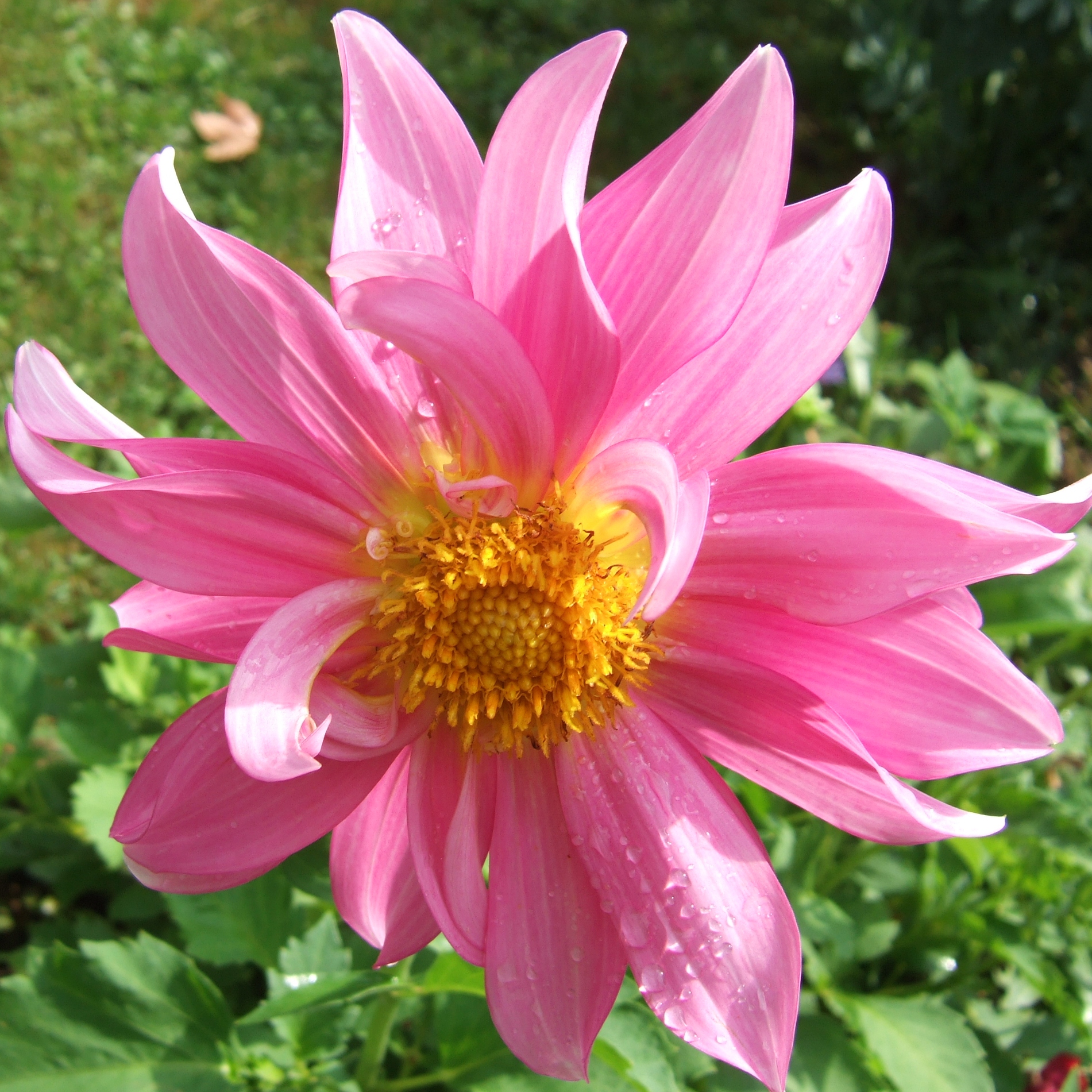
One evening last month, I took my young friend Isabel on a walk past our flower garden. Isabel is three years old. As we walked along, I named the flowers she was seeing: Wisteria. Coleus.  Viola.  Geranium. Isabel stooped to inspect the geranium, whose bright red petals had caught her eye.

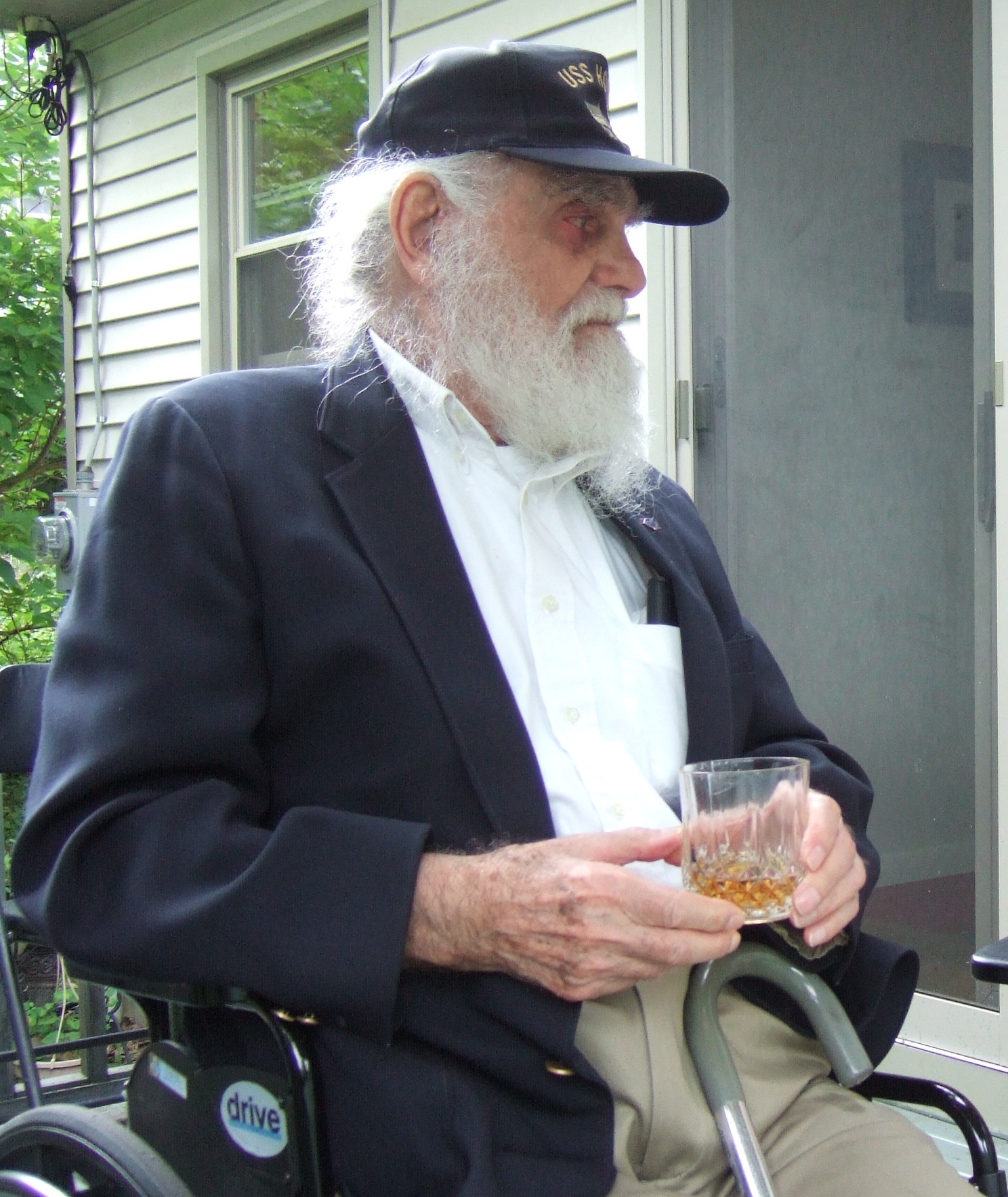
Not long afterward, Isabel and I arrived at our deck, where my father-in-law, Saul, was relaxing in his wheelchair. An 89-year-old veteran of World War Two, Saul wears a full white beard, and he is seldom seen without his blue, U.S.S. Hornet cap. “Isabel,” said my wife, Robin, “This is my dad, Mr. Caster.”

Isabel looked up at Saul quizzically, as though he might be another, somewhat larger flower. “Why are you in a wheelchair?” she asked.

“Because I only have one leg,” Saul replied.

“Oh,” said Isabel, taking a moment to absorb that information. “Very nice to meet you,” she said, extending her hand.

Isabel soon dashed off to play with a friend, but her response left a lasting impression, not least because it was so unfiltered. It evinced a capacity to meet the external world, including its unfamiliar and potentially disturbing aspects, with openness, curiosity, and an absence of comment. Continue Reading »

For many years I taught courses in imaginative writing to college students, and when it came time to read their work, I kept three tools of the trade close at hand.

One was a fine-point pen, with which I corrected errors of grammar and usage. Another was a mechanical pencil, with which I made marginal comments. And the third was a small rubber stamp, which fit neatly into its circular ink pad. A relic of my son’s childhood, the stamp produced a miniature image of a Tyrannosaurus Rex, complete with oversized head, upraised tail, and greedy-looking paws. At once fierce and benign in aspect, this creature was known as the Cliché Monster, and whenever a cliché appeared in a student’s essay, poem, or story, he too would appear, poised to devour the offending phrase. “Don’t feed him,” I warned the students, “or he’ll come back for more.” Continue Reading »

If you spend much time on Facebook, you may have noticed the response that so often follows an announcement of personal achievement. “Congratulations!” exclaims a respondent, sometimes within minutes of the announcement. “That’s wonderful,” writes another. “We’re very happy for you,” declares a third. If the achiever’s circle of Facebook friends numbers in the hundreds or even thousands, the roster of congratulants may extend to thirty or more, creating a visible avalanche of affirmation, a collective expression of unselfish joy.

Such expressions are common at weddings, graduations, and other real-life occasions, but their virtual presence on Facebook is something new. At the same time, it is something very old, insofar as it resembles a state of mind known to Buddhist practitioners as mudita, or “sympathetic joy.” One of the four “immeasurable minds” (brahminviharas) of Buddhist teachings, mudita may be defined as the capacity to feel and express joy in someone else’s happiness or success. Like the other “immeasurable minds”—loving-kindness, compassion, and equanimity—mudita is both a mind-state and a practice. It is to be contemplated and cultivated on a daily basis. And, as the Buddhist scholar C.F. Knight has noted, mudita “multiplies in ratio to the extension of its application, quite apart from its purifying effect on our own lives.”[1] Yet, unlike the other “immeasurable minds,” mudita is seldom discussed in the meditative community. And should one venture to bring it up outside that community, one must be prepared to encounter raised eyebrows, looks of puzzlement, or even tacit derision. Cultivate sympathetic joy? Feel joy at others’ success? You must be joking. Continue Reading »

Bob Marley, Zurich, 1980

“Watch, watch, watch what your doin’,” chanted Bob Marley at the One Love Peace Concert in Kingston, Jamaica in 1978. At the time, Jamaica was torn by sectarian violence, and Marley had returned from London in the hope of promoting reconciliation. Hearing Marley’s improvised chant, the crowd of 32,000 assumed he was voicing a general warning. Watch what you’re doing, lest you cause further harm.

As it happened, Marley was speaking to Junior Marvin, his lead guitarist, who had just played a wrong note. “Everybody thought he was telling the people out there you gotta watch what you’re doin’,” Marvin recalls in Kevin Macdonald’s documentary Marley, “but he was really talking to me.”  Given Marley’s stature as a moral leader, it is understandable that his audience might interpret his words as a cautionary exhortation. But their actual context was immediate and professional, their intent practical rather than prophetic. Continue Reading »

106. Fixed ideas

Thich Nhat Hanh, 2006

In a recent talk in Dublin, the Venerable Thich Nhat Hanh spoke of the happiness available to us in our everyday lives. We have only to “release our idea of happiness,” he advised, and return to the present moment, where the conditions for happiness are already to be found.*

Thich Nhat Hanh is not alone in offering this advice, nor is he unique in viewing ideas of happiness as obstacles to the experience itself. In his book Beyond Happiness, the Zen teacher Ezra Bayda deconstructs what he calls the “myth of happiness,” which holds that “we deserve to be happy, as if it’s our birthright; that we will be happy if we get what we want; that we can’t be happy if we’re in discomfort.” For Bayda, as for Thich Nhat Hanh, our common human error lies in chasing an image of future happiness. Once we have shed that illusion, we can return “again and again to staying present with exactly what we are experiencing right now.” Rather than try to manipulate our own or others’ lives, we can “surrender to what is.”** Continue Reading »

Sakura at Maizuro Park

Although the nights have been cold of late, the peonies in our perennial garden are energetically pushing up. Their crimson stalks are nearly knee-high; their white flowers will soon be in bloom. That is the nature of hardy perennials and the origin of their name: they come back every year. Having watched this happen, year after year, can we still greet the return of spring flowers with the excitement, joy, and awe we felt when we were younger?

That is the question addressed by two poems written in two very different times and places. The first is a waka by the Japanese poet Saigyo (1118-1190), a one-time samurai who became a wandering Buddhist monk:

                        Hana ni somu

                        kokoro no ika de

                        nokoriken

                        sute hateteki to

                        omou waga mi ni

                        Why should my heart

                        still harbor

                        this passion for cherry flowers,

                        I who thought

                        I had put all that behind me?*

For anyone who has looked closely at cherry blossoms, whether in Kyoto or Washington, D.C., it may be hard to imagine not being moved by the flowers’ evanescent beauty. What astonishes Saigyo, however, is his own response. A mature adult, he had thought his heart was jaded. Instead, he found his passion for natural beauty unabated. Continue Reading »

104. Wait up!

It’s a Saturday morning, and Jack and Ian are playing catch in their backyard. Jack is twelve, his brother ten.  After they have tossed a softball back and forth for a while, Jack announces that he’s going for a ride on his bike. Without waiting for a response, Jack mounts his bike and pedals off. “Wait up!” cries Ian, his older brother already far ahead.

Although Ian is probably unaware of it, he has just used a phrasal verb. In contrast to simple verbs, phrasal verbs contain two or more words, which function as a single semantic unit. “Wait up” differs in tone and meaning from “wait,” and it also differs from “wait around” or “wait out.” Phrasal verbs are a challenge for non-English speakers, who sometimes leave out the “particle”—the second word—or get it wrong. “I take my hat to you,” a Japanese acquaintance once wrote to me, intending to offer a compliment but instead evoking an image of a vigorous assault. Continue Reading »

Earthquake memorial monument, Kobe, Japan

Are you an extrovert or an introvert? And if you happen to be the latter, how do you cope in a culture biased toward extroversion?

That is the central question posed by Susan Cain, a former corporate attorney, in her new book Quiet: The Power of Introverts in a World That Can’t Stop Talking. According to studies cited by Cain, introverts make up thirty to fifty percent of the American population. Numbering herself among that cohort, Cain explores ways by which introverts can navigate a culture enthralled by what she calls the Extrovert Ideal. Those ways include adopting an extrovert’s persona, creating a “restorative niche” in one’s daily round, and negotiating respectfully with extroverted colleagues, friends, and spouses. Continue Reading »

102. Consistency

Toward the end of the February 22 Republican primary debate, John King asked the candidates to define themselves in a single word. “Consistent,” replied Representative Ron Paul. In the ensuing commentaries, Dr. Paul’s response met with wide approval, even by those not partial to his views. “I’ll give him that,” Jon Stewart wryly remarked.

Ron Paul’s response stood out from the others, not only because it came across as honest and accurate but also because it pointed toward his history rather than his temperament. Where the others laid claim to laudable traits of character—courage, resolution, cheerfulness—Ron Paul alluded to his public record. By so doing, he appealed to conventional wisdom, which holds that a candidate may best be judged by what he or she has said and done. “Ask me,” wrote the American poet William Stafford, “if what I have done is my life.” Under most circumstances, the answer would probably be yes. And should the next question be, “Who am I?” the standard of judgment might well be the same. The self exists in time, and a person may best be judged by examining his or her background, actions, and abiding traits of character. By such means we hire an employee or choose a doctor or pick a president. Continue Reading »