Feeds:
Posts
Comments

Earthquake memorial monument, Kobe, Japan

Are you an extrovert or an introvert? And if you happen to be the latter, how do you cope in a culture biased toward extroversion?

That is the central question posed by Susan Cain, a former corporate attorney, in her new book Quiet: The Power of Introverts in a World That Can’t Stop Talking. According to studies cited by Cain, introverts make up thirty to fifty percent of the American population. Numbering herself among that cohort, Cain explores ways by which introverts can navigate a culture enthralled by what she calls the Extrovert Ideal. Those ways include adopting an extrovert’s persona, creating a “restorative niche” in one’s daily round, and negotiating respectfully with extroverted colleagues, friends, and spouses. Continue Reading »

102. Consistency

Toward the end of the February 22 Republican primary debate, John King asked the candidates to define themselves in a single word. “Consistent,” replied Representative Ron Paul. In the ensuing commentaries, Dr. Paul’s response met with wide approval, even by those not partial to his views. “I’ll give him that,” Jon Stewart wryly remarked.

Ron Paul’s response stood out from the others, not only because it came across as honest and accurate but also because it pointed toward his history rather than his temperament. Where the others laid claim to laudable traits of character—courage, resolution, cheerfulness—Ron Paul alluded to his public record. By so doing, he appealed to conventional wisdom, which holds that a candidate may best be judged by what he or she has said and done. “Ask me,” wrote the American poet William Stafford, “if what I have done is my life.” Under most circumstances, the answer would probably be yes. And should the next question be, “Who am I?” the standard of judgment might well be the same. The self exists in time, and a person may best be judged by examining his or her background, actions, and abiding traits of character. By such means we hire an employee or choose a doctor or pick a president. Continue Reading »

Let us imagine that it’s a Friday afternoon, and you are driving on the New York State Thruway. You are in the passing lane, going seventy-five miles per hour. The car on your right is not slowing down, and the SUV behind you is fast approaching. You can see its emblazoned grill in your rearview mirror. You do not want to increase your speed, but the driver behind you is leaving you no choice.

As the SUV draws closer, you feel your heart rate increasing, your anger arising. You can’t see the driver in your mirror, but you can well imagine him: an aggressive, insensitive lout, with no concern for anyone but himself. As you reluctantly speed up and move over, an epithet comes to mind, and you let it slip from your lips. It is not a nice word, but it gives you satisfaction.

Moments later, the SUV passes on your left, and you see that the driver is not a lout at all but a petite, professional-looking woman in her thirties, who is keeping her eyes on the road, apparently unaware of your distress. And a few minutes later, after she and her SUV have long since disappeared, you realize that your anger, too, has disappeared and your clarity of mind is slowly returning. It is as if a veil, through which you were viewing the world, has gradually been lifted. Continue Reading »

100. Paying heed

One April morning, twenty-five years ago, I found myself speaking with an elderly Irish farmer in his newly ploughed field. At the time I was living in County Monaghan, a rural midland county on the border with Northern Ireland. Prior to coming to Ireland, I had been reading the poems of Patrick Kavanagh (1904-1967), who grew up on a farm in Monaghan and felt confined by the “black hills” of his native landscape. At the age of thirty-four Kavanagh left the family farm for Dublin and went on to become the most influential Irish poet of his time. The Irish Nobel laureate Seamus Heaney has acknowledged his debt to Kavanagh’s work.

“I knew Paddy,” the farmer told me, leaning on his spade. “His father was a shoemaker. His mother couldn’t read or write. His fields were up there, over that hill. Paddy kept his books in his fence—in between the stones. I’d see him reading there for hours at a time. He was not a good farmer, not good at all. He paid no heed to his fields.” As if to clinch the point, he drove his spade forcefully into the soil. Continue Reading »

99. Seventy percent

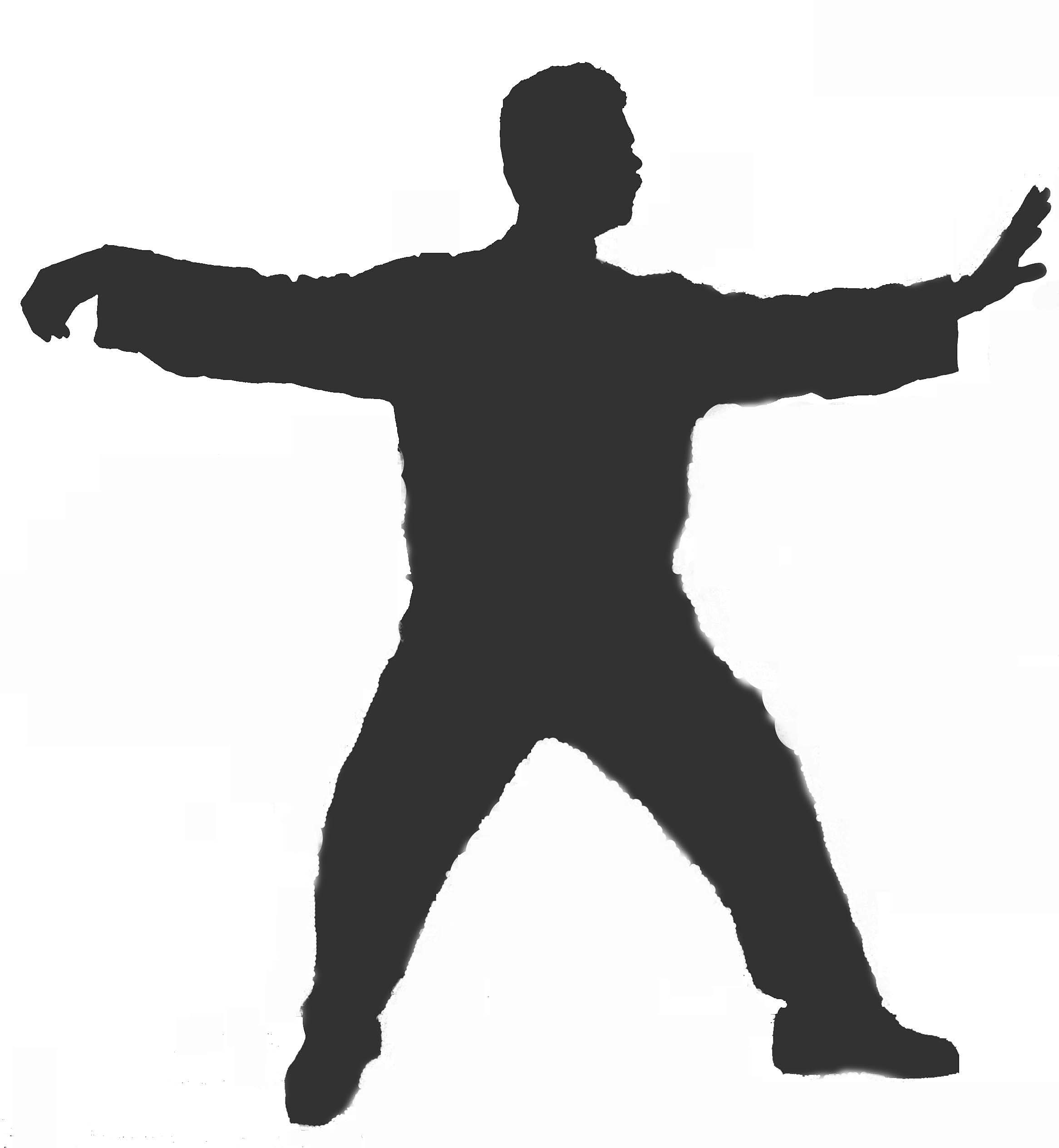
Single Whip, Guang Ping Yang Tai Chi

If you have ever played a competitive sport, you have probably been exhorted to give 100 percent. Or, as the sports cliché would have it, “110 percent.” And the attitude embodied in that exhortation extends well beyond the arena of athletics. Whether the field of activity be business or law, selling cars or playing tennis, giving 100 percent of one’s effort and energy is widely regarded as a virtue, if not a moral imperative.

In the present American workplace, those fortunate enough to be employed might have little choice but to give 110—or 150—percent, day in and day out, to their jobs and sponsoring institutions. But for the conduct of everyday life, a wiser guideline may be found in the ancient Chinese practice of Tai Chi. At once a martial art and a contemplative discipline, Tai Chi is rooted in the Taoist tradition. And a cardinal principle of Tai Chi states that the practitioner should not exceed 70 percent of his or her physical capacity. As Bruce Frantzis, a contemporary Tai Chi master, explains, “[s]triving for 100 percent inherently produces tension and stress because as soon as you strain or go beyond your capacity, your body has a natural tendency to experience fear and to begin, even without you[r] being aware of it, to tense or shut down in response.”* By staying within the limit of 70 percent, you “can use your full effort and energy, but not to the point of strain.”** Continue Reading »

71. Children from the sun.

Ven.  Thich Nhat Hanh in Washington, DC, September, 2003

“Peace,” writes Zen master Thich Nhat Hanh, “is made of peace. Peace is a living substance we build our lives with. It is not only made of discussions and treaties. To infuse our world with peace, we must walk in peace, speak with peace, and listen with peace.”

As so described, peace is more than a noble goal. It is a practice for everyday life. Peace is to be cultivated not only by imagining a peaceful world, as John Lennon did, but also by walking, speaking, and listening in ways that embody a peaceful spirit. In Thich Nhat Hanh’s school of Vietnamese Zen, these practices are known as “walking meditation,” “loving speech,” and “deep listening.” Diligently pursued, these practices can, in Thich Nhat Hanh’s words, “help heal the wounds that divide our nation and the world.”* Continue Reading »

97. Fresh listening


“Can there be fresh speaking and fresh listening right now,” asks the Zen-trained teacher Toni Packer, “undisturbed by what is known?”*

Packer’s question would be pertinent in any season, but it is especially so in the present season, when the usual holiday tunes are in the air, and what we are hearing is so well-known as to seem banal. Like it or not, here comes The Little Drummer Boy again—he and his drum. Given the familiarity of the old songs, is “fresh listening” possible? And if so, how shall we go about it? Continue Reading »

Zenshin Philip Whalen

“The elbow,” Zen teachings tell us, “does not bend outward.” As a longtime Zen practitioner, I have heard that saying more than once, but in recent years it has come to seem ever more germane.

That might have something to do with my growing older. On certain mornings, the elbow is not the only bodily component that doesn’t want to bend outward—or inward, for that matter. But a reminder that elbows do not bend outward can be of benefit to all of us, regardless of age, not least because it returns our hyperactive minds to a physical reality. Beyond that, the saying might also provide a countervailing motto for the twenty-first century, particularly as it pertains to the tempo of our activities, the volume of our consumption, and the realism of our view of life. Continue Reading »

Cloisters of Lisbon Cathedral

“There is this cave / In the air behind my body / That nobody is going to touch: / A cloister, a silence / Closing around a blossom of fire.”* So wrote the American poet James Wright (1927-1980) in his poem “The Jewel.” Wright’s images are enigmatic, in the way dreams are, but their import is clear. They evoke a place in the self that is silent, luminous, and inviolate. Continue Reading »