Feeds:
Posts
Comments

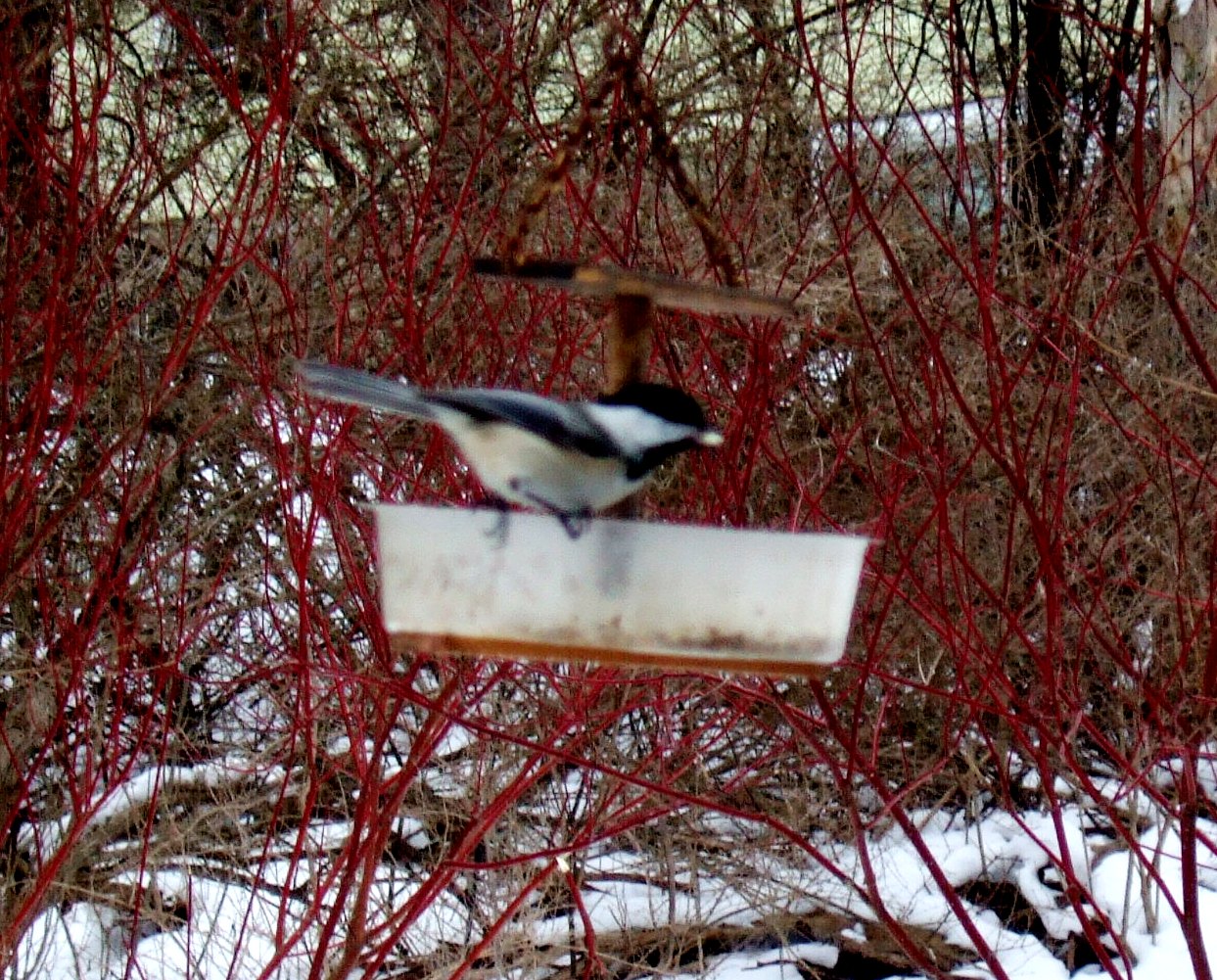
Chickadee feeder 2012-06-25 005One spring morning five years ago, as I was watching chickadees flit around our backyard feeder, it occurred to me that those nimble little birds might appreciate having a trapeze on which to perch. When my son was a child I built him a trapeze, and he enjoyed it. Perhaps the chickadees would as well.

Construction was simple. Rummaging in the garage, I found a remnant of 3/4” flat screen molding. From this I cut two six-inch pieces for the top and bottom bars. These I connected with a central, four-inch dowel. Using wire-cloth staples, I fastened two three-inch lengths of cuckoo-clock chain to the ends of the top bar, joining them at the middle with a handsome brass S-hook. My trapeze thus completed, I hung it from a branch of our pin oak tree. Ready for occupancy, it swung invitingly in the wind. Continue Reading »

125. Elsewhere

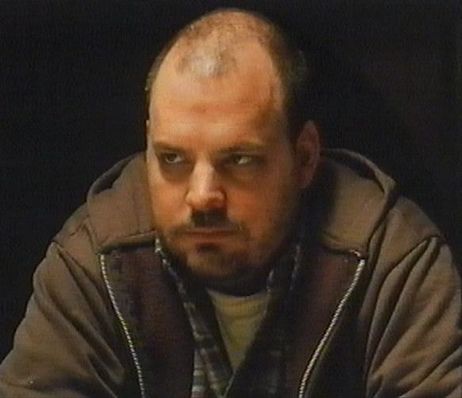
Pruitt Taylor Vince(Rub Squeers in Nobody's Fool)

Pruitt Taylor Vince

If you have a good memory for movies, you may remember Nobody’s Fool (1994). Set in a declining town in upstate New York and based loosely on Richard Russo’s comedic novel, Nobody’s Fool stars Paul Newman as Donald “Sully” Sullivan, a feckless, sixty-year-old handyman who, in Russo’s words, has “led a life of studied unpreparedness.“ Although he is blessed with humane instincts and a generous heart, Sully’s devil-may-care attitude and his boyish penchant for mischief have too often sabotaged his better nature.

Sully’s sidekick and fellow bungler of odd jobs is a garbage collector named Rub Squeers, who plays a role in Sully’s adventures comparable to that of Sancho Panza in Don Quixote’s. Rub is just over five feet tall. His large head sits “like a medicine ball precariously balanced on his thick shoulders.” For most of his life Rub has seldom paid attention to much of anything. He finds attentiveness “hateful and exhausting,” and he considers inattention “normal human behavior.”

What Rub does do is wish, habitually and frequently. During a lull, when he and Sully are out of work, Rub wishes that “we’d just start up again like before.” Later, when they do find work, Rub wishes “we were all through with this job and sitting in The Horse eating a big ole cheeseburger.”* Wherever Rub might be, he wishes he were elsewhere. Continue Reading »

800px-Sliced_carrotsBeing retired now, I cook most of the meals in our home. And of late I have become a connoisseur of my wife’s responses, spoken and unspoken, to what I put on our table.

Let us say that tonight’s menu is Rotini with Lemon-Asparagus Sauce, a side of cooked carrots, and a Martha’s Vineyard salad. After a few bites, Robin may comment on what she has just eaten, or she may not. If she is silent for very long, I begin to get curious. “How do you like it?” I venture to inquire. Continue Reading »

123. Past and present

Dennis O' DriscollPhoto by Kim Haughton

Dennis O’ Driscoll
Photo by Kim Haughton

“He gave the art a good name,” remarked the Nobel laureate Seamus Heaney of the Irish poet Dennis O ’Driscoll, who died suddenly on Christmas Eve at the age of fifty-eight. Dennis was the author of nine collections of graceful, civilized verse and one of the most respected voices in contemporary Irish letters. I am saddened by his early death, as are many of his fellow writers, Irish and American, who remember him as a true gentleman and a generous friend. Continue Reading »

122. Unwelcome sounds

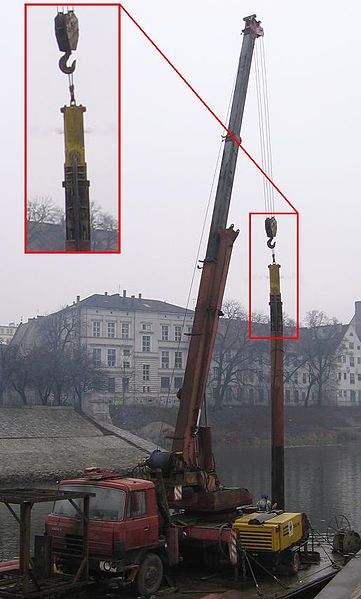
Pile driverAs I sit at my desk this morning, I am listening unwillingly to the rhythmic, reverberant, and unrelenting blows of a pile driver on cold steel.  Wham! (Pause). Wham! (Pause). Wham! The crashes continue for another twenty minutes, as they have for the past few weeks. Charitably regarded, this disturbance of the peace represents the embodied spirit of Progress. Alfred University is building a new recreation center, a half block away from our home. But for many of us who live or work nearby, the noise has been the aural equivalent of a chronic, throbbing toothache. It has been an unwelcome sound.

In this it is far from alone. Most of us, I suspect, have our lists of unwelcome sounds, and more often than not, those sounds are beyond our power to abate, much less eliminate. Under such conditions, a scriptural reminder might be helpful: “And we exhort you, brethren . . . be patient with them all” ( 1 Thessalonians 5:14).  But help may also be found in Buddhist teachings, which offer three distinct practices for dealing with unwanted feelings and sensations. Continue Reading »

121. Snow

2012-03-11 002 2012-03-11 012Dr. Friederike Boissevain is a German oncologist and seasoned Zen practitioner. By her own admission, her meditative practice is imperfect—or “crooked,” as she describes it. Rather than remain focused and fully aware of the present moment, she finds herself wandering off into the “land of dreams and worries.” But, crooked though it be, her practice has supported her daily work with the sick and the dying. “The most important thing I ever did,” she reflects, “was to sit down once.” That act set “something in motion that cannot be stopped. This is not because of trust in something but because of experience. . . The snow of dharma covers everything, whether we see it or not.” Continue Reading »

120. Wise attention

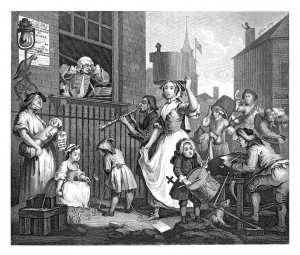
William Hogarth, The Enraged Musician

William Hogarth, The Enraged Musician

According to a recent report on the NBC Nightly News, American police have been running stop signs and causing serious accidents, so distracted have they become by the computers in their cars. To address the problem, the Fort Wayne, Indiana police department has installed devices that freeze the computer’s keys whenever the patrol car’s speed exceeds fifteen miles per hour.

This situation may be uniquely ironic, but the underlying problem is hardly peculiar to the police. On the contrary, in the age of the Internet and ubiquitous mobile devices, distraction has become endemic. With so many objects summoning our attention, where shall we direct it? On what objects should we place our minds? Continue Reading »

During the last few days of October, when Hurricane Sandy was threatening Western New York, state and local officials advised us as to the important documents we should take with us in the event of an evacuation: deeds, home-insurance policies, birth certificates, passports, and the like. In preparation, we should assemble those documents and place them in a waterproof envelope.

Sound advice, to be sure. But as I read that official list, I thought of a less than official item I would add to it: the file of documents I have kept for years under my father’s well-worn Bible. Contained in that file are notes, letters, and cards from friends and family, including letters from my deceased mother; birthday cards from my wife; holiday cards from my daughter-in-law; and a variety of notes from my son, some of them dating from his early childhood. Unlike the policies and passports, those documents are irreplaceable. And all were written by hand, which makes them all the more valuable.

That value, I might point out, is more than sentimental. It is historical and spiritual. The novelist Philip Hensher, author of The Missing Ink (Macmillan, 2012), has argued, with ample corroboration, that “we are at a moment when handwriting seems to be about to vanish from our lives,”* having been supplanted by the printed—and now the digital—word. If Hensher is right, we would do well to cherish whatever handwritten documents remain extant, irrespective of their author or content.  But even if we believe that handwriting, having survived for 5000 years, will always be with us, the act of writing by hand is worthy of renewed attention, if not of veneration. For in the handwritten word, it might be said, the authentic human self is concretely embodied. And the handwritten note or letter, however rough or polished, affords a depth of intimacy between writer and reader that print can only approximate. Little wonder that the world’s great spiritual traditions, Zen included, have accorded the handwritten word—or character—a place of honor, whether the handwritten text be the Torah, the Quran, the Heart Sutra, or the Book of Kells. Continue Reading »

118. Realizing

Chalmette National Cemetery, USCT Tree

One evening last week, as I was reading Khaled Hosseini’s novel The Kite Runner, I paused at the end of a paragraph. That paragraph, I realized, had just given me exceptional pleasure. An aesthetic pleasure, to be sure, but no less keen for that.

Here is the paragraph, which depicts a winter morning in Kabul:

Here is what I do on the first day of snowfall every year: I step out of the house early in the morning, still in my pajamas, hugging my arms against the chill. I find the driveway, my father’s car, the walls, the trees, the rooftops, and the hills buried under a foot of snow. I smile. The sky is seamless and blue, the snow so white my eyes burn. I shovel a handful of the fresh snow into my mouth, listen to the muffled stillness broken only by the cawing of crows. I walk down the front steps, barefoot, and call for Hassan to come out and see.*

There are many reasons why a reader might relish this paragraph. My own enjoyment stemmed, in a general way, from the clarity, directness, and freshness of Hosseini’s prose. More specifically, it derived from Hosseini’s sensuous, evocative imagery, his deft handling of cadence, and his construction of an intimate narrative voice: that of a grown man tenderly recalling his childhood. Experiencing all those qualities and more, I experienced the complex pleasure they provided.

Yet, had I not paused, I might never have realized what I was experiencing. Almost certainly, I was thinking as I read, but thinking is not the same as realizing the experience one is having, an experience that includes but is not limited to thought. Understandably, much of our educational effort focuses on teaching students how to think, critically and conceptually. Far more rare, however, is systematic training in how to realize what one is experiencing. And toward that end, meditative practice can play an important, complementary role, not only in education but also in our everyday lives. Continue Reading »
Melody Babbitt lives on Main Street in Pueblo, Colorado, a city of 106,595 once described as the “Pittsburgh of the West” but now enduring hard times. One of several Pueblo residents profiled on the PBS program Need to Know (October 5, 2012), Melody is an outreach specialist for the state of Colorado. She helps disabled Americans find work. Melody earns $40,000 a year and carries health insurance, but after three required abdominal surgeries that her insurance didn’t cover, she found herself deeply in debt and filed for bankruptcy. Now she needs a fourth operation and doesn’t have the money. “I’m procrastinating and postponing the surgery,” she tells journalist John Larson, the program’s narrator, as she sweeps her front porch. “I will eventually. But I can’t right now. I just can’t afford it.”

Melody Babbitt’s plight is compelling, but no less compelling is the image we are left with: that of an American woman in her late forties, telling her story of hardship while sweeping her front porch. In the midst of financial constraints so severe that she won’t allow herself to go to the movies, she is sweeping her porch. Faced with economic conditions she had no reason to expect and is virtually powerless to control, she is taking care of her home. By extension, it might be said, she is also taking care of her life.

That is an abiding purpose for most of us, I suspect, and it is also a central purpose of Zen meditation. People often come to Zen practice because their minds are unsettled and their lives are in disarray. After a few months—or even weeks—of daily practice, many find that their minds are becoming calmer and clearer, and that order is returning to their lives. And should they continue beyond that point, setting aside at least ten minutes a day for meditation, they may also find that the practice which helped them regain their balance is also helping them sustain it. For in three distinct ways, Zen practice can help us take care of our lives. Continue Reading »