Feeds:
Posts
Comments

Posts Tagged ‘zazen’

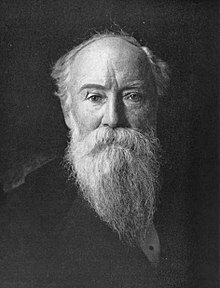
Yamada Koun

“The practice of Zen,” declared Yamada Koun Roshi (1907-1989), “is the perfection of character.” To those accustomed to thinking of Zen as a means of “living in the present” or relieving stress, that stark pronouncement may come as a surprise. In any event, it merits and rewards a closer look.

To begin with, Yamada Roshi was speaking of a process, not a fait accompli. Specifically, he was referring to what are known in Zen as the paramitas, or the Perfections of Wisdom: a set of virtues that are both a focus of daily practice and an essential foundation for its long-term aims. In Zen parlance, the paramitas are the vessels that “carry” practitioners to the “other shore” of full awakening. In the Rinzai Zen tradition in which I was trained, there are six such Perfections: generosity, ethical conduct, patience, joyful effort, meditation, and wisdom. Together with other qualities of heart and mind, including compassion, sympathetic joy, and equanimity, the Perfections comprise the ethical infrastructure on which Zen practice is based.

But how, exactly, can the central practice of Zen, namely zazen (seated meditation), contribute to the perfection of character? How can sitting quietly while following one’s breath, watching and releasing thoughts, or contemplating a koan further the development of character? And how can the “non-action” of zazen, as distinguished from virtuous actions in the world, foster the perfection of character? Of the many ways in which this can occur, I would single out three for special attention.

The backward step

In a classic text of the Soto Zen tradition (the Fukanzazengi  or Principles of Seated Meditation), Eihei Dogen (1200-1253), founder of that tradition, characterizes the practice of zazen as taking “the backward step” that “turns the light inward.” What that light illuminates, among other things, is the ever-changing states of our bodies, minds, and hearts. Our physical sensations, especially those to do with respiration; our present state of mind, whether agitated or tranquil, angry or at ease; our heart’s intentions, whether malicious or benevolent; our thoughts, however fleeting or obsessive—all are revealed to the mindful observer. Where before there were only sensations, thoughts, and feelings, now there is also awareness of those phenomena. Awareness of this kind can transform our character, insofar as it reveals what was hidden, even from ourselves. In this respect, zazen resembles the practice of prayer, in which petitioners humbly articulate their needs, longings, regrets, gratitude, and more, while seeking to atone for past misdeeds. And like the practice of prayer, zazen can nourish and advance the development of character.

Response rather than reaction

In many situations in everyday life, such as driving a car or riding a bike, it is imperative that we react instantaneously to whatever has suddenly arisen. Seeing an unaccompanied child crossing the street, we hit the brakes without hesitation. But in many other situations, such as a parent-child conflict or a domestic argument, even a moment of reflection prior to speaking or acting can make the difference between a destructive reaction and a constructive response.

By its very nature, zazen fosters the latter. The practice of sitting still and not reacting to internal or external stimuli strengthens a precious mental faculty, namely the ability to respond to unwelcome circumstances in a spirit consistent with the paramitas. By not reflexively reacting but wisely responding to such challenging affronts as insults, inflammatory remarks, and false accusations, we create opportunities to align our responses with our deepest values. We actively cultivate kshanti paramita (patience). And over time, this measured, disciplined response to adversity can deepen and fortify character.

Humility

Although Zen meditation is sometimes misconstrued as a self-centered practice, its net effect is to heighten practitioners’ sensitivity to what Paula Arai, in The Little Book of Zen Healing (Shambhala, 2023), calls “the extensive matrix of connections we all share.” That heightened sensitivity enables us to interact “with present conditions from a perspective that moves in rhythm with the circling of stars, seas, life, bones, stones, stars.” In other words, the practice of zazen reminds us not only of the interdependence of the human family but also of non-human forces larger than our ordinary selves. As Arai notes, that broadened awareness can bring relief from anxieties, insecurities, and suffering generally. And for some practitioners, it can feel like being embraced by a higher power, over which the personal self has little or no control. By so doing, zazen can reinforce our sense of humility, one of the essential components of what we in the West call character.

To be sure, Zen meditation is not for everyone. Nor is it common in our fast-paced contemporary culture. As the Zen teacher Nelson Foster observes, “Sitting silently for long hours, reciting old Asian texts, studying koans—these are hardly common behaviors in the West.” More’s the pity, I might submit, if so simple, accessible, and enjoyable a practice can indeed equate with the gradual perfection of character.


Paula Arai, The Little Book of Zen Healing: Japanese Rituals for Beauty, Harmony, and Love (Shambhala, 2023), 88, 106.

Nelson Foster, Storehouse of Treasures: Recovering the Riches of Chan & Zen (Shambhala, 2024), 31.

Photo: Yamada Koun Roshi
Read Full Post »

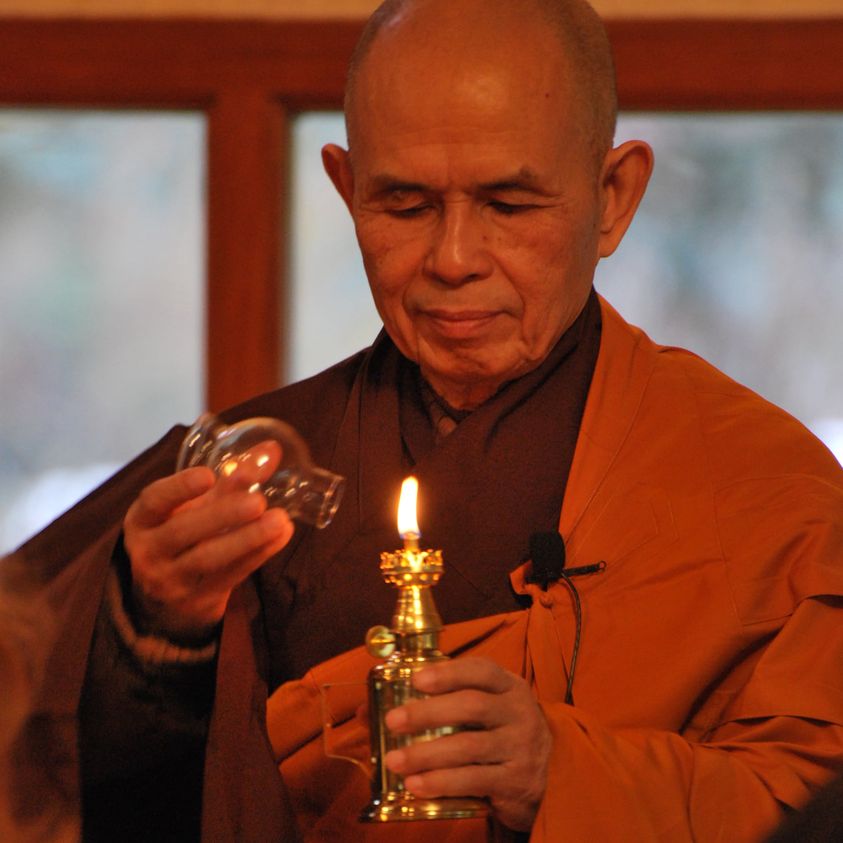
THICH NHAT HANH

Thich Nhat Hanh

1926-2022

Back in December, my wife and I sent an electronic holiday card to our family members and friends, wishing them “happiness, peace, and equanimity” in the year to come. Ever the realist, one of our friends replied, “I’ll settle for equanimity.” I suspect he was not alone.

Equanimity is a central term in the lexicon of Zen. A translation of the Sanskrit word upeksha, the word refers to a quality of mental balance and emotional stability. Not to be confused with a neutral passivity or cold indifference, equanimity might better be likened to what Hemingway called “grace under pressure”: the ability to remain calm and composed under the most trying of circumstances. Equanimity is also the faculty that enables us to take the long, even-tempered view and to remain unmoved by praise or blame, desire or aversion. Although this quality of heart and mind may be more evident in some people than in others, from the standpoint of Zen teachings, equanimity is not an ingrained trait, which some people possess and others do not. Rather, it is a capacity anyone can acquire and systematically cultivate through well-established practices.

The most fundamental of those practices is zazen, or seated meditation. Although Zen literature abounds in special instructions and nuanced techniques, zazen itself is a simple practice. In essence it consists of sitting still and paying close attention to one’s breath, body, and awareness. In this respect, Zen practitioners doing zazen resemble non-practitioners sitting quietly and enjoying their early-morning coffee, aware of their thoughts, bodies, and immediate environment.

Yet there are two crucial differences. Ideally at least, zazen is both a non-judgmental and a non-reactive practice. However pleasant or unpleasant our feelings, thoughts, and bodily sensations may be, we refrain from judging them. If the room where we are sitting is uncomfortably cold, we note that fact but refrain from passing judgment. And should an uncharitable thought cross our minds, we refrain from reacting with an inner rebuke or external action. Instead, we note our transitory thought and return to our awareness of breath and posture. By such means, zazen engenders an attitude of mindfulness and non-reactivity. Rather than judge or try to fix what we encounter, we closely observe its arising and passing.

In similar fashion, sitting still and taking the “backward step” heightens our sense of impermanence. All things change, no matter how permanent they seem. We may know this already, but when practicing zazen, that knowledge becomes concrete and unignorable. Whether what arises is an anxious thought or a disturbing image, a memory from childhood or the fragment of a song, it’s gone before we know it. The contents of our minds are in constant flux. By experiencing this directly, we are reminded time and again that even the most troubling circumstances in our lives are also subject to change. “Long live impermanence!” Zen master Thich Nhat Hanh used to say. Not only can awareness of impermanence bring relief from fear and obsessive thinking. Over time, it can also foster the qualities of dignity and equanimity, which we can carry into our daily lives.

For those who might prefer a more direct approach, there is also a practice known as “equanimity meditation,” in which the qualities of balance and peace become objects of contemplation. This practice begins with reflection on the benefits of equanimity. We are asked to consider the gift an equanimous state of mind can bestow on those with whom we come into contact. We may also reflect on its long-term benefits for ourselves. The meditation proceeds to an inner recitation of such sentences as “May I learn to see the arising and passing of all nature with balance and equanimity,” or “May I be balanced and at peace.” In some lineages, the exercise may conclude with a “transfer of merit,” in which we transfer to a person or persons of our choice whatever merit we may have accumulated by doing this practice. Though more abstract than the practices described above, this verbal exercise, repeated daily, can strengthen our sense of balance and emotional well-being.

In Zen teachings, upeksha (equanimity) is known as one of the Four Immeasurable Minds: the “boundless” states of mind that practitioners vow to cultivate. The other three are maitri (loving-kindness), karuna (compassion), and mudita (sympathetic joy). Equanimity is sometimes regarded as the most important of the four, if not their very foundation. Without equamimity, it can be difficult to practice loving-kindness or compassion or to feel joy in someone else’s happiness. For Thich Nhat Hanh, upkesha also means “inclusiveness” and “non-discrimination”: the capacity to absorb whatever vicissitudes we encounter and to treat all sentient beings with equal regard. All things considered, one could do worse than settle for equanimity.

________

Detailed instructions for equanimity meditation may be found in Jack Kornfield’s A Path with Heart (Random House, 1993). See also Thich Nhat Hanh’s discussion of upeksha and the Four Immeasurable Minds in The Heart of the Buddha’s Teaching (Harmony, 1999).

Read Full Post »

John Burroughs

“To learn something new,” wrote the American naturalist John Burroughs (1837-1921),”take the path that you took yesterday.”

As resonant as it is paradoxical, Burroughs’s remark has survived in our public discourse for more than a century. Only last year, the essayist Pico Iyer quoted it in Autumn Light, his meditation on impermanence in Japanese culture. On first hearing, Burroughs’s observation may seem puzzling, if not willfully obscure. Duly considered, however, it has the ring of half-concealed truth. And it closely accords with a cardinal principle of Zen practice. (more…)

Read Full Post »

Chevy interior cropped“Put it in neutral, Bud,” my father said, quietly but firmly. It was the summer of 1958, and I was learning to drive. The car was a 1950 Chevrolet sedan with a three-speed transmission and the gearshift lever on the steering column. “Three on the Tree,” it was called. Learning to put the lever and the Chevy itself into neutral was my first lesson.

It might also be the first lesson for the Zen practitioner. Wherever else it might lead, the practice of Zen meditation begins with finding, establishing, and maintaining a neutral center, both for the body and the mind. Neutrality may well be the body-mind’s most natural condition, but for many people it is far from habitual. In a culture as competitive as ours, neutrality is often not an option, much less a state to be cultivated and explored. To do so requires training and sustained attention (more…)

Read Full Post »

For the student of Zen, the world provides a multitude of teachers. From rooted, resilient trees we can learn the posture of meditation. From the birds we can learn directness of response. And from other people, particularly those whose trades have taught them to live in the present, we can learn a fundamental principle of Zen practice.

Thirty-five years ago, my first wife and I were living in a rundown farmhouse on Elm Valley Road. Asphalt-shingled and lacking insulation, our house was drafty and expensive to heat. To make ends meet, we installed three woodstoves, which we fed with maple, beech, and ash throughout the winter. Most of the firewood came from our woodlot across the road. I bought a 14” Homelite chainsaw at Carter Hardware, and though I’d had no experience with such a machine, I learned how to use it.

Or at least I thought I did, until I met Howard “Chainsaw” Chilson, my neighbor from down the road. Driving his little Ford tractor past our house, as he often did, Howard spotted me cutting wood and stopped to help, offering some pointers along the way. He showed me how to adjust the chain and how to trim branches without jamming the bar. Most important, he exhorted me to pay attention—full attention—to whatever I was doing. Although I did not quite realize it at the time, my eyes, limbs, and indeed my life depended on it.

Howard had served as an MP in the Second World War. A rugged, lanky man with a bone-crushing handshake, he proudly claimed to be “one-quarter Indian”—Cherokee, as I recall. His own chainsaw was a green, 20” Poulan, which looked as weathered as its owner. But in Howard’s hands it might have been a scalpel, so prodigious was his skill.

Howard’s prized tool had also earned him his name. As he told the story, he was refused service at a local bar, having come in drunk. Disappointed with this lack of courtesy, Howard went out to his truck and returned with his chainsaw. “Either serve me,” he bellowed, “or I’ll cut your bar down!”. Although he did not make good on his threat, he was known ever after as Chainsaw Chilson.

Howard could be moody, but he was an amiable companion, and we spent many productive hours in the woods, cutting and hauling enough wood to heat two houses. Although he’d had little formal education, Howard had a woodsman’s expertise, which he generously shared, and a keen observant eye, which he often turned in my direction. In three summers of working together we never had an accident or sustained even a minor injury, thanks mainly to Howard’s vigilance. Although he called me “Boss,” it was he who kept us both from harm. And though he chided me for wearing something so unmanly as ear protectors (“ear muffs,”he called them), he provided protection of his own, bringing my sometimes wandering mind back to the work at hand.

That is exactly what a good Zen teacher does, and though Chainsaw Chilson, who passed away in 1991, had probably never heard of Zen meditation, he had something in common with the long lineage of Zen teachers. “Will you please write some maxims of the highest wisdom?” a man asked Ikkyu, a fifteenth-century Zen master. “Attention, attention, attention!” Ikkyu wrote. And in a well-known poem, Layman P’ang, a C’han master of the eighth century, trains his own attention on ordinary labor. “Who cares about wealth and honor?” he writes, “Even the poorest thing shines. / My miraculous power and spiritual activity: / drawing water and carrying wood.”


February 26, 2009

Read Full Post »

If you own a home in Western New York, you may be familiar with ice dams. These pesky obstructions occur when heat escapes from a warm attic, melts the snow on the roof, and sends water trickling down to the cold eaves. There it freezes into mounds of ice, blocking the further flow of melting snow. Unless your roof is protected by an asphalt polymer membrane, the trapped water may find its way under the shingles and into the ceiling below.

Ice dams can cause no end of trouble. And so can their counterparts in the inner life, if we allow them to form and grow. In his article “The Mind’s True Nature,” the Tibetan poet and meditation master Dilgo Khyentse Rinpoche explains:

Water is soft and fluid, ice hard and sharp, so we cannot say that they are identical; but neither can we say that they are different, because ice is only solidified water, and water is only melted ice.

The same applies to our perception of the world around us. To be attached to the reality of phenomena, to be tormented by attraction and repulsion, by pleasure and pain, gain and loss, fame and obscurity, praise and blame, creates a solidity in the mind. What we have to do, therefore, is to melt the ice of concepts into the living water of freedom within.*

In this vivid analogy Dilgo Khyentse is describing dualistic thought: the process by which we habitually divide undifferentiated reality into concepts of this or that—into good and bad, beautiful and ugly, self and other, and so on. While necessary for survival, such concepts can all too easily freeze into rigid categories, to which we become attached, occluding our vision and blocking the stream of life.

But how do we “melt the ice of concepts into the living water of freedom within”? Franz Kafka, author of “The Metamorphosis” and other modern parables, once described a book as an “axe to the frozen sea within us.” And Zen koans, which sometimes resemble Kafka’s parables, can also serve that function. Contemplating a koan such as “Who hears the sound?” or “All things enter the One. But what does the One enter?” we are compelled to abandon conceptual thought, making room for direct, intuitive perception.

But there is also a gentler and more gradual method. It consists of sitting still and watching our sensations, thoughts, and mental states arise, take form, and eventually dissolve. Bringing relaxed attention to that inner stream, we may detect the counterpart of ice dams in our psyches: fixed ideas, inflexible beliefs, impermeable states of mind. That’s just the way I am, we may be tempted to say. But should we continue to shine the lamp of mindfulness on those aggregates of thought and feeling, recognizing their impermanent and insubstantial nature, we may sense the beginning of a thaw. We may touch the ground of being—the common source of ice and water. And over time, we may taste the living water within.

______________________________

* Shambhala Sun (January, 2009), 78-79

Read Full Post »

Jundo Cohen, an American Zen priest who lives in Japan, often refers to the “tool kit” of meditative practices. Within the Japanese Zen tradition alone those practices include susokkan (counting out-breaths), kinhin (walking meditation), samu (work practice), oryoki (formal meals), contemplation of koans, and shikantaza (“just sitting” ). And that is to say nothing of the multitude of other methods, such as meditation on a text or repetition of a mantra, employed by the world’s contemplative traditions.

Jundo himself practices shikantaza, which is also known as “objectless meditation”. In most modes of meditation, the practitioner is instructed to focus on an object, tangible or intangible. In Zen practice that object is usually the flow of the breath, at least at the beginning of a sitting, but it can also be a koan, such as “Who hears the sound?” or “What was your original face before your parents were born?” In either case, we are enjoined to focus our attention, exclusively and singlemindedly, on a chosen object. By so doing, we enter the state of one-pointed concentration known as samadhi.

In practicing shikantaza, we dispense with all such methods. Insofar as we can, we do nothing but sit in awareness, noticing whatever comes along, including the sensations in our bodies, the coming and going of the breath, and the urge to be doing something—anything—but just sitting. Should we begin to slouch, we correct our posture, but apart from such corrections, we focus on nothing in particular. Instead, we cultivate a panoramic attention, opening our minds to all that is occurring, within and without. If thoughts cross our minds, we note them but do not pursue them. Nor do we attempt to analyze our thoughts or discern their emotional subtexts. We just sit.

Shikantaza is a composite word, made up of three discrete elements. Shikan is usually translated as “just” or “nothing but,” and it connotes wholehearted attention. Ta is an intensifier, literally meaning “hit.” Za means “to sit,” or more broadly, “to sit together.” Together these elements describe a practice of sitting in precise, continuous awareness.

Eido Shimano Roshi, a contemporary Zen master, explains the practice of shikantaza in this way:

This is zazen in which one neither seeks enlightenment nor rejects delusion. The purest zazen, it uses no devices as such; strictly speaking, there is no goal or method. Shikan taza practice is a manifestation of original enlightenment, and is at the same time a way toward its realization . . . . Zazen is both something one does and something one essentially is.*

To sit without goals or methods is not so easy as it sounds. In a culture as competitive as ours, where doing rather than being is widely prized, such a practice presents an extraordinary challenge. But for all its rejection of goals, “just sitting” affords the diligent practitioneer uncommon rewards. In contrast to object-centered meditation, it trains us to include whatever we experience—and to let the things of this world reveal themselves, just as they are.

Shikantaza is best practiced under the guidance of a teacher, lest it become what Eido Roshi once called “shikan-waste of time.” If you would like to explore the practice, I would recommend that you visit Jundo Cohen’s Tree Leaf Zendo at www.treeleaf.org. There you will find detailed instructions, as well as a daily opportunity to sit with Jundo in shikantaza.

____________

*Namu Dai Bosa, ed. Louis Nordstrom (Theatre Arts Books, 1976), 251.

Read Full Post »