Feeds:
Posts
Comments

Posts Tagged ‘Buddhism’

“Each of you is perfect the way you are,” Shunryu Suzuki Roshi, founder of the San Francisco Zen Center, said to his students one morning, “and you could use a little improvement.”

Over the years, in conversations with acquaintances, friends, and family members, I have sometimes repeated Suzuki’s remark, and it has almost always evoked strong responses, ranging from laughter to curiosity to puzzlement. I’m reminded of a self-ironic comment the onetime U.S. Poet Laureate Howard Nemerov made, apropos of modernist poetry: “I don’t know what the fellows mean.

To grasp the meaning of Suzuki’s remark in the context of Zen teachings, it may be helpful, first, to clarify what he doesn’t mean. In common Western parlance, “perfect” is synonymous with “flawless.” If a used book is in perfect condition, its spine is intact, and it is free of dogeared pages, coffee stains, and other visible defects. If a Zen practitioner sits in perfect stillness, he or she doesn’t move, not even a little bit. And if a vacant space is described in a real estate listing as “perfect for a studio,” we may assume that the room could not be better suited to that purpose. Little wonder that perfect is so widely used in advertising, where it is often paired with ideal.

Clearly, that was not what Suzuki had in mind. Most likely, he was employing the word perfect in the special sense in which it is used in Zen teachings. As Tetsugen Bernie Glassman Roshi, an American Zen teacher, explains in his book Infinite Circle, in Zen lingo “perfect means neither good nor bad, just what is as it is,” irrespective of any judgments or other concepts we might add:

Rain is what is. If we are farmers, we tend to say that rain is wonderful; if we were planning a picnic, we think rain is terrible. But rain is rain. People say rain is wet, but a fish wouldn’t. Water is very essence of life to a fish, neither wet nor dry. The fish attaches no notions or dichotomies to it. When we say something is perfect, we’re pointing to this absence of dichotomies or dualism.

Viewing a thing dualistically, whether that thing be rain or a self, we separate subject from object And we view the object through the lens of our “notions,” which in Glassman’s phrase, are the “colors we add to the thing itself.”

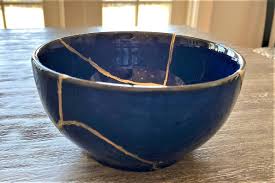
In the world according to Buddhism, things do not manifest sui generis. They come into being through “dependent origination,” a twelvefold chain of causes and conditions. Within that worldview, as Glassman notes, any one “thing-event” is “the best that could happen at this very moment—but best in the special sense that it’s happening and there is no choice. It is in this sense that we say everything is perfect just as it is, in the sense of being complete”. Even a broken incense bowl is “perfect as it is—because that’s what it is. We may have the notion that all those pieces should be returned to their original condition as parts of a whole incense bowl so they can be perfect again, but that’s just a notion.”

It’s reasonable to conclude that something akin to Glassman’s definition is what Suzuki meant when he told his students they were perfect as they were. But how does that square with his subsequent assertion: that they “could use a little improvement”?

To address that apparent contradiction, I would note, to begin with, that the first clause of his pronouncement deals with being and the second with doing. We may each be perfect, not only in the sense of being complete as we are but also in having what Zen calls “buddha nature”: an innate capacity for wisdom and compassion. Dormant and unrealized it may be, but it can be awakened and cultivated through committed daily practice. That paradox is at heart of Zen teachings and practice. It is embodied concretely in Hakuin Ekaku Zenji’s “The Song of Zazen,” which speaks of “a man who, in the midst of water, / Cries in thirst so imploringly.”

But beyond this underlying intellectual coherence of Suzuki’s remark, I would also note its deeply compassionate nature. All too often, we may feel more like that broken incense bowl than that object in its original state. But even if our efforts to improve our present condition fall far short of their mark, we will still be “perfect” in the sense of being just as we are in this very moment: whole, complete, and rich in potential. And that way of seeing oneself can go a long way toward overcoming the habit of negative self-judgment, even as it fosters self-acceptance, a condition hard to come by and much to be desired.
Read Full Post »

Good neighbors

As the world knows, Zen Buddhism is a practice of stillness and silence. Its iconic image is a figure sitting cross-legged in meditation. But Zen is also a practice of active questioning. And no question is more central to the practice than one a child might ask: “What is this?” Zen teachings enjoin practitioners to ask this question over and again, not only in formal meditation but throughout the day. Whether the immediate focus of attention be an orange, an iPhone, a transitory feeling, a state of mind, or what is commonly called the self, to practice Zen is to inquire deeply into whatever we encounter: to penetrate beneath its illusory surface to its “true nature.”

Yet one need not be a Zen practitioner to benefit from asking Zen’s central question. Radical inquiry is basic to pursuits as diverse as science, medicine, law, philosophy, and the visual arts. And it is also fundamental to Western meditative poetry, as in Wordsworth’s Prelude or T.S. Eliot’s Four Quartets, where the aim, as in Zen, is both to understand the essential nature of the object under scrutiny and to reignite an Edenic sense of awe and wonder.

Few Western poems better illustrate this process than Robert Frost’s “Mending Wall” (1913), one of the most celebrated, widely anthologized, and enduring poems of the 20th century. At first glance, this readily accessible poem is a folksy, anecdotal account of a conversation between two neighboring farmers in rural New Hampshire. But on closer inspection, it reveals itself to be a profound inquiry into the nature, origins, and purpose of man-made walls. More broadly, it is an examination of the sources of division, enclosure, and territorial conflict in Western culture and the role that fixed, traditional ideas play in such conflicts.

In “Mending Wall,” two owners of adjoining farms are engaging in the annual springtime ritual of repairing a drystone wall that separates their properties. Even as they work together, the narrator (who has initiated this chore by getting in touch with his neighbor) is inwardly questioning its worth and meaning. “Something there is that doesn’t love a wall,” he confides to the reader. Whatever that unspecified “something” may be, it has both human and natural agents: the hunters who break through the wall in pursuit of prey and the winter groundswell, which topples the carefully balanced stones. And just as these physical forces undermine the established wall, so the narrator subverts its very existence by questioning its reason for being. As he notes, there is no practical need to separate his apple orchard from his neighbor’s pine forest. Neither is harming the other. Nor are there cows to enclose. Why erect a wall at all?

In response to this mischievous but searching question, the neighbor offers a platitude, most likely derived from a 19th-century Farmer’s Almanac: “Good fences make good neighbors.” Recognizing this argument as proverbial rather than original, expedient rather than persuasive, the narrator characterizes it as his neighbor’s “father’s saying,” which the man has neither the inclination nor the imagination to call into question. And toward the end of the poem, the two neighbors merely restate their opposing positions: “Something there is that doesn’t love a wall” and “Good fences make good neighbors.” Whether the author is siding with one or the other remains unknown. And the question itself remains unresolved.

“Mending Wall” has sometimes been read—or misread—as a didactic poem with a simple message: “Tear down all walls.” But, given the even balance of opposing perspectives, supported by the author’s own impartiality, the poem might better be understood as a concrete demonstration of an ongoing inquiry. That the issue remains far from resolved after more than a hundred years may be seen in an episode of the TV drama Yellowstone (Season 1, Episode 7), where the cattle baron John Dutton (Kevin Costner) directs the Asian tourists who are trespassing on his property (and photographing a nearby grizzly bear) to take note of his fences and get off his land. When one of the tourists objects, asserting that the earth belongs to everyone, Dutton dismisses his argument with a memorable line: “This is America. We don’t share land here!”

In Zen practice, “What is this?” is both a question and a koan, whose purpose is not so much to produce definitive answers as to lift the veils of prejudicial concepts, freshen our perceptions, and reveal the impermanent, selfless, and interdependent nature of things we usually take for granted. Likewise, Robert Frost, at once a social conservative and a radical explorer, offers a koan of his own, inviting us to look more deeply into the nature of walls and boundaries, literal and figurative, and to ask what place and meaning such fabrications have in our daily lives.

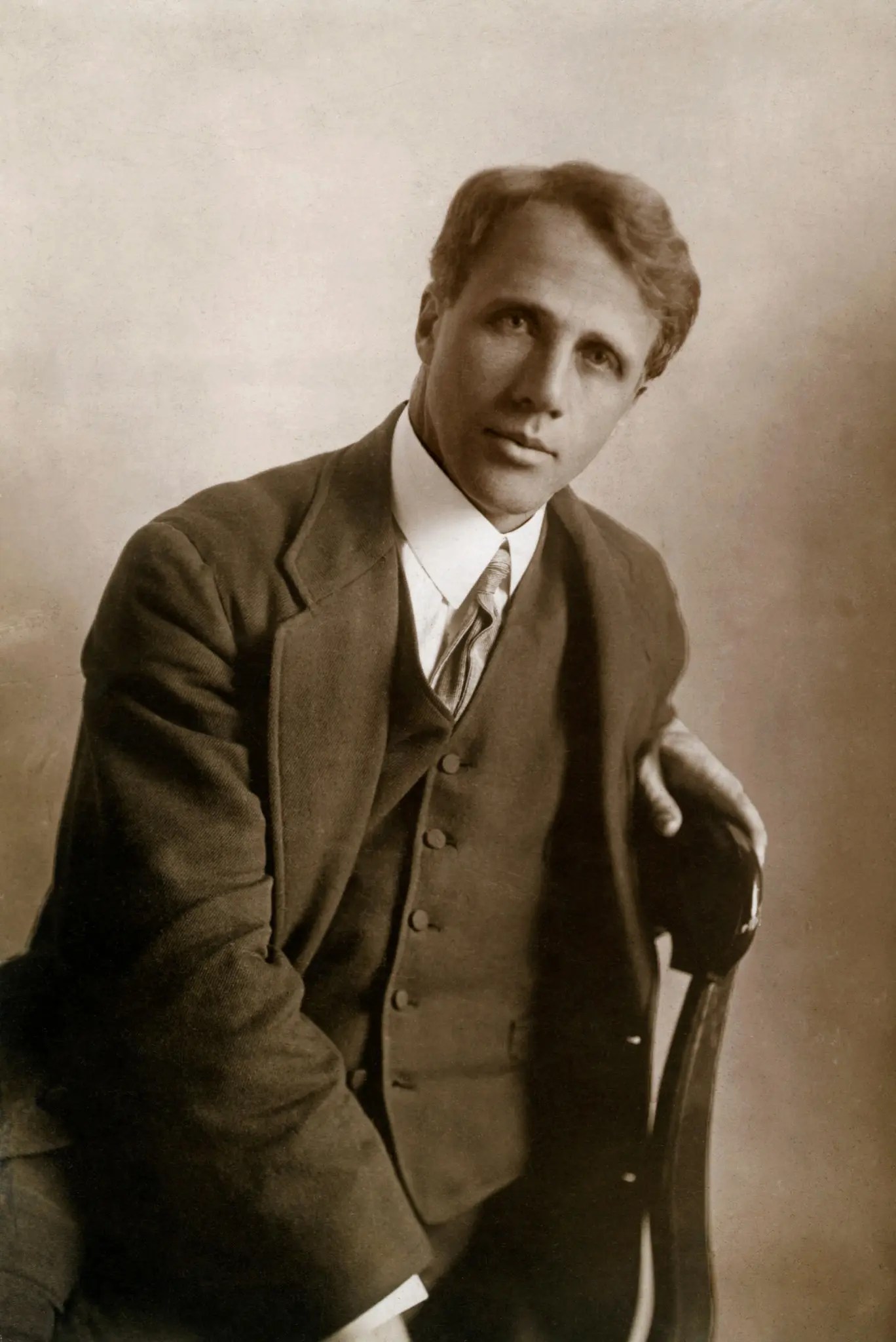
Photo: Robert Frost

To read “Mending Wall” go to https://www.poetryfoundation.org/poems/44266/mending-wall

Read Full Post »

Like the word silly, which once meant “innocent” (“the silly sheep”) but now means “foolish, frivolous, lacking in common sense,” the word contention has a distinctive history. Derived from the Latin contentio, it once meant “striving, struggle, competition.” But sometime in the sixteenth century, contention came to mean “disagreement, argument, fighting.” Unlike silly, contention has retained its earlier meaning, but today it most often conjures scenes of conflict, dysfunction, and disharmony—or, at its most extreme, mortal combat. A contentious person is someone inclined to instigate division, discord, and outright feuding—and, in the worst case, incite violent action.

In its healthiest manifestation, contention is fair-minded competition, physical or intellectual. The Bills and the Chiefs contend for victory on the playing field. Olympians contend for the gold. Nations contend in an open, if regulated, market. But in its unhealthiest forms, contention is first and last a ruthless power struggle. Fairness goes by the board, as do such norms as lawfulness, decency, and respect. Oxford debaters contend, but unless they are prepared to be disqualified, they adhere to established rules. But contending parties in an ungoverned dispute may simply fight to the bitter end, verbally or physically, with no holds barred. All that matters is winning or being in the right, or both.

Contention is often understood to be an existing condition, akin to the temperature of a room or the quality of the air. Likewise, a propensity toward contention is commonly viewed as an aspect of temperament, a trait of personality more likely to harshen than mellow with age. But from the standpoint of Zen practice, contentiousness is a mental and emotional capacity susceptible to changing conditions. With sufficient self-awareness, we can choose at any time to nourish or actively neglect it. At the same time, we can also cultivate a peaceable heart: a heart inclined toward peace.

Toward that end, classic Zen teachings offer a practice known as the Four Great Efforts, an aspect of the Noble Eightfold Path. Practitioners are encouraged to “water the seeds” of such “wholesome” states of mind as mindfulness, patience, kindness, and wisdom, as distinguished from such “unwholesome” states as greed, hatred, and vindictiveness. The first “effort” is to cultivate wholesome states that have already arisen. The second is to nourish wholesome states that have yet to arise. The third is to allow unwholesome states that have already arisen to languish. And the fourth is to do the same with unwholesome states that have yet to arise. These efforts are to be conducted methodically, their aim being the perfection of character. In monastic settings, the practice of the Four Great Efforts may include the recitation of vows and the contemplation of such virtues as patience, kindness, and compassion. For lay practitioners, it may be enough to regularly stop whatever one is doing and check one’s heart for currents of aversion. Bringing contemplative attention to such currents can lessen their destructive power and forestall future harm.

Robert Thurman, an emeritus professor of Indo-European Buddhist Studies at Columbia University, once noted that throughout our everyday lives we are feeding one state of mind or another. We may be doing so habitually and unconsciously, with neither a beneficent nor malevolent intent. But whether we are listening to a quiet, contemplative piece of music or watching a violent, blood-drenched action film, we are directing our attention to a particular object. We are engaging, as it were, in a form of meditation. In the first instance, the mental state being fueled is one of tranquility, harmony, and accord. In the second, it is one of destructive, ego-driven action. But whatever our present state of mind may be, for good or ill we are at once sustaining and strengthening it.

In an old Jewish story, a man is strolling along a sandy beach when a bottle floats by. Out pops a genie, who invites the man to make a wish. Without hesitation, he blurts out, “world peace.” “Oh, I’m sorry,” replies the genie. “A lot of people ask for that, but I’m afraid it’s out of the question. Please make another wish.”

Not everyone would agree with that genie. In the views of such prominent peace advocates as Desmond Tutu, Dr. Martin Luther King, Jr., Thomas Merton, and the Ven. Thich Nhat Hanh, peace between peoples and nations is an attainable, if distant, objective. But, as Thich Nhat Hanh often reminded ardent pacifists back in the 1970s, any serious effort toward peace must begin with ourselves. At any moment, we can examine the presence of contentiousness in our hearts and minds, and, if we so choose, deprive it of favorable conditions. We can practice what the Dalai Lama has called “inner disarmament,” even as we tend a peaceable heart.

Image: Fred Easker, Mississippi Meditation

Read Full Post »

In the closing line of his poem “Sandstone Keepsake,” the Irish poet and Nobel laureate Seamus Heaney describes himself as “one of the venerators.” That line is striking, not only because the verb venerate has largely disappeared from everyday discourse but also because the spirit of veneration itself, like water in certain parts of the world, is becoming as scarce as it is precious.

Veneration derives from the Latin root veneratio¸which means “reverence or profound respect.” In his poem, which was written during the Troubles, Heaney depicts himself wading on a beach on the Inishowen Peninsula, at the border between the Irish Republic and Northern Ireland. There he finds a “chalky, russet” chunk of sandstone, which he subsequently likens to the “long venerated” heart of a 13th-century martyr. And he portrays himself as a humble countryman, out for an evening walk and no threat to the wary British authorities of Northern Ireland, who may well be watching him with binoculars.

Humility is an essential component of veneration. It can be expressed physically through the acts of bowing, kneeling, or prostration. No less important than these outer forms, however, is a mental attitude of selfless regard. In Zen parlance, this attitude is sometimes described as “lowering the mast of the self.” Often it is accompanied by silence, stillness, and a profound sense of gratitude.

In formal religion, the objects of veneration have most often been spiritual leaders, saints, martyrs, texts, statues, and sites regarded as sacred. A short list might include the Cross, the Shroud of Turin, the Torah, the Koran, Bodh Gaya, Mecca, and Bethlehem. Informally, however, those unaffiliated with organized religion can elect to venerate an art such as painting, sculpture, or poetry; an institution, such as higher education, medicine, or law; a trade, vocation, or profession; the wild natural world; blood or spiritual ancestors; or, not least, the person or persons standing before them. In traditional Asian cultures, an attitude of veneration may be expressed by pressing the palms of one’s two hands together and making a nod or bow. More subtly, it can be expressed by offering a friend a gift with both hands.

In the Zen monastic tradition, a sense of veneration extends to the familiar objects of everyday life, such as one’s cushion, eating bowls, garments, and utensils. Beyond that, it also encompasses such tasks as cooking, cleaning, gardening, and temple maintenance. And in Japanese Zen, it is closely associated with two specific practices.

The first of those practices is known as ma, which roughly translates as “giving [an object] appropriate space.” Whether the activity be the tea ceremony, flower arranging, calligraphy, or one of the martial arts, this principle enjoins the practitioner to honor both the objects of attention and the space around them. In his notebooks the writer and Zen practitioner Peter Matthiessen spoke of the “fierce cleanliness” of Dai Bosatsu Zendo, the monastery where he learned the practice of Zen. Having trained there myself, and having washed its windows, vacuumed its tatami mats, and washed its floors by assuming a deep crouch and running down its Tasmanian oak floors with a wet cloth, I can attest to the cleanliness of its interiors. But equally important were the austerity and minimalism of its décor. The objects to be dusted and meticulously arranged were few and far between, and the spaces between them felt as present as the objects themselves. Both their presence and the space between them embodied the “Way” of ma.

As the conscientious, if temporary, steward of those objects, I learned to embody the second principle of veneration, known in Zen as menmitsu-no-kafu. Derived from roots meaning “interwoven” and “family,” menmitsu refers to a warm, wholehearted, and intimate quality of attention to the objects in one’s care. However humble or precious, those objects are to be treated with what is sometimes called “grandmother mind,” as though they were members of one’s family. Whether the items in question be the three bowls used in oryoki (formal Zen meals), the towels folded and placed on the beds of incoming guests, the exact, woodpecker-like striking of the han (wooden block) to initiate a sitting, or the placement of one’s hands when engaged in zazen (seated meditation), the Way of menmitsu may be understood as a form of kinetic, daily veneration.

John Daido Loori Roshi, an American Zen master, once noted that it was impossible to bow in gratitude and complain at the same time. Analogously, it is difficult, if not impossible, to nurture the spirit of veneration while in pursuit of riches, importance, power, and conquest. The two sets of values are incompatible. But even at a time when our cultural ethos has sharply veered toward the latter way of being, it is still possible to become, like Seamus Heaney, one of the venerators. At any given moment, it is still possible to choose.

—–

To read the full text of “Sandstone Keepsake,” see https://voetica.com/poem/7555.

Photo: Dai Bosatsu Zendo

Read Full Post »

(more…)

Read Full Post »

In the opening lines of his poem “Gauze,” Ted Kooser, a former Poet Laureate of the United States, asks a provocative question: “Can a man in his eighties, with cancer, / be happy?” In the remaining lines, he provides a tentative answer:

                        It seems that he can, cutting

            yesterday’s gauze dressing in pieces

            to scatter over the grass for the wrens

            who’ve come back again after another

            long winter and are building their nests

            in his birdhouses built with old boards

            that he salvaged in happiness, which he

            hammered together in happiness too.

If Kooser’s response to his own question sounds surprising, even startling, it is probably because it runs athwart conventional assumptions. In contemporary Western culture, old age is not commonly regarded as a time of exceptional happiness. On the contrary, it is often characterized as a kind of sunset: a time of loss, regret, physical indignity, and relative incapacity. Likewise, a critical, if not incurable, disease would seem incompatible with a general mood of happiness. Kooser’s pivotal use of the verb seems suggests that even he cannot quite believe what he is experiencing.

            From the vantage point of Zen teachings, however, Kooser’s experience of happiness amidst adverse conditions is not all that unusual. It seems entirely plausible. This is because Zen teachings sharply distinguish between external events and our internal responses. The former are often well out of our control. The latter are often a matter of choice, however conscious or unconscious.

            Usually, this distinction is framed as the difference between pain and conditioned suffering. Pain is what happens to us. Conditioned suffering is what we inflict upon ourselves through our reactions and responses, as when we catastrophize without sufficient evidence or engage in fearful speculation. Classical Buddhism likens the pain attendant to harsh external conditions to an arrow piercing our bodies. Our negative, conditioned responses are like a second arrow shot into the open wound.

            With respect to aging, anyone of a certain age can confirm that the first arrow and its impact are all too real. Beyond the maladies already mentioned, there may be cognitive impairments, the risk of taking a life-altering fall, or the eventual need for joint replacements, to name a few. These and other infirmities can make the lives of elderly people challenging, to say the least.

            At the same time, we have a choice. We can deny, resist, exaggerate, or otherwise worsen our afflictions.  Or we can acknowledge them, seek treatment, and, if possible, accept them for what they are. If the former response is akin to the second arrow, the latter affords at least a possible end to conditioned suffering.

            With respect to illness and disease, true acknowledgment and acceptance may be a far more complex and difficult matter. And it is also an individual one, dependent on temperament, overall health, and many other variables. For those with high pain thresholds and a cultivated tolerance for the uncertain and the unknowable, it is one thing. For those with neither, it is quite another.

            What Ted Kooser’s poem distinctively reflects is an open and curious but realistic sensibility discovering, as if for the first time, that happiness can co-exist with the realities of aging and the presence of a serious illness. It is not as if he is fully accepting either. Rather, he is implying that what Zen teachings would call contentment is ultimately not determined by externally imposed conditions. Its sources are within.

            For Kooser those sources would appear to include the pleasures of making and making do with what is at hand; the sense of being an integral part of nature rather than merely an outside observer; the exercise of imagination in returning a manufactured, disposable fabric to the natural world; and, not least, the neighborly company of wrens, one of the most comely and sonorous of North American birds.

Read the full text of “Gauze” in Raft (Copper Canyon Press, 2024), Ted Kooser’s most recent book.

Read Full Post »

In the summer of the year 2000, I had the good fortune to be spending the month of June in Ireland, where I was teaching Irish literature to American students at Trinity College, Dublin. One sunny afternoon, as I was walking down Nassau Street in central Dublin, I stopped to browse at a sidewalk bookstall.

Enclosed in wooden trays were dozens of used books, including hefty, well-worn volumes on Irish history, culture, literature, and topography; slim, tattered collections by obscure Irish poets; dated anthologies of Irish drama, short stories, and essays; and biographies of such luminaries as Michael Davitt, Michael Collins, and Éamon de Valera. Finding many books of interest but none I cared to buy, I was about to leave, when another book caught my eye. Lo and behold, it was a book of my own: my verse novella, Midcentury, which my Irish publisher, Salmon Poetry, had released three years earlier.

Midcentury is a book-length, blank-verse meditation, narrated by a middle-aged American lexicographer living alone in Ireland in the nineteen-forties. Down on his luck and overly fond of Irish whiskey, he is seeking solace in the Irish landscape and Ireland’s wartime neutrality. His dominant themes, interwoven through six, interrelated sections in the manner of a string quartet, include impermanence, dispossession, forgiveness, the roots of language, Ireland’s tragic history, and his own spiritual deracination and renewal.

I began the  the first section, “The Word from Dublin, 1944,” while in residence at Yaddo, the writers’ retreat in Saratoga Springs, New York. The remaining sections were written in multiple venues over the next three years. I completed the book in 1995 while staying at the Tyrone Guthrie Centre (Annaghmakerrig), the Irish writers’ retreat in Co. Monaghan. Before I had even begun this project, I might add, months of historical research into mid-twentieth-century Irish history and culture had laid its foundation. And there it was, my magnum opus, for sale on a Dublin sidewalk for less than a pint of Guinness.

“All conditioned things,” the Buddha is reported to have said, “are of the nature of vanishing.” Where books are concerned, those conditions include the vagaries of publishing, marketing, aesthetic fashion, critical opinion, and time itself, which can be cruel to unprotected ink and paper. With obvious exceptions, most authors should not be surprised to see their books vanish or be forgotten in due time—and often sooner rather than later. (With Midcentury I’ve had better luck: according to WorldCat, the worldwide library database, the book is currently in 89 libraries, here and abroad). No matter how many hours went into the making of a book, it can disappear quickly and with scarcely a trace, taking with it whatever ephemeral acclaim it might have accrued. In his poem “Provide, Provide!” Robert Frost puts the matter succinctly: “No memory of having starred / Atones for later disregard.”

What I am speaking of, of course, is the reality of impermanence, which the Zen teacher Norman Fischer has called the “cornerstone of Buddhist teachings and practice.” For Frost, the remedy was to “make the whole stock exchange your own,” which might increase the chances of having interested parties at one’s bedside as the end draws near. “Better to go down dignified,” he advised, “With boughten friendship at your side / Than none at all.” From the perspective of Zen teachings, however, the issue is neither so materialistically defined nor so easily resolved. Nor is impermanence something we can deal with later. It is immanent, if not always apparent, in things as they appear to us in the here and now. And, as Fischer puts it, “to understand impermanence at the deepest level, and to merge with it fully, is the whole of the Buddhist path.” Mindfulness, the central practice of Zen meditation, is “not a way to cope with or overcome impermanence. It is the way to fully appreciate and live it.”

That is more easily said than done. A lifetime of Western conditioning militates against it. But having practiced Zen for more than three decades, I can report that eventually one can get the hang of living within, rather than outside, the reality of impermanence. And should that happen, you may find yourself experiencing an unexpected lightness of being. As the Vietnamese master Thich Nhat Hanh often noted, we suffer not because things are impermanent but because we expect them to be permanent when they are not. Truly releasing that expectation can lift a self-inflicted burden, offer a fresh way of seeing, and open a gate to the next new experience. And for Zen practitioners who are also creative artists, living in alignment with impermanence rather than habitually resisting it can both facilitate the process of artistic creation and make it far more enjoyable. “Long live impermanence!” Thich Nhat Hanh, a poet and the author of more than a hundred books, delighted in saying, with only the gentlest irony in his tone.


Norman Fischer, When You Greet Me I Bow (Shambhala, 2022), 99, 102.

Photo: “At the Bookstall,” by garryknight (Creative Commons)


Read Full Post »

Everyday ceremonials

cleanliness-in-zen-buddhism-1

Around the time I began writing these essays, now more than sixteen years ago, I also wrote a poem by the same title:

ONE TIME, ONE MEETING

Picking up the phone to call my son,
I entertain the thought that every act,
No matter how familiar or banal,
Might be construed as unrepeatable
And all of life as ceremonial.
What could be less formal than the feel
Of yet another handset in the hand
Or, beneath my fingertips, the cool
Resistance to the punching-in of numbers?
And what could be more normal than hello,
Spoken by a voice I couldn’t fail
To recognize, despite the poor connection,
The fading in and out across the miles?
And yet to entertain that counter-thought,
To see each action and its consequence
As marvelous and not to be repeated,
Suffices to enlarge this conversation
Beyond the casual or circumstantial,
The morning’s headlines and the evening’s news,
As though just now the truth of things had spoken.

                        (From Leaf, Sunlight, Asphalt, Salmon Poetry, 2009)

As longtime readers of this column may recall, “one time, one meeting” is a translation of the Japanese phrase ichigo ichie. Historically associated with the tea ceremony, the phrase is also a motto for Zen practitioners. It reminds us that in truth, if not always in appearance, every moment of our lives is unprecedented and unrepeatable. As such, it is worthy of our full attention, however habitual or mundane it may seem.

That is the central theme of the poem. But rereading it after many years, the line I find most arresting is “And all of life as ceremonial.” That line envisions a hypothetical (and highly unlikely) state of affairs and should not be read too literally. But the notion of “all of life” being ceremonial invites deeper consideration.

“We don’t stand on ceremony,” I recall a new acquaintance saying, as my first wife and I arrived at her home for a Christmas party. Our hostess’s intention, I assume, was to put us at ease. At the same time, the tone of her greeting was declarative and almost boastful.  It reflected and even championed the casual, informal, and individualistic ethos of American culture. And if that was the character of our society four decades ago, it is even more so now.

Ceremonies have their place and their purpose. Weddings, funerals, graduation exercises, church services, and the like mark certain occasions as special and sometimes historic. Whether religious or secular, they bear an aura of the sacramental. At the same time, those of a skeptical nature sometimes view such ceremonials as hollow, archaic forms and little more. As seen from that perspective, public ceremonies function largely to preserve a tradition, elevate the institutions that sponsor them, and preserve existing hierarchies of status, money, and power. Ceremonies are the province of cultural and economic elites. And though they may console, honor, inspire, and otherwise benefit the ordinary people who attend and value them, they may have little to do with the conduct of their daily lives.

Not so in Zen practice. In Zen monasteries, temples, and practice centers around the world, the most familiar chores and tasks, whether they be washing windows, vacuuming cushions, or sweeping steps, are carried out in silence and in ways both ritualistic and ceremonial. And for committed lay practitioners, the attitude underlying this practice extends well beyond the precincts of the zendo and into the activities of everyday life.

In The Little Book of Zen Healing, Paula Arai, a longtime Zen practitioner, observes that “by consciously approaching an action with presence and purpose, you can ritualize any act to be a healing activity.” That may sound like a daunting challenge, best left to advanced practitioners, but it is quite the opposite. As simple as it is efficacious, anyone can learn to do it.

If you would like to experience the practice for yourself, choose a familiar task, perhaps one you perform every day. Take three deep but natural breaths, following them from start to finish.

Now reflect on the nature of the task at hand. Consider its relationship to present conditions, including the environment, the season, and the time of day. If the task involves a tangible object, such as the cotton T-shirt you are folding or the hand-crafted ornament you are hanging on the tree, take a minute to contemplate its constituent materials and the labor that went into its making. Then give the task your full attention, as though you had nothing else to do and nowhere else to go.

Undertaken with this attitude, onerous chores can become dignified acts of attention. Personal and household maintenance, which can occupy so large a space in our daily lives, can be transformed into a venue for insight and understanding. And over time, if you persist, this venerable practice can foster greater appreciation of the gifts of nature, closer alignment with things as they are, and a profound and lasting equanimity.

_____

Paula Arai, The Little Book of Zen Healing, (Shambhala 2023), 107

Read Full Post »

Tea master“Receive a guest,” advised the Zen master Soyen Shaku (1860-1919), “with the same attitude you have when alone. When alone, maintain the same attitude you have in receiving guests.”

Zen masters’ pronouncements are often enigmatic, but this one is particularly baffling. For one thing, it seems to blur, if not collapse, the distinction between social and private conduct. What we do and say when hosting a guest may be very different from our speech and behavior when no one is in earshot and no one is watching. And rather than liberate our minds, as Zen teachings purport to do, Shaku Roshi’s admonition seems unduly restrictive. When we are alone and things go awry, the words we choose to express our frustrations may be impermissible in public discourse. And conversely, the constraints we impose upon ourselves when entertaining guests may be irrelevant to the ways we dress, speak, and act when home alone.

Yet if Shaku Roshi’s advice may be puzzling to a Western sensibility, it becomes more intelligible if understood in the context of traditional Japanese culture in general and the formal tea ceremony in particular. In that venerable ritual, traditionally conducted in a tea hut, both host and guest have prescribed roles to play. The host must assemble and arrange such essentials as a Zen slogan for the hanging scroll in the alcove, seasonal flowers, and sweets to accompany the tea. And his or her physical movements throughout the ceremony must be orchestrated down to the last detail. Little wonder that tea masters train for many years to perfect their exacting art.

On the other side of the host-guest equation, guests are expected to observe the conventional protocols. Before entering the tea hut, they cleanse their mouths in water from a stone basin. Entering, they pass through a low door, requiring even the most self-important guest to assume a posture of humility.  Once inside, guests are to bow when appropriate, to assume a kneeling posture as they prepare to be served, and to express appreciation for the beauty of the tea bowls. Together, these ritualized interactions, performed within the muted setting of the tearoom, generate an atmosphere consistent with the four principles governing the formal tea ceremony: Respect, Purity, Harmony, and Tranquility.

Such an atmosphere is as rare as it is desirable, and the conditions by which it is created may well be unique to its place and occasion. But the attitudes underlying the Way of Tea, derived primarily from the Zen tradition, may be cultivated anywhere and at any time, whether one is sitting alone in zazen (seated meditation), or hosting a public event, or having a few friends over for dinner and conversation.

Chief among those attitudes is the practice of continuous attention, which encompasses both the one-pointed attention of zazen and what is sometimes called “soft eyes”: the panoramic vision required of quarterbacks, equestrians, and soldiers on reconnaissance. Just as the tea master meticulously attends to the processes of brewing and serving tea, committed Zen practitioners strive to remain mindful throughout the day, whether they are sitting in zazen, chopping vegetables, or raking leaves. And whether they are alone or in company is largely irrelevant. Although the objects of attention will differ, the quality of attention will remain the same.

Second, Zen practitioners are encouraged to remain open to whatever is presently occurring, within and without. “Include everything,” a traditional Zen slogan, encapsulates this aspect of the practice. Contrary to popular belief, Zen is not a practice of splendid isolation. Nor is it a practice of detachment. Rather, practitioners endeavor to welcome the whole of their experience but to do so with an attitude of non-attachment. Thoughts, sensations, and feelings are allowed to arrive, endure, and dissipate on their own. Practitioners may arrive at important insights, which they can act upon at a later time. But while engaged in zazen, they aspire to a state of stillness, silence, and non-judgmental awareness. “Everything” may indeed be included, but it is not to be judged, reacted to, or pursued.

Third and last, Zen practice fosters an attitude of non-separation. “We are here,” wrote the Venerable Thich Nhat Hanh, “to awaken from the illusion of separateness.” Rather than view the self as separate and apart from other people, groups, and cultures, Zen teachings urge awareness of the web of interconnectedness that unites the individual with the larger human family. In similar fashion, practitioners are encouraged to treat the natural world with reverence and respect, rather than as a resource to be ruthlessly exploited.

As twenty-first century Westerners, we live in a culture far removed from medieval Japan. But in a time when sustained attention, openness, and awareness of interdependence are often in short supply, there is much to be learned from the custom of serving and receiving tea in an atmosphere of tranquility and respect. And whatever the historical and cultural distance, there is much to be said for treating both ourselves and others as honored guests.

Read Full Post »

Yamada Koun

“The practice of Zen,” declared Yamada Koun Roshi (1907-1989), “is the perfection of character.” To those accustomed to thinking of Zen as a means of “living in the present” or relieving stress, that stark pronouncement may come as a surprise. In any event, it merits and rewards a closer look.

To begin with, Yamada Roshi was speaking of a process, not a fait accompli. Specifically, he was referring to what are known in Zen as the paramitas, or the Perfections of Wisdom: a set of virtues that are both a focus of daily practice and an essential foundation for its long-term aims. In Zen parlance, the paramitas are the vessels that “carry” practitioners to the “other shore” of full awakening. In the Rinzai Zen tradition in which I was trained, there are six such Perfections: generosity, ethical conduct, patience, joyful effort, meditation, and wisdom. Together with other qualities of heart and mind, including compassion, sympathetic joy, and equanimity, the Perfections comprise the ethical infrastructure on which Zen practice is based.

But how, exactly, can the central practice of Zen, namely zazen (seated meditation), contribute to the perfection of character? How can sitting quietly while following one’s breath, watching and releasing thoughts, or contemplating a koan further the development of character? And how can the “non-action” of zazen, as distinguished from virtuous actions in the world, foster the perfection of character? Of the many ways in which this can occur, I would single out three for special attention.

The backward step

In a classic text of the Soto Zen tradition (the Fukanzazengi  or Principles of Seated Meditation), Eihei Dogen (1200-1253), founder of that tradition, characterizes the practice of zazen as taking “the backward step” that “turns the light inward.” What that light illuminates, among other things, is the ever-changing states of our bodies, minds, and hearts. Our physical sensations, especially those to do with respiration; our present state of mind, whether agitated or tranquil, angry or at ease; our heart’s intentions, whether malicious or benevolent; our thoughts, however fleeting or obsessive—all are revealed to the mindful observer. Where before there were only sensations, thoughts, and feelings, now there is also awareness of those phenomena. Awareness of this kind can transform our character, insofar as it reveals what was hidden, even from ourselves. In this respect, zazen resembles the practice of prayer, in which petitioners humbly articulate their needs, longings, regrets, gratitude, and more, while seeking to atone for past misdeeds. And like the practice of prayer, zazen can nourish and advance the development of character.

Response rather than reaction

In many situations in everyday life, such as driving a car or riding a bike, it is imperative that we react instantaneously to whatever has suddenly arisen. Seeing an unaccompanied child crossing the street, we hit the brakes without hesitation. But in many other situations, such as a parent-child conflict or a domestic argument, even a moment of reflection prior to speaking or acting can make the difference between a destructive reaction and a constructive response.

By its very nature, zazen fosters the latter. The practice of sitting still and not reacting to internal or external stimuli strengthens a precious mental faculty, namely the ability to respond to unwelcome circumstances in a spirit consistent with the paramitas. By not reflexively reacting but wisely responding to such challenging affronts as insults, inflammatory remarks, and false accusations, we create opportunities to align our responses with our deepest values. We actively cultivate kshanti paramita (patience). And over time, this measured, disciplined response to adversity can deepen and fortify character.

Humility

Although Zen meditation is sometimes misconstrued as a self-centered practice, its net effect is to heighten practitioners’ sensitivity to what Paula Arai, in The Little Book of Zen Healing (Shambhala, 2023), calls “the extensive matrix of connections we all share.” That heightened sensitivity enables us to interact “with present conditions from a perspective that moves in rhythm with the circling of stars, seas, life, bones, stones, stars.” In other words, the practice of zazen reminds us not only of the interdependence of the human family but also of non-human forces larger than our ordinary selves. As Arai notes, that broadened awareness can bring relief from anxieties, insecurities, and suffering generally. And for some practitioners, it can feel like being embraced by a higher power, over which the personal self has little or no control. By so doing, zazen can reinforce our sense of humility, one of the essential components of what we in the West call character.

To be sure, Zen meditation is not for everyone. Nor is it common in our fast-paced contemporary culture. As the Zen teacher Nelson Foster observes, “Sitting silently for long hours, reciting old Asian texts, studying koans—these are hardly common behaviors in the West.” More’s the pity, I might submit, if so simple, accessible, and enjoyable a practice can indeed equate with the gradual perfection of character.


Paula Arai, The Little Book of Zen Healing: Japanese Rituals for Beauty, Harmony, and Love (Shambhala, 2023), 88, 106.

Nelson Foster, Storehouse of Treasures: Recovering the Riches of Chan & Zen (Shambhala, 2024), 31.

Photo: Yamada Koun Roshi

Read Full Post »

Older Posts »