Feeds:
Posts
Comments

Posts Tagged ‘thich nhat hanh’

ENSO by Shinge RoshiThe British poet Sir Geoffrey Hill (1932-2016) once described words as repositories of meanings. Those meanings may be social, historical, or political. They may also be hidden or manifest, dormant or active. The word silly, for example, once meant “innocent,” as in “the silly sheep,” but that meaning is no longer current. By contrast, the original meanings of other words may be extant in one culture but not in another, though the two share a common language.

Nature is one such word. In ordinary usage, nature refers to a physical world apart—or seemingly apart—from the human: the world of stars and planets, mountains and rivers, flora and fauna. But as recently as the mid-nineteenth century, the word nature could also refer to a quality altogether human: one’s “natural feeling and affection” (O.E.D.). Thus, in 1841, the English cleric Charles Henry Hartshorne could observe that “There’s often more nature in people of that sort than in their betters.” Commoners, in other words, often expressed more natural feeling than did the lords and ladies. By the end of the nineteenth century, lexicographers had deemed that older meaning archaic, at least in England. But in Ireland, it has persisted into the present century. In Brendan Behan’s play The Quare Fellow (1954), a prison guard who has just learned that a fellow guard has done him a favor responds by saying, “I’m more than grateful to you. But sure I’d expect no less from you. You’re all nature.” (more…)

Read Full Post »

A few months ago, our bathroom wall clock ticked its last. Shopping online for a replacement, I settled on a contemporary Hito analog clock, with a stark white face, plain Arabic numerals, and a stainless-steel rim. The size and shape of a pie plate, our new timepiece incorporates a thermometer and hygrometer, both of them reliably inaccurate. But it also possesses two additional features, which together make its presence distinctive, compelling, and curiously unsettling.

Nowadays, most wall clocks tick. The tick may be as soft as a heartbeat—or loud enough to keep a light sleeper awake. By contrast, the Hito makes no sound at all. Advertised as a “silent, non-ticking” clock, it lives up to that description. If you wish to be aware of time’s winged chariot hurrying near, you must employ your eyes rather than your ears.

Should you do so, you will discover the Hito’s other distinguishing feature: a needle-thin second hand that never stops. Moving smoothly and continuously above the two main hands, it brings to mind the flow of sand through a nineteenth-century hourglass. Combined with the eerie silence of its movement, this concrete reminder of time passing leaves an impression of time itself as objective, inexorable, and unnervingly swift.  And by so doing, it evokes three realities that Zen teachings admonish us to remember, lest we live in ignorance and delusion. (more…)

Read Full Post »

Shohaku Okumura

Shohaku Okumura

“I live in America as a foreigner and need a great deal of patience,” writes Shohaku Okumura Roshi, a respected Zen scholar, priest, and teacher who lives in Bloomington, Indiana. In the United States, he explains, “the spiritual and cultural backgrounds are very different from Japan.” And actually, he adds, “any two people who live and work together will sometimes have conflicts and need to practice patience.”

Like other spiritual traditions, Zen Buddhism accords the mental factor of patience a place of honor in its hierarchy of values. By cultivating and exercising patience, we forestall unnecessary suffering. By developing patience as a quality of heart and mind, we avoid causing harm to others and ourselves. With that end in view, Zen teachings offer a wealth of insights and practices, which those willing to make the effort can incorporate into their everyday lives. Four of the most helpful might be summarized as follows. (more…)

Read Full Post »

Hand on BibleIf you have ever testified in a court of law, you have sworn an oath to tell the truth, the whole truth, and nothing but the truth. And as you may have discovered, that is a tall order. Even if we are trying our best to be honest, our best intentions may be at odds with imperfect memory, the slipperiness of language, and the inherent complexity of human affairs. “The whole truth,” if it exists at all, may be well beyond our comprehension or powers of expression.

In practicing Zen meditation, we also seek the whole truth, though our means are not primarily verbal. Rather than talk, we endeavor to realize ultimate truth through a variety of practices, one of the most essential being that of conscious breathing. Coming home to our breath, time and again, we embody the truth of our lives in general and three kinds of truth in particular. (more…)

Read Full Post »

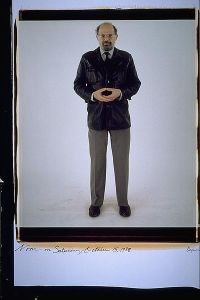
Allen Ginsberg

Allen Ginsberg, 1988

When the student is ready, the teacher will appear. So goes the Zen proverb, and for many it may be true. In my case, however, I was neither ready nor expectant. And my first guide on the path of meditation was an unlikely candidate for the position.

Allen Ginsberg visited Alfred University in October 1978.  It was a relatively tranquil time, especially when contrasted with our present era. A few weeks earlier, the Camp David Accords had been signed under the watchful eye of President Jimmy Carter. In Western New York the fall colors were at their peak. (more…)

Read Full Post »

800px-UH-1H_Flying_over_ROCA_Infantry_School_Ground_20120211Last week two Army helicopters flew over the village of Alfred, New York. Their thunder, my wife confided, unnerved her as never before.

In the wake of the mass shootings in Paris, Colorado Springs, and San Bernadino, fear has become a focus of national attention. In his address to the nation on December 6, President Obama sought to reassure us. “Freedom,” he asserted, “is more powerful than fear.” Perhaps it is in the long run, but for the time being, how can we best address the growing presence of fear in our daily lives? And how can the practice of meditation help us in that effort? (more…)

Read Full Post »

Open seaAs a boy growing up in eastern Iowa, I savored the word dwell, which I heard on many a Sunday morning. I will dwell in the house of the Lord forever, I intoned with the rest of the congregation, not quite understanding the context but reassured by the general idea. The word was pleasant to pronounce. It made a pleasing sound.

Only later did I learn that dwell bears a negative connotation. “Don’t dwell on it,” I was advised, in the aftermath of some abrasive encounter. “She didn’t mean to hurt your feelings.” Used in that fashion, dwell meant to brood, to worry, to concentrate unhealthily on some slight or insult or perceived injustice. Nowadays, for good or ill, many people use the verb obsess to describe the same habit of mind. “Don’t obsess about it,” we might advise a person who can’t stop talking about a personal dilemma, or can’t let go of a painful experience, as though that person had a choice, or our well-intentioned counsel might be helpful. (more…)

Read Full Post »

AustraliaSkyZen has been called the study of silence. “We need silence,” writes Zen master Thich Nhat Hanh, “just as much as we need air, just as much as plants need light.” But how, exactly, are we to study silence? By what means can we cultivate its nourishing presence?

Just be quiet, one is tempted to suggest. Just be still. But in a world rife with noise and distraction, that choice may no longer seem plausible–or even very desirable. In her book Reclaiming Conversation, the sociologist Sherry Turkle reports that many of the people she has interviewed, particularly young people, have an aversion to silence, finding it merely boring. They would rather go online. And as Thich Nhat Hanh observes in his book Silence, many of us are afraid to sit quietly, doing nothing. By keeping ourselves ever-busy and ever-connected, we avoid such negative feelings as loneliness, restlessness, and sadness, which can become all too present when we are silent and alone. If we wish to study and cultivate silence, it would seem, we have first to overcome our resistance, whether it be grounded in aversion or fear. (more…)

Read Full Post »

800px-Taughannock_Falls_overlook“As everyone knows,” declares Ishmael, the narrator of Herman Melville’s novel Moby-Dick (1851), “meditation and water are wedded forever.”

Melville’s schoolmaster-turned-sailor makes this remark in the opening pages of Moby-Dick, as he reflects on the lure of water, especially to those of a contemplative disposition, who are naturally drawn to ponds, lakes, rivers, and the sea. Ishmael is not a meditative practitioner in any formal sense, and as Daniel Herman, a Melville scholar and Zen practitioner, notes, “Melville almost certainly never in his life heard the word ‘Zen’.” Yet Ishmael’s remark is relevant to the discipline of Zen meditation, insofar as that remark calls attention to two salient elements of the practice. By its nature, water visibly embodies the quality of impermanence, one of the primary objects of Zen contemplation. At the same time, water also embodies the quality of constancy, which Zen teachings urge us to contemplate. “How can I enter Zen?” a student asked a master. “Can you hear the murmuring of the mountain stream?” the master replied. “Enter there.” (more…)

Read Full Post »

800px-Blue_Cliff_Monastery_-_3In its most common usage, the word intimacy hardly suggests a spiritual context. Enter the word in your browser, and you are likely to turn up references to the bedroom, the boudoir, and Britney Spears’ line of designer lingerie. Yet the root of intimate, from which intimacy derives, is the Latin intimus, which means “inmost.” And a desire for true intimacy–for connection with one’s inmost nature–is fundamental to many spiritual traditions, Zen Buddhism included. “Intimacy,” writes the Zen teacher Jakusho Kwong, “is at the heart of all of Zen.” (more…)

Read Full Post »

« Newer Posts - Older Posts »