Feeds:
Posts
Comments

Posts Tagged ‘ichigo ichie’

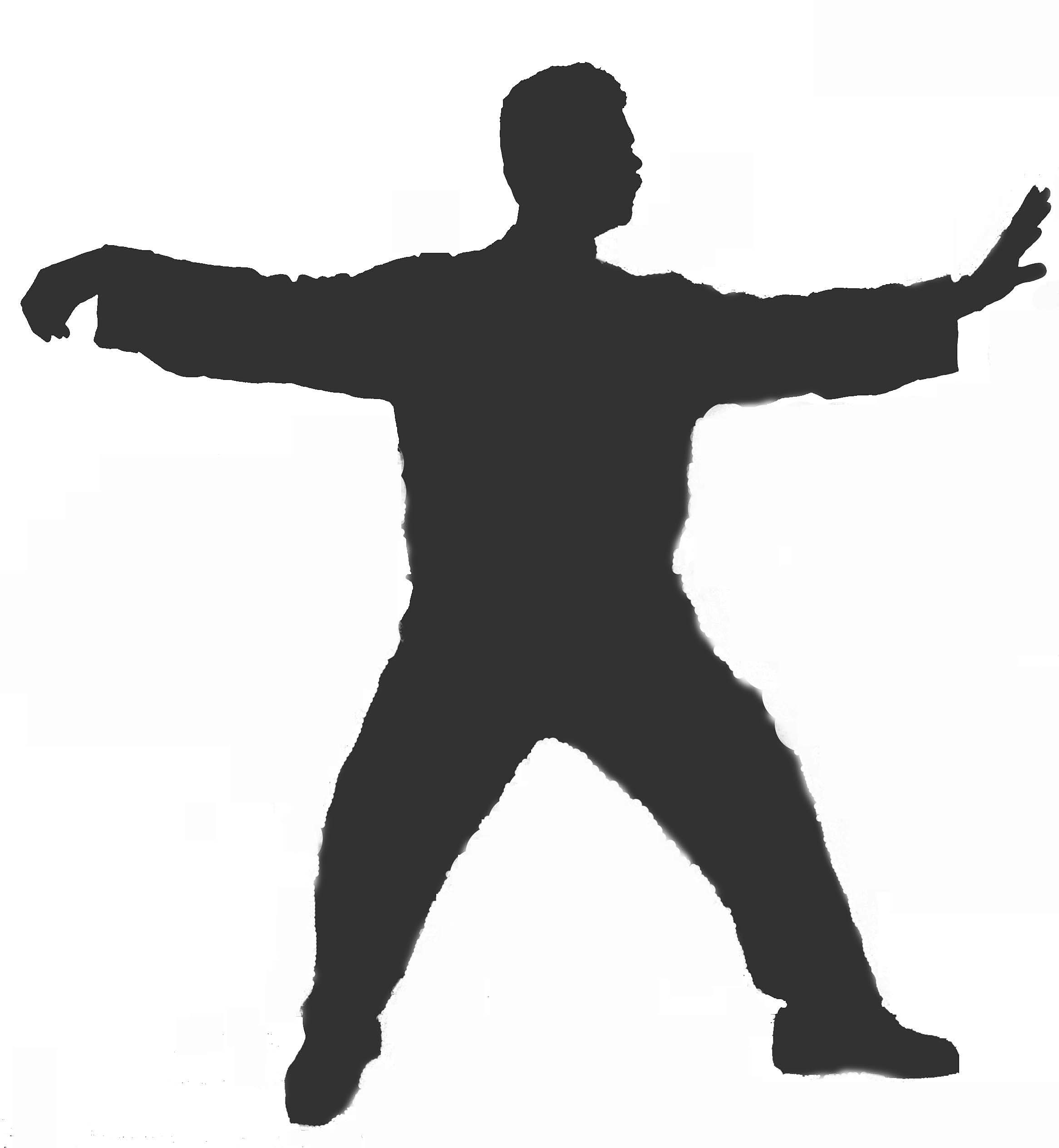
Single Whip, Guang Ping Yang Tai Chi

If you have ever played a competitive sport, you have probably been exhorted to give 100 percent. Or, as the sports cliché would have it, “110 percent.” And the attitude embodied in that exhortation extends well beyond the arena of athletics. Whether the field of activity be business or law, selling cars or playing tennis, giving 100 percent of one’s effort and energy is widely regarded as a virtue, if not a moral imperative.

In the present American workplace, those fortunate enough to be employed might have little choice but to give 110—or 150—percent, day in and day out, to their jobs and sponsoring institutions. But for the conduct of everyday life, a wiser guideline may be found in the ancient Chinese practice of Tai Chi. At once a martial art and a contemplative discipline, Tai Chi is rooted in the Taoist tradition. And a cardinal principle of Tai Chi states that the practitioner should not exceed 70 percent of his or her physical capacity. As Bruce Frantzis, a contemporary Tai Chi master, explains, “[s]triving for 100 percent inherently produces tension and stress because as soon as you strain or go beyond your capacity, your body has a natural tendency to experience fear and to begin, even without you[r] being aware of it, to tense or shut down in response.”* By staying within the limit of 70 percent, you “can use your full effort and energy, but not to the point of strain.”** (more…)
Read Full Post »


“Can there be fresh speaking and fresh listening right now,” asks the Zen-trained teacher Toni Packer, “undisturbed by what is known?”*

Packer’s question would be pertinent in any season, but it is especially so in the present season, when the usual holiday tunes are in the air, and what we are hearing is so well-known as to seem banal. Like it or not, here comes The Little Drummer Boy again—he and his drum. Given the familiarity of the old songs, is “fresh listening” possible? And if so, how shall we go about it? (more…)

Read Full Post »

Cloisters of Lisbon Cathedral

“There is this cave / In the air behind my body / That nobody is going to touch: / A cloister, a silence / Closing around a blossom of fire.”* So wrote the American poet James Wright (1927-1980) in his poem “The Jewel.” Wright’s images are enigmatic, in the way dreams are, but their import is clear. They evoke a place in the self that is silent, luminous, and inviolate. (more…)

Read Full Post »

Autumn in Kyoto, Japan

In his essay “Reading Oneself,” the writer and teacher Sven Birkerts describes the experience of encountering a long-forgotten page of his own prose. As Birkerts tells the story, he agreed to read the book manuscript of a student whom he had taught many years before. When his former student arrived at their meeting, she brought both her manuscript and Birkerts’ written evaluation of her work, which she had saved from her days in his course. Typed on the Selectric II he was using at the time, Birkerts’ prose seemed foreign to its author:

And suddenly there’s this feeling, I’ve had it before—more and more in recent years. I am reading something I’ve written and I not only don’t recognize the sentences—they’ve gone from me—I also don’t quite map to the mind that produced them. It’s very much like catching your shopwindow reflection for a split second before you realize it’s you. Almost always, the shock is negative. I look like that? With these sentences it’s the opposite. My eyes catch sight of what my hand did. Reading, I actually admire the images, the figures of speech, the confidence of the rhythm. Not the rhythm I would write in now. But I feel it as distinct.

For Birkerts this encounter with his younger self was comparable to contemplating an old photograph. “The looking,” he observes, “is mainly about taking in the differences.”* (more…)

Read Full Post »


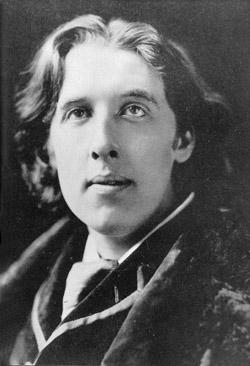
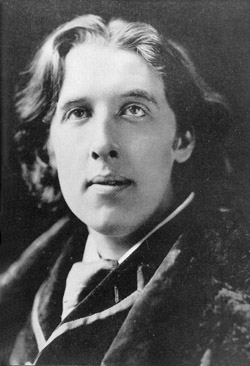
“Man is least himself,” wrote Oscar Wilde in The Critic as Artist,* “when he talks in his own person. Give him a mask, and he will tell you the truth.”

Wilde was speaking of Shakespeare, who, in Wilde’s view, revealed more of himself in his plays than he did in his sonnets. Over the years I have often recalled Wilde’s maxim, and I have had occasion to test it against my experience, both as a teacher of imaginative writing and as the author of poems, essays, and a verse novella. And by and large I have found Wilde’s notion to be true, though perhaps not in the way he intended. (more…)

Read Full Post »

When Ernest Hemingway was a cub reporter for the Kansas City Star, he learned four simple rules for writing well:

             1. Use short sentences.

            2. Use short first paragraphs.

            3. Use vigorous language.

            4. Be positive, not negative.

“Those were the best rules I ever learned for the business of writing,” Hemingway later declared. “I’ve never forgotten them. No man with any talent, who feels and writes truly about the thing he is trying to say, can fail to write well if he abides with them.” (more…)

Read Full Post »

Path of stone over water, Nanjing, South of China

If you have ever sung in a choir, you know that certain disciplines apply. You must sit up straight at the edge of your chair. You must breathe from the diaphragm. And you must open your mouth more widely than you otherwise would—widely enough to accommodate three fingers. Although these principles are simple, it is easy to forget them, especially if your mind is elsewhere.

Such was the case one morning in 1961, when I and other members of the Clinton High School A Cappella Choir sat upright at the edge of our chairs, rehearsing Michael Pretorius’s beautiful carol “Lo, How a Rose E’er Blooming.” Leading us was our director, John De Haan, a tall, ruggedly-built man with a gentle but commanding presence. Glancing in my direction, he noticed my half-open mouth. “Open your mouth, Ben,” he said, quietly but firmly, in his deep bass voice. “This is my life’s work.” (more…)

Read Full Post »

Peace Pagoda, Providence Zen Center

To live in a place is one thing, to inhabit it another. The word inhabit derives from the Latin inhabitare, which originally meant to dwell. “They shall build houses,” prophesied Isaiah, “and inhabit them; and they shall plant vineyards, and eat the fruit of them” (Isaiah 65:21). To eat the fruit of your vineyards, you cannot be flitting from one locality to another. You must dwell in one place for a while.

What is true of grape farming is also true of the practice of Zen.  “Authentic Zen,” writes Dr. James H. Austin, a neurologist and longtime Zen practitioner, “has always meant inhabiting each present moment in the most natural, direct, and spontaneous way.”[i} And in his book Being Upright, the Zen priest Tenshin Reb Anderson employs the same verb to describe the practice of zazen:

For a sentient being to practice the ultimate good means not to move. How do you realize not moving? By fully settling into all aspects of your experience: your feelings and your perceptions. Not moving means to be fully congruent with yourself. You go down to the bottom of your experience, as all buddha ancestors have done, and enter the proverbial green dragon’s cave. Graciously and gently, you encourage yourself to fully inhabit your body, speech, and thought. You may even command yourself to be obedient to yourself, and to come all the way in and sit down.[ii]l

 “Although no one issues the invitation,” Anderson further explains, we “invite the self into the self.” As both “host and guest of the self,” we fully inhabit our experience. (more…)

Read Full Post »

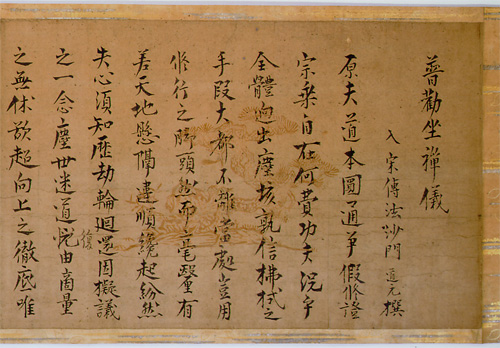
Eihei Dogen, Fukanzazengi (1233)

“It’s time for Congress to step up to its job,” writes Chris Dunn on his blog Collegiate Times. “It’s time for the Lakers to step up,” writes Darius Soriano on the Forum Blue and Gold. “It is time for webOS to step up,” writes Derek Kessler on precentral.net, if Hewlett-Packard is to compete with the iPad.  And “it is time to step up and be found faithful to God and his work,” writes Pastor Joe on the website of the Oakdale Baptist Church.

Surveying these pronouncements, one might conclude that it is time for American bloggers—and American popular culture—to find a new figure of speech. But cliches often reflect common beliefs, and behind this particular cliche lies a widely held belief that whatever the problem might be, it can best be addressed by someone stepping up. Whether the field of endeavor be politics, sports, business, or religion, this belief is so familiar as to be mistaken for empirical fact. And though the contexts in which it functions are most often practical, it also carries its share of moral weight. Those who have stepped up are to be commended. Those who have not would do well to get with the program. (more…)

Read Full Post »

In 1968 the Vietnamese Zen master Thich Nhat Hanh, then a young Buddhist monk, visited the United States. Meeting with church groups, students, and others, he sought to promote peace and reconciliation. Throughout his tour, the gentle monk was well-received, but when he spoke one evening at a wealthy church in St. Louis, he found himself confronted by an angry detractor, who stood up to challenge him. “If you care so much about your people,” demanded the man, “why are you here? If you care so much for the people who are wounded, why don’t you spend your time with them?” Taken by surprise, Thich Nhat Hanh had no choice but to respond. But what could he say? What might be an appropriate response? (more…)

Read Full Post »

« Newer Posts - Older Posts »