Feeds:
Posts
Comments

Posts Tagged ‘japan’

Tea master“Receive a guest,” advised the Zen master Soyen Shaku (1860-1919), “with the same attitude you have when alone. When alone, maintain the same attitude you have in receiving guests.”

Zen masters’ pronouncements are often enigmatic, but this one is particularly baffling. For one thing, it seems to blur, if not collapse, the distinction between social and private conduct. What we do and say when hosting a guest may be very different from our speech and behavior when no one is in earshot and no one is watching. And rather than liberate our minds, as Zen teachings purport to do, Shaku Roshi’s admonition seems unduly restrictive. When we are alone and things go awry, the words we choose to express our frustrations may be impermissible in public discourse. And conversely, the constraints we impose upon ourselves when entertaining guests may be irrelevant to the ways we dress, speak, and act when home alone.

Yet if Shaku Roshi’s advice may be puzzling to a Western sensibility, it becomes more intelligible if understood in the context of traditional Japanese culture in general and the formal tea ceremony in particular. In that venerable ritual, traditionally conducted in a tea hut, both host and guest have prescribed roles to play. The host must assemble and arrange such essentials as a Zen slogan for the hanging scroll in the alcove, seasonal flowers, and sweets to accompany the tea. And his or her physical movements throughout the ceremony must be orchestrated down to the last detail. Little wonder that tea masters train for many years to perfect their exacting art.

On the other side of the host-guest equation, guests are expected to observe the conventional protocols. Before entering the tea hut, they cleanse their mouths in water from a stone basin. Entering, they pass through a low door, requiring even the most self-important guest to assume a posture of humility.  Once inside, guests are to bow when appropriate, to assume a kneeling posture as they prepare to be served, and to express appreciation for the beauty of the tea bowls. Together, these ritualized interactions, performed within the muted setting of the tearoom, generate an atmosphere consistent with the four principles governing the formal tea ceremony: Respect, Purity, Harmony, and Tranquility.

Such an atmosphere is as rare as it is desirable, and the conditions by which it is created may well be unique to its place and occasion. But the attitudes underlying the Way of Tea, derived primarily from the Zen tradition, may be cultivated anywhere and at any time, whether one is sitting alone in zazen (seated meditation), or hosting a public event, or having a few friends over for dinner and conversation.

Chief among those attitudes is the practice of continuous attention, which encompasses both the one-pointed attention of zazen and what is sometimes called “soft eyes”: the panoramic vision required of quarterbacks, equestrians, and soldiers on reconnaissance. Just as the tea master meticulously attends to the processes of brewing and serving tea, committed Zen practitioners strive to remain mindful throughout the day, whether they are sitting in zazen, chopping vegetables, or raking leaves. And whether they are alone or in company is largely irrelevant. Although the objects of attention will differ, the quality of attention will remain the same.

Second, Zen practitioners are encouraged to remain open to whatever is presently occurring, within and without. “Include everything,” a traditional Zen slogan, encapsulates this aspect of the practice. Contrary to popular belief, Zen is not a practice of splendid isolation. Nor is it a practice of detachment. Rather, practitioners endeavor to welcome the whole of their experience but to do so with an attitude of non-attachment. Thoughts, sensations, and feelings are allowed to arrive, endure, and dissipate on their own. Practitioners may arrive at important insights, which they can act upon at a later time. But while engaged in zazen, they aspire to a state of stillness, silence, and non-judgmental awareness. “Everything” may indeed be included, but it is not to be judged, reacted to, or pursued.

Third and last, Zen practice fosters an attitude of non-separation. “We are here,” wrote the Venerable Thich Nhat Hanh, “to awaken from the illusion of separateness.” Rather than view the self as separate and apart from other people, groups, and cultures, Zen teachings urge awareness of the web of interconnectedness that unites the individual with the larger human family. In similar fashion, practitioners are encouraged to treat the natural world with reverence and respect, rather than as a resource to be ruthlessly exploited.

As twenty-first century Westerners, we live in a culture far removed from medieval Japan. But in a time when sustained attention, openness, and awareness of interdependence are often in short supply, there is much to be learned from the custom of serving and receiving tea in an atmosphere of tranquility and respect. And whatever the historical and cultural distance, there is much to be said for treating both ourselves and others as honored guests.
Read Full Post »

Falling blossoms


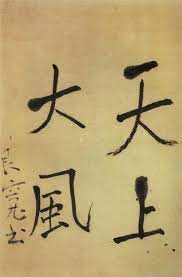
Sky Above, Great Windsdfdd

As I was walking up North Main Street in Alfred, New York a few weeks ago, I stopped to look at a row of Cleveland pear trees spanning two front yards. The trees were in full bloom. Their brilliant white blossoms caught the late-morning light.

A week later, those blossoms had fallen. Only the green leaves remained. I was reminded of a haiku by the Zen master, poet, and calligrapher Daigu Ryokan (1758-1831):

            Falling blossoms

            Blossoms in bloom are also

            falling blossoms

As Kazuaki Tanahashi, Ryokan’s biographer and translator, has noted, this haiku “presents the Zen paradox that flourishing is no different from withering.”* Flourishing and withering are two distinct phases in the life cycle of blossoming trees, but the two are one in the stream of life.

If Ryokan’s haiku embodies the paradox of non-duality, it also represents the principle of impermanence, one of the fundamental tenets of the Zen tradition. Ryokan entered a Zen temple at the age of sixteen and was ordained as a monk two years later. Through his rigorous Zen training and his intensive study of Japanese classical poetry, he was well acquainted with the truth of impermanence, a truth harshly confirmed when his father, a prominent and prosperous local official, ran afoul of the ruling shogunate and committed suicide by drowning. Yet, for all his understanding of transiency, Ryokan could still be moved by fresh evidence of that inviolable law. On one occasion, as he was walking down a path at the foot of a mountain, he came upon “an ancient cemetery filled with countless tombstones.” The names on the tombstones were obliterated, the lives of the dead long since forgotten. “Choked with tears, unable to speak,” he took his staff and returned home.

Ryokan lived alone in a thatched-roof mountainside hut, having renounced the world of money, fame, and power. A mendicant monk, he often ventured into a nearby village, where his calm presence was said to confer an atmosphere of peace on the places and people he encountered. From time to time, he invited visitors to his hut for tea or sake, but for more than twenty years, he spent the bulk of his hours in silence and solitude, tending his garden, practicing zazen, and reading and writing poetry, companioned only by the natural world:

Only two in the garden,

plum blossoms at their peak

and an old man full of years

As vivid as it is immediate, this haiku presents one of many such impressions in Ryokan’s poems. Collectively these sensuous impressions register an uncommon intimacy with the sights, sounds, and smells of his natural environment. Whether he is noting a nightingale in the brush, frogs “chanting,” “plum trees reflecting the silver moon,” hail striking bamboo, wind in the pines, or a monkey’s cries from a distant valley, Ryokan’s imagery bespeaks a cultivated openness to what the dharma teacher Gaylon Ferguson has called the “redemptive fullness” of the natural world.* In contrast to our own ubiquitous consumerism, which views fulfillment as something to be acquired from the latest consumer product, Ryokan’s poems evoke an abundance not dependent on wealth or power:

Out-breath

and in-breath

proof that the world

is inexhaustible.

Yet for all his appreciation of natural abundance, Ryokan also demonstrated a capacity for non-attachment, not only to nature but also to human preconceptions of value and importance. His most famous haiku, composed after a thief broke into his hut and stole his meager belongings, expresses that quality of heart and mind:

The thief left it behind—

the moon

at the window

Just as this haiku reflects Ryokan’s non-attachment to material possessions, his observation that “blossoms in bloom are also / falling blossoms” attests to his freedom from conventional hierarchies of value, which prize blossoms in bloom far more than their fallen counterparts. In the language of Zen,  each exists in its “suchness” and its “dharma position,” independent of human yardsticks. Practicing non-attachment, Ryokan contemplates things as they are and not as the human mind, eager to impose its rankings on whatever it encounters, would have them be.

Which is not to say that Ryokan practiced “detachment” or a cold indifference to the world of human striving and suffering. On the contrary, in one of his most piercing haiku, he voices a complaint reminiscent of many a conscientious priest, minister, rabbi, or pastor:

Oh, that my priest’s robe were wide enough

to gather up all the suffering people

in this floating world

A confession of his personal limitations, this haiku also defines Ryokan’s moral character. Little wonder that this humble hermit-poet, who spurned both the careerism of the literary world and opportunities for temporal prominence in the Zen community, is now among the most treasured poets in the Japanese Zen tradition. “When we know one Ryokan,” wrote Daisetz T. Suzuki in his Zen and Japanese Culture, “we know hundreds and thousands of Ryokans in Japanese hearts.”


* Kazuaki Tanahashi, Sky Above, Great Wind: The Life and Poetry of Zen Master Ryokan  (Shambhala, 2012), 2.

*Gaylon Ferguson, Welcoming Beginner’s Mind (Shambhala, 2024), 173.

Photo: Calligraphy by Ryokan: “Sky Above, Great Wind.”

Read Full Post »

And yet, and yet

ISSA 2

In 1973, the writer and Zen practitioner Peter Matthiessen and the field biologist George Schaller undertook an expedition to the High Himalayas in hopes of sighting the elusive snow leopard. Before departing for the Tibetan Plateau, Matthiessen consulted with his Zen teacher, Eido Shimano Roshi, at Dai Bosatsu Zendo. Drawing upon a fundamental Zen teaching, Eido Roshi advised his student to “expect nothing.” By adopting that attitude, Matthiessen would enable himself to be open and attentive to whatever he encountered. Rather than regard his expedition as a means to an end, he might treat the experience as an end in itself.

Eido Roshi’s advice may well have been sound, given Matthiessen’s slim chances of sighting so rare a creature as the snow leopard. As a guideline for living, however, “expect nothing” might best be viewed as a wise maxim to bear in mind rather than a practical motto to live by. We human beings, it’s fair to say, are hardwired not only to expect but also to hope for and fear specific outcomes. Should we attempt to banish our expectations, we are more than likely to fail. As a realistic alternative, however, we can resolve to take note of our expectations as they arise, acknowledging both their presence and their largely speculative nature. And we can endeavor to remain cognizant, moment by moment, of the ongoing tension between the time-honored wisdom of Zen and the recalcitrant realities of human nature.

Nowhere is that tension more concisely expressed than in this haiku by the Japanese poet and Buddhist priest Kobayashi Issa (1763-1828):

             tsuyu no yo wa

             tsuyu no yo nagara

             sari nagara

                        –

            The world of dew

            is only the world of dew –

            and yet, and yet

The first two lines of this haiku allude to a central tenet of the Buddhist tradition, articulated in these verses from the Diamond Sutra:

            Think in this way of all this fleeting world:

            As a star at dawn, a bubble in a stream,

            A dewdrop, a flash of lightning in a summer cloud,

            A flickering lamp, a phantom, and a dream.

Through a concentration of metaphors, these verses remind us that all conditioned things are subject to change. All are impermanent. What we may conventionally view as solid and lasting is no more permanent than morning dew. The image of a “world of dew” evokes this foundational premise of the tradition in which the poet-priest Issa was trained.

“The world of dew” also reflects a cardinal principle of Japanese art and poetry.  According to this principle, known as mono no aware, the transience of the things of this world is both a locus of their pathos and a source of their beauty, whether those transient things be cherry blossoms, bubbles in a stream, or our own brief existence on this planet. Beautiful, ephemeral things are moving and beautiful because they are transient. A visual artist as well as a poet, Issa was steeped in Japanese cultural traditions, and as his haiku demonstrates, his aesthetic was deeply aligned with the convention of mono no aware.

But Issa was also a husband and father who had experienced profound losses in his life, including the deaths of his first wife, several of his children, and, shortly before writing the present haiku, the loss of his two-and-a-half-year-old daughter to smallpox. Introducing his haiku in his travel journal The Springtime of My Life, he recounts that devastating experience:

Her mother clutched her cold body and wailed. I knew her heartbreak but also knew that tears were useless, that water under the bridge never returns, that scattered flowers are gone forever. And yet nothing I could do would cut the bonds of human love.

In popular iconography, Japanese Zen is sometimes viewed as a meditative version of samurai culture: a practice marked by “detachment” and the stoic repression of feeling. Contrary to that popular conception, authentic Buddhist practice—and the Zen-based practice of haiku—foster direct engagement with external realities, particularly the realities of impermanence and death. Rather than turn away, practitioners are admonished to make those realities objects of contemplation. At the same time, the practice also encourages continuous awareness of (and non-attachment to) one’s changing moods and feelings, however pleasant or painful they may be.

Hence the last line of Issa’s haiku. Occurring just after the “turning” characteristic of the haiku form, the repeated phrase “and yet” acknowledges the emotional dimension of his present experience: the upwelling of grief triggered by the death of a child. And though it leaves much unsaid, this repeated phrase leaves little doubt as to its meaning.

“The deepest feeling,” wrote the American poet Marianne Moore, “always shows itself in silence; / not in silence but restraint.” As silent and restrained as a poem can be, Issa’s haiku is all the more piercing for its reticence and all the more affecting for its restraint. If you would live wisely, it seems to say, expect nothing. And yet, and yet.

    —–

Image: Kobayashi Issa

Her mother clutched her body: Sam Hamill & J.P. Seaton, The Poetry of Zen (Shambhala, 2004), 172-3.

Marianne Moore,  “Silence,” in The Complete Poems of Marianne Moore (Macmillan, 1972), 91.

Read Full Post »