Feeds:
Posts
Comments

Over the past year we have heard a great deal about collective anger. During the run-up to the midterm elections, the news media provided daily reports on the anger of the American electorate, and it would appear that many took their anger to the polls. However, amidst all the expressions of anger, political and otherwise, words of gratitude have been in short supply. Now that the season of thanksgiving is upon us, where shall we find those words?

The world’s great spiritual traditions abound in expressions of gratitude, and if you are affiliated with one of those traditions, you may already have all the words you need. If you are not, however, or if you would like to refresh your sense of gratitude, you may wish to explore three practices from the Zen and Vipassana traditions.

The first practice concerns the body, which many of us take for granted. If our organs and limbs are functioning normally and causing us no discomfort, we often give them scant attention, sometimes at the expense of our well-being. To counter that tendency, Zen master Thich Nhat Hanh recommends that we sit still, follow our breathing, and silently recite verses such as these:

Breathing in, I know that I have two good eyes

Breathing out, I feel joy

– – –

Breathing in, I am aware of my heart

Breathing out, I am grateful for my heart

Proceeding through the various parts of our bodies, as a doctor might, we acknowledge the normal functioning of our lungs, stomach, liver, and so on. We express our gratitude that each is serving us well. The purpose of this exercise is not to cheer ourselves up or convince ourselves that we feel something we don’t. Rather, it is to put us in touch with our latent capacity for gratitude, which may have yet to manifest in conscious feeling. In Vipassana meditation, such practices are known as bhavana, or mind/body cultivation, and they are an essential component of meditative discipline.

A second practice is the meal chant. Comparable to grace-before-meals in the Judeo-Christian tradition, this practice raises our awareness of the nature and origin of the food we are about to eat. Here is Thich Nhat Hanh’s translation of one traditional text, known in Zen as the Five Contemplations:

This food is the gift of the whole universe: the earth, the sky, and much hard work.
May we live in mindfulness so as to be worthy to receive it.
May we transform our unskillful states of mind and learn to eat with moderation.
May we take only foods that nourish us and prevent illness.
We accept this food so that we may realize the path of understanding and love.

In Zen centers and monasteries around the world, these lines and others like them are chanted or recited in unison before each of the daily meals.  For secular Westerners, group recitation may be impractical, but anyone can silently recite the Five Contemplations before tucking into a meal, whether the food on the table be a red-lentil curry or turkey with all the trimmings. Practiced wholeheartedly, meal chants can change our relationship, gradually but radically, with the food we consume.

The third practice is the most general of the three. Formulated by the Vipassana teacher Jack Kornfield, it is a kind of litany, which expresses gratitude not only for our bodies and our food but for our very presence in the cosmos:

With gratitude I remember the people, animals, plants, insects, creatures of the sky and sea, air  and water, fire and earth, all whose joyful exertion blesses my life every day.
With gratitude I remember the care and labor of a thousand generations of elders and ancestors who came before me.
I offer my gratitude for the safety and well-being I have been given.
I offer my gratitude for the blessings of this earth I have been given.
I offer my gratitude for the measure of health I have been given.
I offer my gratitude for the family and friends I have been given.
I offer my gratitude for the community I have been given.
I offer my gratitude for the teachings and lessons I have been given.
I offer my gratitude for the life I have been given.*

Although this text is particularly apt for the Thanksgiving holiday, it really knows no season. It can be recited, singly or collectively, at any time or place, and its cumulative effect can be transformative.

The late John Daido Loori Roshi once remarked that if we voiced our gratitude rather than our complaints every morning, in a year’s time we would become grateful people. That is a lot to ask, especially when anger is so pervasive, and when there is so much to fear and complain about. But as a succinct reminder, here is a poem by the twelfth-century Japanese poet Saigyo:

GRATITUDE

Whatever it is,

I cannot understand it,

although gratitude

stubbornly overcomes me

until I’m reduced to tears.**

If this poem speaks to you, you might post it on your fridge. Or perhaps above your TV.

_____________________________

*Jack Kornfield, The Wise Heart (Random House, 2008), 399-400.

**Translated by Sam Hamill, Gratitude (Boa Editions, 1998).

The dish pictured above is Curried Red Lentil and Barley Soup. The image is taken from the website The Joy of Mindful Cooking (http://mindfulcooking.org/) and is used with the kind permission of Eve Heidtmann.

“Calm the heart’s dark waters,” advised the third-century Chinese poet Lu Chi. “Collect from deep thoughts the proper names for things.”

I was reminded of Lu Chi’s admonition the other day, when I came upon a poem by the Irish poet Pearse Hutchinson (b. 1927). Entitled “She Fell Asleep in the Sun,” the poem concerns the children of unwed mothers.  Embedding Irish-Gaelic phrases within his English text, Hutchinson presents two, very different ways of describing such children. In so doing, he also presents two contrasting perspectives on human frailty.

“She fell asleep in the sun,” explains the narrator of the poem, is an Irish way of saying that a young woman got pregnant unintentionally. “That’s what they used to say,” the narrator recalls, “in South Fermanagh / of a girl who gave birth / unwed.” Shifting the scene to County Kerry, the narrator invokes a phrase used in that part of the country: “leanbh on ngrein: / a child from the sun.” As a third example, he describes another “child from the sun”: a “little lad running round a farmyard” in North Tipperary. Watching the child, his “granda” remarks that the boy is “garsuinin beag mishtake.” That phrase may be translated as “the little lad’s a mistake” or “the lad’s a little mistake.”

Taken together, the Irish phrases in Hutchinson’s poem express an attitude of realism, acceptance, and forgiveness. In subsequent stanzas, the narrator praises that attitude—and wonders whether it can survive in modern times:

A lyrical ancient kindness

that could with Christ accord.

Can it outlive technolatry?

or churches?


Not to mention that long, leadranach,

latinate, legal, ugly

twelve-letter name not

worthy to be called a name,

that murderous obscenity—to call


any child ever born

that excuse for a name

could quench the sun for ever.*

Pairing a narrow morality, as preached in certain churches, with the worship of technology, these lines inquire whether the Christ-like kindness of the older culture can endure in twentieth-century Ireland. Embodied in the phrases of an endangered language, that kindness seems itself endangered, a mode of feeling that may soon be leaving the world.

Among the forces eroding that mode of feeling, Hutchinson cites a  “legal, ugly, / twelve-letter name.”  As the reader may readily infer, that unspoken, Latinate name is illegitimate. In contrast to the vivid, concrete Irish phrases, the abstract English word conveys a tedious (leadranach), judgmental attitude toward the mother’s “mistake” and the child who must bear the consequences of her actions. Rather than welcome the child into the human family, the English word defines him as an outcast, murdering his spirit and quenching the life-giving sun.

Of the two perspectives in his poem, Hutchinson clearly favors the first. Adopting that perspective, we might empathize with the plight of mother and child. We might look into the conditions that brought her son into being and try to imagine the life ahead of him. And we might also admit that at times we have done foolish, irresponsible things ourselves. Adopting the second perspective, however, we might observe that the child is indeed illegitimate, as judged by accepted norms, and that to call him a child from the sun is to soften a social reality, poeticize a legal fact, and implicitly condone unwed motherhood. In passing we might note that calling a child a “mistake” may be only a little less damaging than calling him illegitimate.

One of the virtues of meditative practice, Zen included, is that it allows us the space and freedom to examine our responses to human frailty, whether judgmental or compassionate or somewhere in between, before taking action or saying a word. In contemporary American culture, the judgmental response has become reflexive, even in putatively “spiritual” circles. But a compassionate response is also possible, and the mind of compassion is often more penetrating than that of moral judgment, which tends to distance us from the conditions of human suffering. And should we deign to look deeply into the heart’s dark waters, we may discover that in our own ways we too are children from the sun.

_______________

*Pearse Hutchinson, “She Fell Asleep in the Sun,” An Anthology of Modern Irish Poetry, ed. Wes Davis (Harvard University Press, 2010), 183-4.

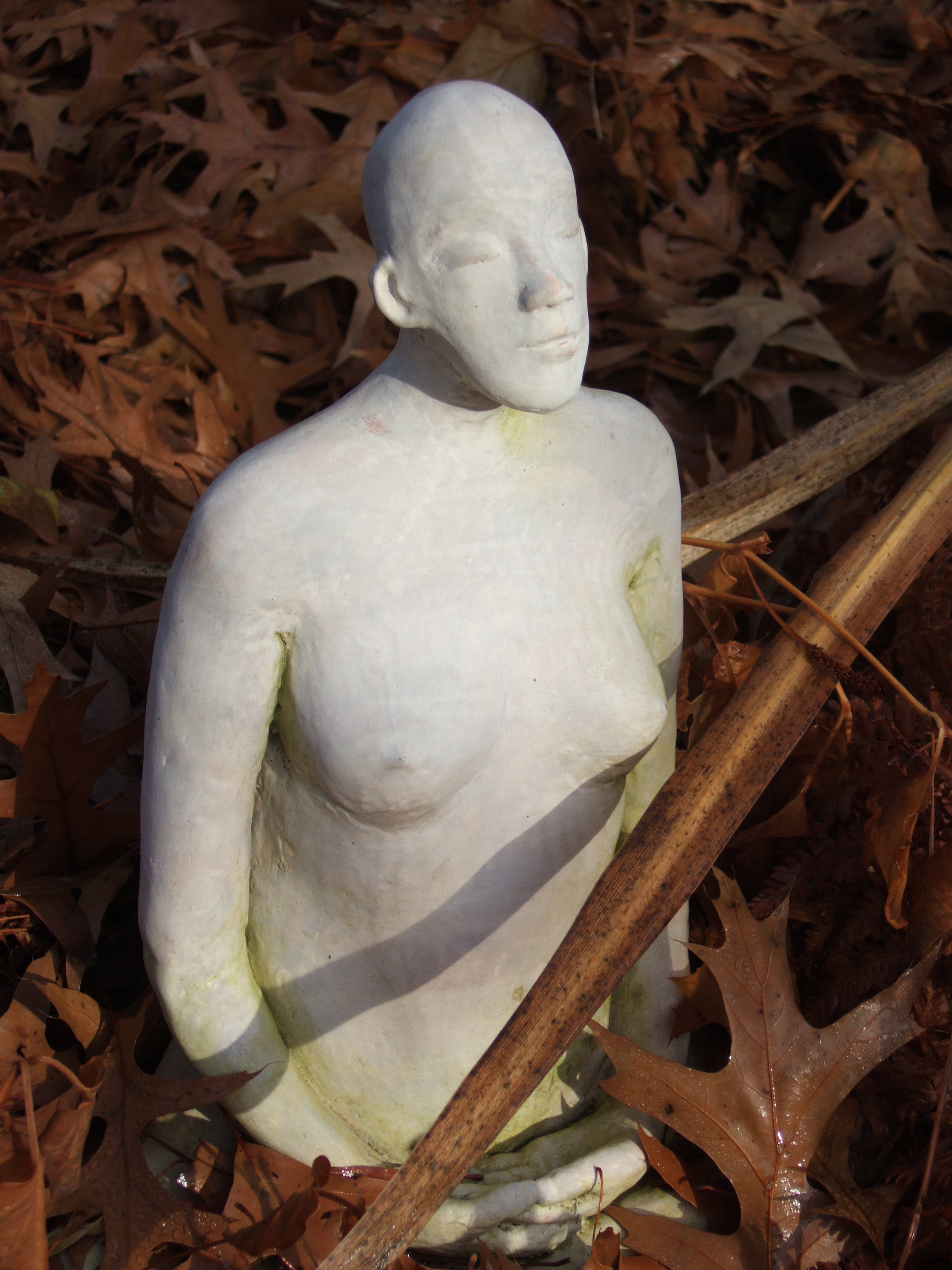
Garden sculpture by Robin Caster Howard.

70. Hope is not a plan

In “Letting Go,” an illuminating article on care for the dying, the surgeon and author Atul Gawande examines the choices that terminal patients and their families face at the end of life. Contrasting hospice with hospital care, he reports a remarkable finding:

Like many people, I had believed that hospice care hastens death, because patients forgo hospital treatments and are allowed high-dose narcotics to combat pain. But studies suggest otherwise. In one, researchers followed 4,493 Medicare patients with either terminal cancer or congestive heart failure. They found no difference in survival time between hospice and non-hospice patients with breast cancer, prostate cancer, and colon cancer. Curiously, hospice care seemed to extend survival for some patients; those with pancreatic cancer gained an average of three weeks, those with lung cancer gained six weeks, and those with congestive heart failure gained three months.*

Reflecting on this finding, Dr. Gawande concludes that the “lesson seems almost Zen: you live longer only when you stop trying to live longer.”

“Almost Zen” is an approximation, akin to the modifier “Zen-like,” which often obscures what it purports to describe. But in associating this particular “lesson” with Zen practice, Dr. Gawande comes close to the mark. Shunryu Suzuki Roshi, author of Zen Mind, Beginner’s Mind, often admonished his students to have “no gaining idea” when practicing Zen meditation. Other teachers have done the same.  Those Medicare patients who chose to forgo hospital treatment were indeed rejecting a gaining idea: that of a longer life at any cost. Ironically, by choosing hospice care, they not only improved the quality of their last days and avoided the debilitating side-effects of hospital treatments. They also lengthened their lives.

Yet it is one thing to know that you have a fatal illness and another to accept that you are dying. “I’d say only a quarter have accepted their fate when they come into hospice,” observes Sarah Creed, a hospice nurse quoted by Dr. Gawande. “Ninety-nine per cent understand they’re dying, but one hundred per cent hope they’re not. They still want to beat their disease.” Such hope is only human. Only a very cold observer would presume to judge it adversely. But to deny that one is dying, when that is in fact the case, is not a constructive way to prepare oneself or one’s loved ones for the inevitable. Nor is it the way of Zen.

The Zen teacher Charlotte Joko Beck, who is nothing if not tough-minded, once proclaimed that to practice Zen, we have to “give up hope.” When that statement angered some of her students, she explained what she had meant:

Sounds terrible, doesn’t it? Actually, it’s not terrible at all. A life lived with no hope is a peaceful, joyous, compassionate life . . . . [W]e are usually living in vain hope for something or someone that will make my life easier, more pleasant. We spend most of our time trying to set life up in a way so that will be true; when, contrariwise, the joy of our life is just in totally doing and bearing what must be borne, in just doing what has to be done. It’s not even what has to be done; it’s there to be done so we do it.**

Joko Beck’s tone is blunt, and her perspective may be difficult to accept. But that perspective accords with Dr. Gawande’s, insofar as it admonishes us to accept the harshest of realities and to act accordingly. Addressing the question of hope, Dr. Gawande recalls the example of Stephen Jay Gould, who survived a rare and lethal cancer for twenty years. “I think of Gould,” Dr. Gawande remarks, “every time I have a patient with terminal illness. There is almost always a long tail of possibility, however thin.” There is nothing wrong with looking for that tail, he acknowledges, “unless it means we have failed to prepare for the outcome that’s vastly more probable.”  What is wrong is that “we have created a multitrillion-dollar edifice for dispensing the medical equivalent of lottery tickets . . .  Hope is not a plan, but hope is our plan.” As a wiser alternative, he advocates open discussions, funded by medical insurance, between terminal patients, their families, and their doctors.  Conducted with patience and candor, discussions of this kind can clarify what is most important to the dying person. And having had such discussions, people are “far more likely to die at peace and in control of their situation, and to spare their family anguish.”

Reading Dr. Gawande’s prescription, I am reminded of the experience of Shinge Roko Sherry Chayat Roshi, Abbot of the Zen Center of Syracuse, whose mother recently passed away. During the days before her death, Shinge Roshi talked with her mother about books, art, and music. She edited her mother’s memoirs—and helped her write the ending. Her mother, in turn, saw to it that her affairs were in order. Accepting her imminent death, she gave her daughter a list of things to do, people to call, and last thoughts. For Shinge Roshi, the experience of being with her mother during and after her passing awakened feelings of profound gratitude.  It was, she said, as miraculous as birth.

________________

* Atul Gawande, “Letting Go,” The New Yorker, July 26, 2010 (http://www.newyorker.com/reporting/2010/08/02/100802fa_fact_gawande).

** Charlotte Joko Beck, Everyday Zen (HarperSanFrancisco, 1989), 66, 68.

One afternoon last summer, I did what many people seem to do: I stepped out of a hotel elevator and took a wrong turn. Realizing that I was headed toward a potted plant rather than my room,  I did a discreet about-face, maintaining my dignity as best I could. What were you thinking?I asked myself. Assuming that I was thinking at all, my thoughts had not been in accord with reality.

To point the thinking mind in the direction of reality is an abiding aim of Zen meditation. In Zen teachings, such thought is called “Right Thinking,” “right” meaning “in accordance with things as they are.” To help us cultivate Right Thinking, Zen master Thich Nhat Hanh has devised four practices, which can be employed whenever we have a decision to make or a problem to solve. Taken singly, these practices help to align our thinking with reality. Taken together, they provide a guide to wise and harmonious living.*

The first practice is to ask ourselves, “Are you sure?”  As Thich Nhat Hanh has often observed, many of our perceptions are erroneous, and erroneous perceptions cause suffering. To take but one example, the recent Pew Forum survey of religious knowledge found that more than a quarter of Americans thought that the Golden Rule was one of the Ten Commandments. While that misperception is unlikely to cause much suffering, it well illustrates the disparity between belief and fact, a disparity that seems to be growing larger every day, as misinformation proliferates and is distributed at lightning speed. Thich Nhat Hanh recommends that we write “Are you sure?” on a large piece of paper and hang it where we will see it often. Perhaps it would make a good screen saver as well.

The second practice is to ask ourselves, “What am I doing?” Although the answer might seem obvious—“I am feeding the birds”; “I am reading a column on Zen meditation”—this question counters the habit of rushing into the future. It returns us to the present moment. For example, if you are up on a ladder cleaning out your gutters but thinking about something else, asking this question can bring your wandering mind back to the task at hand. That is important for your safety as well as your presence of mind. Asking “What am I doing?” can also reveal the extent to which our thoughts are conditioned—if not created—by whatever we are doing. Having that awareness, we may be less inclined to believe our passing thoughts or lose ourselves in speculation.

The third practice is to say, “Hello, habit energy.” By “habit energies” Thich Nhat Hanh means our “ingrained thoughts,” our habitual patterns of thinking and behaving. “Our way of acting depends on our way of thinking,” he observes, “and our way of thinking depends on our habit energies.” To become aware of those energies is often to diminish their power. And by addressing our habits directly, we accept and befriend them, rather than feel guilty about having them. Over time, this practice can keep us from applying tired, habitual ways of thinking to fresh situations. Insofar as we can recognize the habitual components in our thinking, we can respond with wisdom rather than react with reflexive judgment.

The fourth practice is bodhicitta, which translates as “the mind of love.” In Thich Nhat Hanh’s words, the mind of love is the “deep wish to cultivate understanding in ourselves in order to bring happiness to many beings.” By making bodhicitta the basis of our thinking, we guide ourselves toward compassionate speech and action. This practice may well be the most important of the four, but in my experience it is also the one most likely to be forgotten when conflict arises. How easy it is to think poorly of someone who has insulted us. How hard it is to cultivate the mind of love when subjected to calumny or manifest injustice. Yet not to do so is to cloud one’s thinking and to foster speech and actions that one may later regret. Like the other practices, bodhicitta affords us protection as well as guidance, steering us away from actions that will do harm to ourselves and others.

As Thich Nhat Hanh makes clear, the practice of Right Thinking is not a substitute for meditation. The practice is merely a “map,” and when we have arrived at our destination, “we need to put down the map and enter the reality fully.” That is sound advice, especially for the practice of Zen, which regards conceptual thinking, however wise or foolish, as a barrier to the direct experience of reality. But the map provided by Thich Nhat Hanh can prepare us for meditation, and it can assist us in implementing meditative insight. Like a patient friend, it can help us find our way.

_______________

*Thich Nhat Hanh, The Heart of the Buddha’s Teaching (Parallax, 1998), 55-58.

68. The leaves’ fossils

If you have looked hard at a single object, you may have found that an image of the object lingers even after you’ve looked away.

Such is my experience every morning, when I drink green tea from a small porcelain cup. Looking down, I see the cup’s white rim, which forms a perfect circle. Looking up, I see that same circle, now in black, projected against the bamboo rug.  In its main features the image resembles the enso, or Zen circle–a symbol of enlightenment and absolute reality.

Not all images are so benign, nor is their duration so brief. The poet Ezra Pound famously defined the image as “an intellectual and emotional complex in an instant of time.” And if that image is laden with emotional content, it may be virtually ineradicable. In her poem “Quai d’ Orleans,” Elizabeth Bishop observes barges on the river Seine, comparing their wakes to giant oak leaves, which extinguish themselves on the sides of the quay. Deepening her analogy, Bishop contrasts the disappearance of the wakes with the endurance of human memories, especially memories of loss. “If what we see could forget us half as easily,” she reflects, “as it does itself—but for life we’ll not be rid / of the leaves’ fossils.”*

Zen meditation is essentially a process of stopping and looking. Amidst the multiple distractions of everyday life, the images in our psyches may well escape notice, but when we sit still, follow our breathing, and have a look at our interior lives, those images often return with a vengeance, bearing their cargo of memories and associations. How, if at all, should we respond to them? What, if anything, should we do?

Perhaps the most reflexive response is to pursue the image: to dwell in the past. Encountering the image of a barge, for example, I might recall the scenes of my childhood, when I sat for hours on the banks of the Mississippi River, watching the barges pass. Pushed by powerful “towboats,” those massive platforms transported steel, coal, and other freight north toward Lock and Dam 13. Viewed from a distance, the barges appeared to be moving slowly, as they rounded the bend and gradually disappeared. But in fact they were moving at a rapid, dangerous clip, and boaters were well advised to stay out of their way. Remembering their bulk and speed, I recall that one of my schoolmates, a third grader named Michael Stone, drowned one night beneath a barge. A few days earlier, I had wrestled with him on the playground.

Such memories haunt us, and it is tempting to pursue them. But to do so is not the way of Zen meditation, whose aim is situate our minds and hearts, vividly and continuously, in the reality of the present moment. The Bhaddekaratta Sutta (Sutra on the Better Way of Living Alone), a guiding text for Zen practitioners, states this aim directly:

Do not pursue the past.

Do not lose yourself in the future.

The past no longer is.

The future has not yet come.

Looking deeply at life as it is

in the very here and now,

the practitioner dwells

in stability and freedom.

The sutra goes on to explain what is meant by “pursuing the past”:

When someone thinks about the way his body was in the past, the way his feelings were in the past, the way his perceptions were in the past, the way his mental factors were in the past, the way his consciousness was in the past; when he thinks about these things and his mind is burdened by and attached to these things which belong to the past, then that person is pursuing the past.

By contrast, when a person thinks about those same things but his mind is neither “enslaved by nor attached” to them, then that person is not “pursuing the past.”**

To think about the past without being enslaved by it is a formidable challenge, but there are ways of meeting that challenge. Jack Kornfield, a clinical psychologist and renowned Vipassana teacher, advises us to heal the wounds in our psyches by bringing meditative awareness—“that which knows”—to our painful memories. Similarly, Zen master Thich Nhat Hanh urges us to review the past and “observe it deeply” while “standing firmly in the present.” In that way our destructive memories can be transformed into something constructive. In either case, the method is first to ground ourselves in the present, and second, to cultivate a generous, clear awareness, in which images from the past, however troubling or enticing, arrive and last for a while but do not become objects of obsessive thought. Like barges observed from a river bank, they interest but do not overwhelm us.

___________________

* Elizabeth Bishop, “Quai d’ Orleans,” The Complete Poems: 1927-1979 (Farrar, Straus and Giroux,1984), 28.

**Thich Nhat Hanh, Our Appointment with Life: Discourse on Living Happily in the Present Moment (Parallax, 1990), 6.

Enso (Zen circle) by Shinge Roko Sherry Chayat Roshi.

67. The sound of tea

Of the sounds of this world, few are more pleasing than that of tea being poured, quietly and gently, into a porcelain cup.

That sound may he heard every Sunday evening, when the Falling Leaf Sangha, our local sitting group, meets to practice seated and walking meditation. With the striking of a gong, one of our members rises from her cushion. One by one, she serves us, pouring hot green tea into each of our cups. Amplified by the spacious, silent room, the trickling sound of tea brings to mind a bubbling stream or a miniature waterfall.

Listening to that sound in that place, I am sometimes reminded of the story of the monk Kyosho, who asked his teacher, Gensha (834-908), how to enter the practice of Zen.

“Do you hear the murmuring of the mountain stream?” asked Gensha.

“Yes,” Kyosho replied.

“Then enter there.”

With that reply, we are told, Kyosho experienced a spontaneous awakening.

To be sure, Gensha could have chosen other means. He could have advised his disciple to study Zen teachings and traditions. He could have prescribed a course of instruction. Instead, he exhorted Kyosho to listen: to put his logical, reasoning faculties in abeyance and to open his body and mind to the sounds of the world. In so doing, Gensha also pointed Kyosho toward an encounter with absolute reality and a deeper understanding of the self.

To listen with full attention to any sound is to awaken from one’s daydreams and speculations and return to the reality of the here and now. In the story of Gensha and Kyosho, the sound could have been almost anything: the sough of wind in the trees, the scrape of sandals on the road, the sound of Kyosho’s own name. By choosing water, however, Gensho called Kyosho’s attention to a phenomenon that was unmistakably concrete, liquid, and transitory. As anyone who has listened to the flow of water knows, the sound induces a sense of calm, a mood of tranquility. But it also places the contemplative in the presence of impermanence, fostering the realization that what appears to be fixed is really fluid and subject to change. In time, the water in the mountain stream may become a lake, or ice, or a cloud, or water vapor. It is anything but solid.

And what is true of the stream is also true of all conditioned things, including the entity we are pleased to call the self. Zen teachings and the larger body of thought from which they derive do not propose that the self does not exist. Rather, they urge the recognition that what we imagine to be a solid self is in fact a fluid collection of experiences, a shifting aggregate of “form, feelings, perceptions, mental formations, and consciousness.” And though we imagine that self to have an intrinsic existence, separate from the rest of the world, it is really an integral element in the web of life, susceptible like water to changing causes and conditions. The Zen teacher Charlotte Joko Beck likens it to a whirlpool in a river. Certainly that whirlpool exists, but it has no permanent form. We don’t have to expend our energies pretending that it does, or attempting to hold it in place.

Paradoxically, the way to engender that liberating recognition is not to analyze the concept of emptiness, or struggle to envision the One Body of absolute reality, or engage in abstract thinking generally. Rather, it is to reconnect with what Zen calls our relative existence: our day-to-day, ordinary lives, experienced with openness and full awareness. And one of the best ways we can do this is through the act of listening, both to ourselves and to the world around us.

If you would like to demonstrate this to yourself, please sit still for a few minutes, following your breathing and collecting your scattered energies. Then do nothing but listen to whatever is occurring within and around you. If you are in a public space, listen to the voices in your environment, as they express their anxieties or joys, their elation or their sorrows. Listen, if you can, to what the novelist George Eliot called the “roar” on the “other side of silence”—the roar of human suffering. If you are at home, listen to your breathing, to the processes of your body, and to your ego as it arises, asserts itself in speech, and dissolves into the silence of awareness. Then, when you are ready, pour yourself a cup of tea, and listen to the sound.


66. Back to school

Sheila Pepe at Alfred University

This is the season when students go back to school. Here in Alfred, New York, the college students have already returned, and the yellow buses will soon be rolling again. There is a youthful freshness in the air.

Zen students also go back to school, but that action occurs with each new sitting, each fresh encounter with things as they are. Shunryu Suzuki Roshi describes the process in this way:

Once in a while you should stop all your activities and make your screen white. That is zazen. That is the foundation of our everyday life and our meditation practice. Without this kind of foundation your practice will not work. All the instructions you receive are about how to have a clean white screen, even though it is never pure white because of various attachments and previous stains.*

The clean white screen to which Suzuki Roshi refers is a mind without prejudice or expectations, judgments or rigid notions. In the Zen practice of shikantaza, or “just sitting,” the mind of the practitioner becomes the mental counterpart of a clean new notebook—or what, in grade school, we used to call our tablets. Open and unmarked, such a mind is ready to receive whatever comes its way.

Yet, as Suzuki observes, the screen is not pure white. Attachments and stains prevent our minds from being immaculate or entirely open. Prominent among those attachments is our fear of the unknown and our expectation, conscious or otherwise, that whatever we encounter should fit our preconceptions. And prominent among the stains is our previous knowledge, which ought to help us interpret experience but often has the opposite effect.

Commenting on what Zen calls “the barrier built of knowledge,” Zen master Thich Nhat Hanh distinguishes between mere knowledge and true understanding:

Old knowledge is the obstacle to new understanding. . . . Like those who are awakened, great scientists have undergone great internal changes. If they are able to achieve profound realization, it is because their powers of observation, concentration, and awareness are deeply developed.

Understanding is not an accumulation of knowledge. To the contrary, it is the result of the struggle to become free of knowledge. Understanding shatters old knowledge to make room for the new that accords better with reality. When Copernicus discovered that the Earth goes around the sun, most of the astronomical knowledge of the time had to be discarded, including the ideas of above and below. Today, physics is struggling valiantly to free itself from the ideas of identity and cause/effect that underlie classical science. Science, like the Tao (Way), urges us to get rid of all preconceived notions. **

Whether the preconceived notion is that of the pre-Copernican universe or the assumption of cause and effect, conventional wisdom quickly grows obsolete, and it can bar the way to a deeper understanding. Elsewhere, Thich Nhat Hanh defines that understanding as “direct and immediate perception,” “an intuition rather than the culmination of reasoning.”

To cultivate direct, intuitive perception is the real work of the Zen practitioner. That work may be aided by the acquisition of conceptual knowledge, including intimate knowledge of Zen teachings and traditions. But unless that knowledge is integrated with direct experience, it can indeed become a positive hindrance. For the work of the Zen practitioner is to enter this present moment, becoming fully and sometimes fiercely aware of whatever is occurring. And as Roko Shinge Roshi has observed, to enter the present moment we “have to let go of everything extraneous—what we think regarding this moment, what we add to it, or try to take away from it.” Practicing Zen is not a process of acquisition, nor is its aim the mastery of a body of knowledge. On the contrary, it is in large part a process of unlearning, of becoming aware of our layers of conditioning rather than adding another layer.

To those of us who grew up in the competitive world of Western education, such a practice runs against the grain, and it may seem formidably foreign. But insofar as the aim of Zen practice is to help us navigate a complex, rapidly changing world, it shares common cause with our universities, colleges, and schools. And insofar as the practice engenders, as it often does, a passion for inquiry and a heightened sense of discovery, its spirit is congruent with that of Western education. In each new moment, we are going back to school.

_____________

*Shunryu Suzuki, Not Always So (HarperCollins, 2002), 51-52.

**Thich Nhat Hanh, The Sun My Heart (Parallax, 1988), 50-51.

In the photo above, visiting artist Sheila Pepe teaches a class in Foundations at the School of Art and Design in the New York State of College of Ceramics at Alfred University. Photo by Robin Caster Howard.

Shadow

When greyhounds race on a track, they chase an artificial rabbit. Mistaking that furry object for the real thing, they pursue it with all their might.

During a recent greyhound race in Australia, however, a living, breathing rabbit wandered onto the track. Spotting that hapless creature, a greyhound named Ginny Lou took off in hot pursuit, leaving the other dogs to their delusion. Apparently, Ginny Lou could distinguish between the illusory and the real, and she chose to pursue the latter.

To make that distinction is also the work of the Zen practitioner. And to reconnect us with our actual lives is a defining aim of Zen meditation. The poet Czeslaw Milosz once described the art of poetry as the “passionate pursuit of the Real,” and much the same might be said of Zen practice. During the course of a day we might expend the bulk of our energy chasing artificial rabbits, but when we are practicing Zen meditation, we are pursuing the real one: the moment-to-moment reality of things as they are.

That pursuit often begins with the body. The Sutra on the Full Awareness of Breathing, a foundational text for Zen students, directs the practitioner to recite, “Breathing in, I am aware of my body // Breathing out, I calm my body.” In keeping with that prescription, the contemporary Zen teacher Zoketsu Norman Fischer advises us to begin a sitting by sweeping our awareness lightly through our bodies. “The point,” he explains, “is to arrive in the body, to be aware of the body as sensation and process, to ground [ourselves] in the body as basis so that thought and emotion don’t fly too far afield.” * In similar fashion, Zen master Thich Nhat Hanh directs us to bring compassionate awareness to the various parts of our bodies, including our internal organs: “Aware of my lungs, I breathe in. / Smiling to my lungs, I breathe out. / Aware of my heart, I breathe in. / Bringing kind attention to my heart, I breathe out.” By such means, we return to our bodies, grounding ourselves in our physical lives.

Having established ourselves in that awareness, we can then turn our attention to our states of mind. In Zen teachings, mind and body are often seen as aspects of each other. “What happens to the body,” Thich Nhat Hanh reminds us, “happens to the mind.” By being aware of the present state of the body—relaxed or tense, energetic or fatigued, balanced or imbalanced—we may already be aware of our present state of mind. To sharpen that awareness, however, we might ask ourselves, “What is my state of mind just now?” Or, more concretely, “Is my mind/body tight or loose?” Employing that classic analogy (which originally referred to the strings of a lute), we can then investigate the causes of tightness or looseness, identifying such specific states as craving, fear, or anger, on the one hand, or balance, elation, and equanimity, on the other. And as with awareness of the body, we can bring kind attention to whatever state of mind we may be experiencing, noting the effect of our awareness on our fear or anger, our craving or agitation.

Meditation of this kind steadies the body and mind. In Zen practice, however, it also serves a broader aim, which is the recognition and acceptance of our present lives, just as they are, just now.  “Do not get carried away,” Dogen Zenji admonishes us in his Instructions to the Cook, “by the sounds of spring, nor become heavy-hearted upon seeing the colors of fall. View the changes of the seasons as a whole, and weigh the relativeness of light and heavy from a broad perspective.” ** Commenting on this passage, the Soto master Kosho Uchiyama urges us “to be resolved that whatever we meet is our life,” and to “see the four seasons of favorable circumstances, adversity, despair, and exaltation all as the scenery of [our lives].”  Such an attitude, which Dogen identifies as “Magnanimous Mind,” can profoundly alter our experience of the world, engendering a deeper realism as well as a more balanced perspective. Uchiyama Roshi describes its impact in this way:

When we have developed this kind of attitude toward our lives, the meaning of living day by day changes completely, along with our valuation of the events and people and circumstances that arise. Since we no longer try to escape from delusion, misfortune, or adversity, nor chase after enlightenment and peace of mind, things like money and position lose their former value. People’s reputations or their skills at maneuvering in society have no bearing on the way we see them as human beings, nor does a certificate of enlightenment make any impression on anyone. What is primary and essential is that as we develop this vision, the meaning of encountering the things, situations, or people in our lives completely changes.***

Artificial rabbits abound, as do encouragements to chase them. But as Dogen’s observations and Uchiyama’s commentary make clear, we can indeed develop another kind of vision, in which things appear as they actually are, not as our conditioning would have them be. Like Ginny Lou, we too can pursue the real.

___________________________________

*Norman Fischer, Sailing Home (Free Press, 2008), 79.

**Eihei Dogen, Tenzo Kyokun (Instructions for the Cook), q. in Kosho Uchiyama Roshi, How to Cook Your Life: From the Zen Kitchen to Enlightenment (Shambhala, 2005), 47.

***Uchiyama, 49.

At one of the climactic moments in Shakespeare’s tragedy King Lear, the aged king experiences a pivotal awakening. Divested of his kingdom and his power, his regal robes and loyal retinue, he finds himself on a barren heath amidst a ferocious storm. Reduced to rags himself, he sees the suffering of the indigent as never before. In a passionate soliloquy he expresses his realization:

Poor naked wretches, whereso’er you are,

That bide the pelting of this pitiless storm,

How shall your houseless heads and unfed sides,

Your looped and windowed raggedness, defend you

From  seasons such as these? O, I have ta’en

Too little care of this! Take physic, pomp;

Expose thyself to feel what wretches feel,

That thou mayst shake the superflux to them

And show the heavens more just.

— III, 4

Forty-five years ago, I memorized those lines, and in four ensuing decades they have often surfaced in my awareness. Their staying power has something to do with their formal beauty, their muscular syntax and resonant pentameters. What makes this soliloquy memorable, however, is not only its forceful rhetoric but also the motive behind it: that of a fallen king, who has realized at long last that he must dissolve the barriers between himself and the suffering of others. He must take “physic” (medicine) to cure the illness of pomposity, the sickness of class prejudice. He must close the gap between himself and others’ suffering.

That is also a motive of Zen practice, whose ultimate aims are the relief of suffering and the cultivation of compassionate wisdom. From the vantage point of Zen teachings, the notion of a separate self is an illusion, whether that self be a king or a homeless serf. And that illusion causes suffering, both to the king and the serf: the subject and object in a mutual relationship. For the reality is that we are all enmeshed in what Martin Luther King, Jr. called an “inescapable network of mutuality, tied into a single garment of destiny.” To deny that reality is to live in a self-centered dream—and to widen the gap between self and other.

But how, in practice, is one to close that gap? Short of becoming destitute and desperate ourselves, how are we to awaken, fully and compassionately, to others’ suffering?

For the Zen practitioner, the best medicine is meditation, which not only steadies the mind but also affords access to our internal suffering and its causes. To attend to others’ suffering, Zen teachings tell us, we must first attend to our own. This directive is not a prescription for self-pity or an invitation to wallow in our woes. Rather, it is an admonition to become aware of the elements in our psyches and our culture that engender suffering—the craving, fear, and anger; the impulse to violence; the mindless consumption; the habitual patterns of reactivity. Only when we have gained insight into these forces and, if possible, transformed them into something more constructive, will we be in a position to pay full attention to others’ distress, much less help to relieve it. As Thich Nhat Hanh sternly puts it, “we have to dissolve all prejudices, barriers, and walls and empty ourselves in order to listen and look deeply before we utter even one word.”* If we can manage that daunting task, we will be in a far better position to act for the benefit of others.

What we will do will depend on the circumstances. It might be humanitarian action, but it might also be the act of stopping and listening, wholeheartedly and without preconceptions, to those with whom we engage in everyday life. Thich Nhat Hanh calls this practice “deep listening,” by which he means unprejudiced, non-judgmental attention to another person’s suffering. “Deep listening and loving speech,” he writes, “are wonderful instruments to help us arrive at the kind of understanding we all need as a basis for appropriate action. You listen deeply for only one purpose—to allow the other person to empty his or her heart. This is already an act of relieving suffering.”**

By such means, any one of us might close the gap—and show the heavens more just.

____________________________

*Thich Nhat Hanh, Living Buddha, Living Christ (Riverhead, 1995), 101

**Thich Nhat Hanh, Creating True Peace (Free Press, 2003), 88.

To view a performance of King Lear, Act III, with J. Stephen Crosby in the leading role, see http://vimeo.com/6011143.

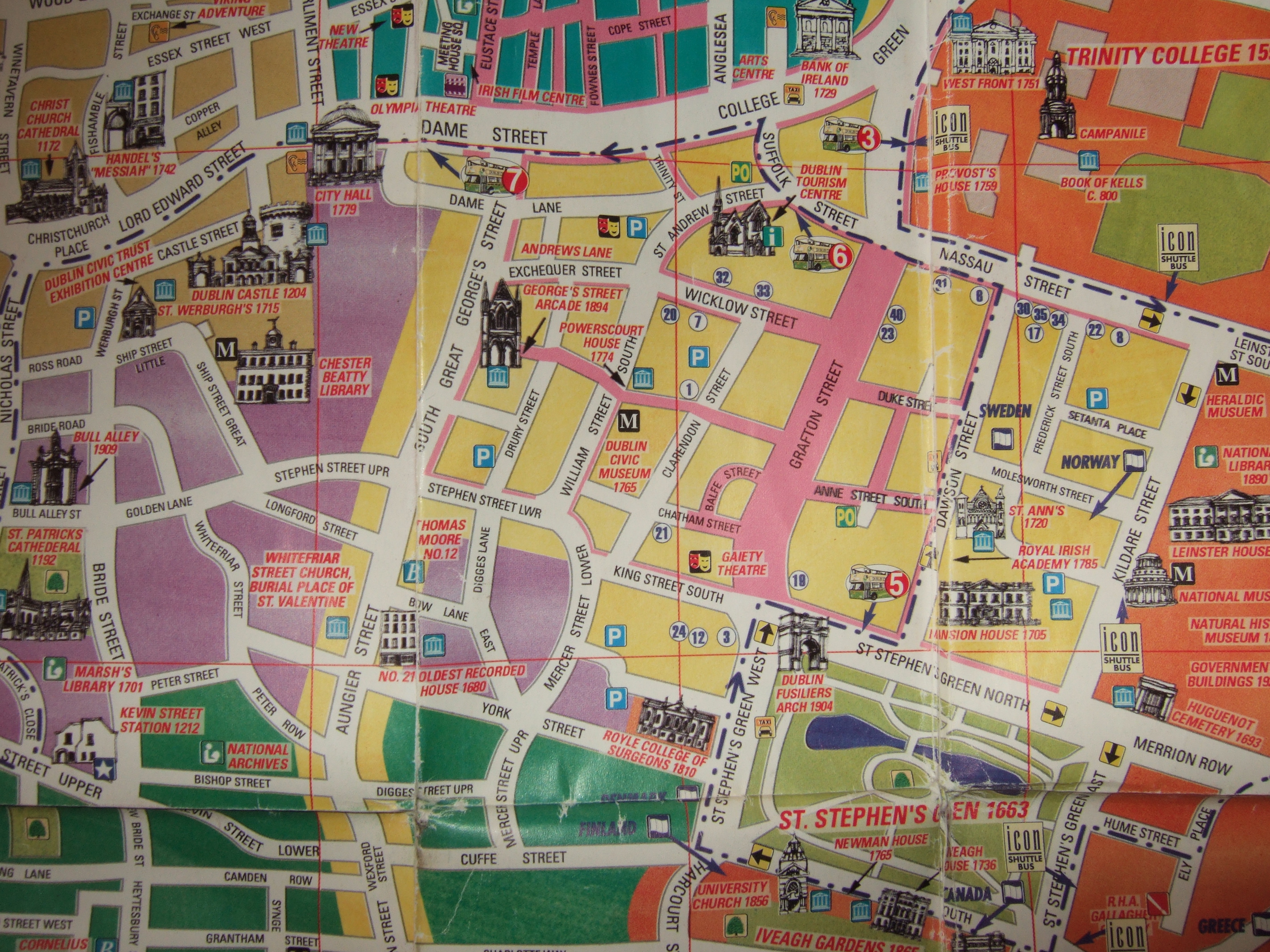
Monasterevin, Co. Kildare, Ireland

Bob Dylan once remarked that when Tommy Makem sang, there was an elsewhere in his eyes. From that elsewhere came his singing.

What was true of Tommy Makem (1932-2007), the celebrated singer and songwriter from Co. Armagh, is also true of Irish balladry in general, particularly its immigrant ballads. One of the best-known ballads, Frank Fahy’s version of Galway Bay, recalls the rugged rocks and the sweet green grass of Galway from the vantage point of Illinois. And one of the most poignant, Sliabh Gallion Brae, is a kind of elegy in advance, in which a farmer by the name of Joe McGarvey from Derrygenard, who can no longer pay his rent, bids farewell to the parish of Lissan, the cross of Ballinascreen, and “bonny, bonny Sliabh Gallion Brae”  All are soon to be elsewhere. In the Irish language, sliabh (pronounced shleeve) means mountain, and in Scots Gaelic brae means hillside. As so often in immigrant ballads, an elsewhere fondly remembered is evoked through its place name, which brings its felt presence into the foreground.

To wish to be elsewhere is a universal human desire. And to become aware of that desire, even as it is arising, is one of the aims of Zen practice. Sometimes the “elsewhere” is a geographical place, as in the immigrant ballads, but just as often it is an imagined state of mind, and it lies in the future rather than the past. In her book Nothing Special the Zen teacher Charlotte Joko Beck examines this recurrent human impulse, as embodied in ordinary thought:

In ordinary thinking, the mind always has an objective, something it’s going to get. If we’re caught in that wanting, then our awareness of reality is gone. We’ve substituted a personal dream for awareness. Awareness doesn’t move, doesn’t bury itself in dreams; it just stays as it is.*

Ordinary thinking, as here portrayed, removes us from wherever we are. By contrast, immovable awareness grounds us in the here and now. To bring meditative awareness to our thoughts is to realize how often they serve to transport us elsewhere.

Of course, not ­all thoughts serve that purpose. Happy to be Here, the title of one of Garrison Keillor’s books, expresses a thought that many of us have when conversing with friends at a dinner party, or spending time with a son or daughter, or eating a bowl of ice cream on a summer evening. Yet the fact is that only a few of our thoughts amplify or clarify our present experience, and many have the opposite effect. If you would like to test this claim, may I suggest that you sit still for three minutes and count the number of thoughts you have during that time. Then sit still for another three minutes, labeling your thoughts (“Thinking about tomorrow’s meeting:”; “thinking about last night”). You may well find that the bulk of your thoughts pertain not to the present but to the past or the future: to where you have been or where you might sometime be. Others may pertain to no place at all, being generalized, abstract, and void of concrete particulars.

The point of this exercise is not to extinguish all such thoughts. To think about other times and places is a natural human activity, and it can give rise to artistic works as richly diverse as Billy Collins’s poems on his childhood or Tommy Makem’s Farewell to Carlingford. The point is rather to become aware of conceptual thinking and to see how it comes between our minds and the realities of our lives, bringing anxiety and untold suffering in its wake. “On the whole,” W.C. Fields is thought to have written as his epitaph, “I’d rather be in Philadelphia.” That makes for a good story, but like many a colorful tale, it isn’t true. The real epitaph reads simply, “W.C Fields, 1880-1946.”  So it is with our images and thoughts, which purport to illuminate reality but often take us elsewhere.

_____________________

*Charlotte Joko Beck, Nothing Special: Living Zen (HarperSanFrancisco, 1993), 152.

Gemma Hasson’s rendition of Sliabh Gallion Brae may be heard at http://www.youtube.com/watch?v=jiSd2rUyrQ8. Tommy Makem’s Farewell to Carlingford may be heard at http://www.youtube.com/watch?v=pGn2G-xjM_M.