15 July 2011 by Ben Howard
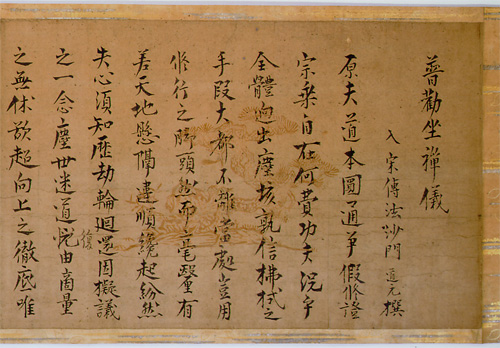
Eihei Dogen, Fukanzazengi (1233)
“It’s time for Congress to step up to its job,” writes Chris Dunn on his blog Collegiate Times. “It’s time for the Lakers to step up,” writes Darius Soriano on the Forum Blue and Gold. “It is time for webOS to step up,” writes Derek Kessler on precentral.net, if Hewlett-Packard is to compete with the iPad. And “it is time to step up and be found faithful to God and his work,” writes Pastor Joe on the website of the Oakdale Baptist Church.
Surveying these pronouncements, one might conclude that it is time for American bloggers—and American popular culture—to find a new figure of speech. But cliches often reflect common beliefs, and behind this particular cliche lies a widely held belief that whatever the problem might be, it can best be addressed by someone stepping up. Whether the field of endeavor be politics, sports, business, or religion, this belief is so familiar as to be mistaken for empirical fact. And though the contexts in which it functions are most often practical, it also carries its share of moral weight. Those who have stepped up are to be commended. Those who have not would do well to get with the program. Continue Reading »
Posted in Uncategorized | Tagged Dogen, Fukanzazengi, ichigo ichie, stepping up to the plate, the backward step | 3 Comments »
30 June 2011 by Ben Howard
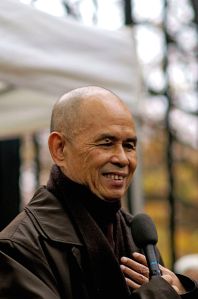 In 1968 the Vietnamese Zen master Thich Nhat Hanh, then a young Buddhist monk, visited the United States. Meeting with church groups, students, and others, he sought to promote peace and reconciliation. Throughout his tour, the gentle monk was well-received, but when he spoke one evening at a wealthy church in St. Louis, he found himself confronted by an angry detractor, who stood up to challenge him. “If you care so much about your people,” demanded the man, “why are you here? If you care so much for the people who are wounded, why don’t you spend your time with them?” Taken by surprise, Thich Nhat Hanh had no choice but to respond. But what could he say? What might be an appropriate response? Continue Reading »
Posted in Uncategorized | Tagged ahimsa, appropriate response, elizabeth bishop, ichigo ichie, norman fischer, phillip moffitt, thich nhat hanh | 3 Comments »
16 June 2011 by Ben Howard
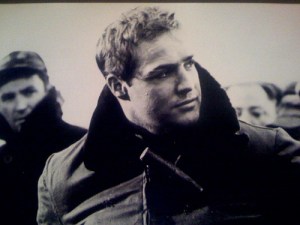 “I coulda been a contender,” laments the boxer Terry Malloy (Marlon Brando) in On the Waterfront (1954). “I coulda been somebody instead of a bum . . .” If those lines are among the most famous in American film, it is perhaps because they express a familiar human desire. Which of us would not wish to be a “contender”? To be “somebody” in others’ eyes?
Yet, as Shunryu Suzuki Roshi observes in his essay “Calmness of Mind,”* the desire to be “somebody” is costly to the human psyche. It steers us into trouble. And as Suzuki also observes, the desire to be somebody bears an intimate connection to the process of breathing, specifically inhalation. “[W]hen you are more interested in inhaling than in exhaling,” he notes, “you easily become quite angry. You are always trying to be alive.” When we are inhaling, we are “trying to be active and special and to accomplish something.” And when, in meditation, we make our inhalations the main focus of our attention, we may only add to our anxiety. In Suzuki’s view, conscious inhalation, striving, and the drive to be somebody are of a piece, and all conduce to suffering. Continue Reading »
Posted in Uncategorized | Tagged ichigo ichie, marlon brando, mindfulness, on the waterfront, shunryu suzuki | Leave a Comment »
2 June 2011 by Ben Howard

“Whoops!” wrote a friend the other day, having just sent me an e-mail message intended for someone else. Studying that word on my screen, I was reminded of an experience that occurred some fifty years ago.
At the time, I was splayed face-down on a sweat-scented wrestling mat. Straddling me was Grant Wilke, a tough competitor whose strength and wrestling skills far surpassed my own. With my belly squashed against the mat and Grant’s weight pressing firmly into my lower back, I attempted what high-school wrestlers call an “escape.” Rising like a cobra and twisting backward, I inadvertently gave Grant a sharp elbow in the ribs.
“Oops!” said I. Continue Reading »
Posted in Uncategorized | Tagged grant wilke, high-school wrestling, ichigo ichie, interjections, reveal ourselves to ourselves, T P Kasulis | 3 Comments »
19 May 2011 by Ben Howard
 Whatever else it has come to mean, at its root the word meditation means “mental cultivation.”* To meditate is to cultivate the mind. In contemporary practice, meditation is often a form of awareness training, in which we learn to calm the body, quiet the mind, and bring relaxed attention to the present moment. But Buddhist meditation is also a practice of cultivating certain qualities of mind and heart. At any given moment, the teachings tell us, we are cultivating one thing or another. What we are cultivating may be loving-kindness, compassion, or other “wholesome” states of mind. But it may also be such “unwholesome” states as fear, rage, and the impulse toward destruction. Continue Reading »
Posted in Uncategorized | Tagged andre dubus III, four great efforts, reap what you sow, townie | 1 Comment »

One thing at a time, Bud, my father used to say. For centuries, Zen teachers have said the same. Whatever you are doing, give that one thing your full attention. When you walk, just walk.
That is sound advice, but in our present culture it stands little chance of being heeded. A recent New Yorker cartoon depicts an urban couple at an intersection of trails in a state park. While the man studies the printed guide, his companion turns to a passing hiker for help. “Which trail,” she asks, “has the best cell-phone reception?” When you walk, just walk, our culture seems to be saying, but keep your cell phone on. Within this prevailing social ethos, the admonition to do one thing at a time, and to give that one thing sustained attention, comes to look like a quaintly archaic notion. Continue Reading »
Posted in Uncategorized | Tagged ichigo ichie, multi-tasking, Okumura, one thing at a time, Toni Packer, when you walk just walk, zen | 2 Comments »
21 April 2011 by Ben Howard
 In “A Voyage to Laputa,” the third book of Gulliver’s Travels, Gulliver visits a flying island where the inhabitants “of better quality” are so preoccupied with their thoughts that they fail to take notice of their surroundings. To remedy that situation, each such inhabitant has been supplied with a “Flapper,” who carries a “blown bladder fastened like a flail to the end of a short stick.” With this device, the Flappers bring their masters’ wandering minds back to reality:
The Flapper is likewise employed diligently to attend his master in his walks, and upon occasion to give him a soft flap on his eyes, because he is always so wrapped up in cogitation, that he is in manifest danger of falling down every precipice, and bouncing his head against every post, and in the streets, of jostling others, or being jostled himself into the kennel.*
These same dreamers also “forget what they [are] about,” until their memories are “roused by their Flappers.” Continue Reading »
Posted in Uncategorized | Tagged gathas, ichigo ichie, jonathan swift, laputa, reb anderson, thich nhat hanh | 2 Comments »
7 April 2011 by Ben Howard

Moises Guevara & Ben Howard
“The song of the piano,” wrote the Catalan poet Eugenio d’Ors, “is a discourse. The song of the cello is an elegy. The song of the guitar . . . is a song.”
Those well-known lines, which please guitarists but tend to annoy pianists and cellists, suggest that the song of the guitar is as natural as that of one’s favorite bird. The Carolina Wren, perhaps, or the Hermit Thrush. That may well be true, but the production of the guitar’s seemingly natural song requires the mastery of two basic right-hand strokes, known to classical guitarists as apoyando and tirando. These two strokes produce two, very different timbres. And they also exemplify two different ways of paying attention. Continue Reading »
Posted in Uncategorized | Tagged apoyando, classical guitar technique, conscious breathing, deep listening, ichigo ichie, song of the guitar, tirando, zen | 1 Comment »
24 March 2011 by Ben Howard
 If you have lived in a northern climate for any length of time, the chances are good that you have slipped and fallen on an icy sidewalk. Or that you will, no matter how careful you are.
Such was the case a few weeks back, as I was walking down the sidewalk in Alfred, New York, wearing shoes more suitable to spring than winter. Coming upon a puddle in the middle of the sidewalk, I stepped onto a mound of ice to avoid the water. Down I went, face forward, landing on my knee.
Thanks, I suspect, to my daily practice of T’ai Chi, I was back on my feet a moment later, suffering no worse injury than a scraped knee. But as the day wore on, and as I felt the lasting effects of my fall, I considered what to call it. Was it a mishap—something, as they used to say in Ireland, that could happen to a bishop? Or was it an avoidable mistake? Although those two small words share a common prefix, their meanings differ widely, as do their implications. Continue Reading »
Posted in Uncategorized | Tagged Dogen, ichigo ichie, mishaps, mistakes, one continuous mistake, Robert Frost "Mending Wall", tai chi, Thomas Hardy Hap | Leave a Comment »
9 March 2011 by Ben Howard
 As the world knows, Aung San Suu Kyi, the Nobel peace prize laureate and leader of the opposition in Myanmar, was released from house arrest in November, 2010. What is not so well known is that during her long years of confinement—fifteen of the past twenty-one—Aung San Suu Kyi relied on meditation to maintain her equanimity. Every morning, she practiced Vipassana (“insight”) meditation, concentrating on the rising and falling of her abdomen. Her practice, she has since reported, enabled her to deal with the “intense irritation and impatience” she felt toward those who had imprisoned her. It also helped her cope with the loss of her husband to prostate cancer and her subsequent estrangement from her two sons. “After years of meditation,” she has said, “I think you remain very much on an even keel. There is not much difference to you mentally whether you’ve been released or not.”* Continue Reading »
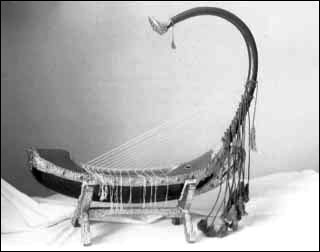
Posted in Uncategorized | Tagged Aung San Suu Kyi, Burmese harp, equanimity, kon ichikawa, meditative awareness, michio takeyama | 3 Comments »
« Newer Posts - Older Posts »