 Whatever else it has come to mean, at its root the word meditation means “mental cultivation.”* To meditate is to cultivate the mind. In contemporary practice, meditation is often a form of awareness training, in which we learn to calm the body, quiet the mind, and bring relaxed attention to the present moment. But Buddhist meditation is also a practice of cultivating certain qualities of mind and heart. At any given moment, the teachings tell us, we are cultivating one thing or another. What we are cultivating may be loving-kindness, compassion, or other “wholesome” states of mind. But it may also be such “unwholesome” states as fear, rage, and the impulse toward destruction. Continue Reading »
Posted in Uncategorized | Tagged andre dubus III, four great efforts, reap what you sow, townie | 1 Comment »

One thing at a time, Bud, my father used to say. For centuries, Zen teachers have said the same. Whatever you are doing, give that one thing your full attention. When you walk, just walk.
That is sound advice, but in our present culture it stands little chance of being heeded. A recent New Yorker cartoon depicts an urban couple at an intersection of trails in a state park. While the man studies the printed guide, his companion turns to a passing hiker for help. “Which trail,” she asks, “has the best cell-phone reception?” When you walk, just walk, our culture seems to be saying, but keep your cell phone on. Within this prevailing social ethos, the admonition to do one thing at a time, and to give that one thing sustained attention, comes to look like a quaintly archaic notion. Continue Reading »
Posted in Uncategorized | Tagged ichigo ichie, multi-tasking, Okumura, one thing at a time, Toni Packer, when you walk just walk, zen | 2 Comments »
 In “A Voyage to Laputa,” the third book of Gulliver’s Travels, Gulliver visits a flying island where the inhabitants “of better quality” are so preoccupied with their thoughts that they fail to take notice of their surroundings. To remedy that situation, each such inhabitant has been supplied with a “Flapper,” who carries a “blown bladder fastened like a flail to the end of a short stick.” With this device, the Flappers bring their masters’ wandering minds back to reality:
The Flapper is likewise employed diligently to attend his master in his walks, and upon occasion to give him a soft flap on his eyes, because he is always so wrapped up in cogitation, that he is in manifest danger of falling down every precipice, and bouncing his head against every post, and in the streets, of jostling others, or being jostled himself into the kennel.*
These same dreamers also “forget what they [are] about,” until their memories are “roused by their Flappers.” Continue Reading »
Posted in Uncategorized | Tagged gathas, ichigo ichie, jonathan swift, laputa, reb anderson, thich nhat hanh | 2 Comments »

Moises Guevara & Ben Howard
“The song of the piano,” wrote the Catalan poet Eugenio d’Ors, “is a discourse. The song of the cello is an elegy. The song of the guitar . . . is a song.”
Those well-known lines, which please guitarists but tend to annoy pianists and cellists, suggest that the song of the guitar is as natural as that of one’s favorite bird. The Carolina Wren, perhaps, or the Hermit Thrush. That may well be true, but the production of the guitar’s seemingly natural song requires the mastery of two basic right-hand strokes, known to classical guitarists as apoyando and tirando. These two strokes produce two, very different timbres. And they also exemplify two different ways of paying attention. Continue Reading »
Posted in Uncategorized | Tagged apoyando, classical guitar technique, conscious breathing, deep listening, ichigo ichie, song of the guitar, tirando, zen | 1 Comment »
 If you have lived in a northern climate for any length of time, the chances are good that you have slipped and fallen on an icy sidewalk. Or that you will, no matter how careful you are.
Such was the case a few weeks back, as I was walking down the sidewalk in Alfred, New York, wearing shoes more suitable to spring than winter. Coming upon a puddle in the middle of the sidewalk, I stepped onto a mound of ice to avoid the water. Down I went, face forward, landing on my knee.
Thanks, I suspect, to my daily practice of T’ai Chi, I was back on my feet a moment later, suffering no worse injury than a scraped knee. But as the day wore on, and as I felt the lasting effects of my fall, I considered what to call it. Was it a mishap—something, as they used to say in Ireland, that could happen to a bishop? Or was it an avoidable mistake? Although those two small words share a common prefix, their meanings differ widely, as do their implications. Continue Reading »
Posted in Uncategorized | Tagged Dogen, ichigo ichie, mishaps, mistakes, one continuous mistake, Robert Frost "Mending Wall", tai chi, Thomas Hardy Hap | Leave a Comment »
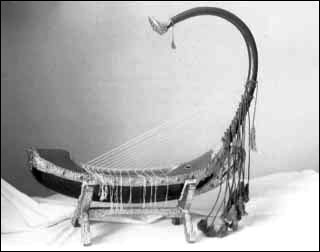 As the world knows, Aung San Suu Kyi, the Nobel peace prize laureate and leader of the opposition in Myanmar, was released from house arrest in November, 2010. What is not so well known is that during her long years of confinement—fifteen of the past twenty-one—Aung San Suu Kyi relied on meditation to maintain her equanimity. Every morning, she practiced Vipassana (“insight”) meditation, concentrating on the rising and falling of her abdomen. Her practice, she has since reported, enabled her to deal with the “intense irritation and impatience” she felt toward those who had imprisoned her. It also helped her cope with the loss of her husband to prostate cancer and her subsequent estrangement from her two sons. “After years of meditation,” she has said, “I think you remain very much on an even keel. There is not much difference to you mentally whether you’ve been released or not.”* Continue Reading »
Posted in Uncategorized | Tagged Aung San Suu Kyi, Burmese harp, equanimity, kon ichikawa, meditative awareness, michio takeyama | 3 Comments »
 Twenty-five years ago, Markus Koch was a defensive lineman for the Washington Redskins. During his third season, he broke his lumbar vertebrae, but he continued to play for three more years. Now in his late forties, he suffers from depression, and when he stands for extended periods of time, his legs go numb.
Recently, Markus Koch reflected on the gap between football fans watching the game at home and the physical experience of the players on the field. To close that gap, he facetiously suggested, players might be fitted with a mouth guard that “registers the impact they’re getting on the field, and at certain g-forces the helmet shell would crack and explode and leak gray matter and blood.” Or, conversely, the fan might be fitted with an adjustable pneumatic suit, which would be “telemetrically linked to a player on the field.” In that way the fan could “experience what the player is going through.” Continue Reading »
Posted in Uncategorized | Tagged Frank Rich, ichigo ichie, jack kornfield, Markus Koch, pro football, Tehrir Square | 7 Comments »
 It’s winter in Western New York, and this morning our driveway is filled with new-fallen snow. As I look out at that white expanse, I am reminded of a poem by Billy Collins, poet of American domestic life.
Entitled “Shoveling Snow with Buddha,” Collins’ poem depicts two men at work in a snow-filled driveway. One is the narrator, who might be Everyman—or at least every man who owns a home and lives in a northern climate. The other is the Buddha, who, as the narrator observes, is out of his customary habitat:
In the usual iconography of the temple or the local Wok
you would never see him doing such a thing,
tossing the dry snow over the mountain
of his bare, round shoulder,
his hair tied in a knot,
a model of concentration.
– – –
Even the season is wrong for him.
In all his manifestations, is it not warm and slightly humid?
Is this not implied by his serene expression,
that smile so wide it wraps itself around the waist of the universe?
Unlikely workmates, one might say. And though the two are toiling harmoniously together, they appear to have little in common. With every heave of snow, the narrator notes, they become “lost to each other / in these sudden clouds of [their] own making, / these fountain-bursts of snow.” And even when they are visible to each other, their ways of working set them apart. Continue Reading »
Posted in Uncategorized | Tagged Billy Collins, Buddha mind, mindfulness, shoveling snow. ichigo ichie | 1 Comment »
 Every morning at half-past six, I make a cup of coffee for my wife, using a device known as an AeroPress. Simplicity itself, this device consists of a plunger, a cylinder, a paper filter, and a perforated cap. To brew a cup of coffee, I place the AeroPress on top of a mug, pour the prescribed amount of freshly ground coffee into the cylinder, and add a small amount of hot water to release the flavor. Moments later, I add the full complement of hot water, insert the plunger, and press down. If I press too hard, I will encounter formidable resistance from the volume of air trapped between the plunger and the coffee, and the AeroPress won’t work. But if I press gently, with virtually no effort, the plunger will go down smoothly, emitting an audible sigh as it reaches the bottom. Almost always, the result will be a delicious cup of coffee.
I first heard about the AeroPress from a friend and fellow Zen practitioner, who also makes morning coffee for his missus. That is perhaps no accident, because the skills required to operate the AeroPress resemble their counterparts in Zen meditation. Both the AeroPress and the practice of Zen require balance, patience, and steady attention. Beyond that, both enlist the kind of energy known to Taoists as wu wei, or “effortless effort,” whether the object of the effort be the breath, the contents of the mind, or the situations encountered in everyday life. Press too hard, and you will fail. Press lightly, aligning yourself with natural forces, and you will allow the desired result to occur.
Most meditative practices begin with attention to the breath. Some schools of meditation, including Zen, advocate the counting of breaths in general and exhalations in particular. Others employ such words as “in” and “out” to track the process of respiration. Whatever the method, however, many people find it difficult to observe the process of breathing without attempting to control that process or bring it into conformity with an imagined ideal. To counter that tendency, I have found it helpful merely to listen to the breath, as the Zen-trained teacher Toni Packer advises, rather than employ an analytic method. In the same spirit, one can view oneself not as the owner/operator of one’s breathing but as the one “being breathed,” both by one’s body and by the life force common to all living beings. Approached in this way, the breath becomes an object of interest rather than willful concentration.
Turning from the breath to the contents of the mind, the same quality of attention may be applied. In his essay Samadhi of the Self, the Soto master Menzan Zuiho Zenji (1683-1769) defines the contents of the mind as “emotion-thought,” which he views as “the root of delusion; that is, a stubborn attachment to a one-sided point of view, formed by our own conditioned perception.” The purpose of zazen, or sitting meditation, is not to suppress thoughts, as some would have it, but to clarify “how emotion-thought melts.” Through the regular practice of zazen, “the frozen blockage of emotion-thought will naturally melt away.” This will occur not through cutting off thought, a practice Menzan likens to cutting the trunk of a tree and leaving the root alive. Rather, it will occur through effortless effort: through mindful observation of self-centered thoughts and their emotional subtexts. The equivalent of a gentle hand on the AeroPress, such observation serves to illuminate the roots, the dynamics, and the consequences of ego-centered, prejudicial thinking. Over time, it can thaw the frozen block of emotion-thought.
But can that degree of awareness, attainable within the confines of private meditation, be sustained within the arena of everyday life? Can it withstand the violence, physical and verbal, of contemporary culture? In his address in Tucson on January 12, President Obama invited us to ask ourselves whether “we’ve shown enough kindness and generosity and compassion to the people in our lives.” He also asserted that “what matters is not wealth, or status, or power, or fame” but “how well we may have loved.” Those are stirring words, and they rightly locate the nexus of non-violence in immediate, human interaction. At the same time, they remind us of the centuries of negative conditioning—the monumental blocks of emotion-thought—that must be addressed with awareness, if the President’s vision of a kinder society is to be realized.
Given present conditions, that may seem a Herculean project, requiring nothing short of a social and spiritual revolution. But such a project can begin with an effortless effort, which is to say, with a clear and intimate awareness of what we are about to say or do in this very moment. Living in that awareness, we can ask ourselves whether what we’re about to say is necessary, true, and kind, and whether our words and actions are likely to be hurtful or harmful. And we can speak and act accordingly.
_______________
*Menzan Zuiho Zenji, “Jijuyu-zanmai” (“Samadhi of the Self”), in Shikantaza: An Introduction to Zazen, edited and translated by Shohaku Okumura (Kyoto Soto-Zen Center, 1985), 106.
The AeroPress was invented by Alan Alder in 2005. For more information please see http://en.wikipedia.org/wiki/AeroPress. In the photo above the AeroPress rests on a cup by Robin Caster Howard.
Posted in Uncategorized | Tagged AeroPress, effortless effort, ichigo ichie, meditation, Menzan, Toni Packer, wu wei, zen | 2 Comments »
 Toward the end of Richard Russo’s novel Bridge of Sighs, a middle-aged widow named Tessa Lynch recalls a wild ride on the back of a motorcycle. A teenager at the time, Tessa defied her parents by secretly consorting with Declan, a reckless, dangerous man, recently discharged from the army, who rode an Indian motorcycle. When Declan invited Tessa to ride with him, she eagerly accepted. And when he opened the throttle she showed no fear. In Declan’s eyes she was “a natural the way she rode . . . leaning into the curves instead of away, as you would if you were afraid.”*
In Russo’s novel, the act of leaning into the curves becomes a metaphor for a bold and open attitude toward life. In similar fashion, the meditation teacher Pema Chodron employs the metaphor of leaning-in to illustrate a way of dealing with fear, anger, and other destructive states of mind. Enlisting the Tibetan concept of shenpa, which she translates as “hooked,” Chodron advocates a three-step method, the first step being acknowledgment that one has been “hooked” by negative feeling. The second step is to “lean into” that feeling:
Step Two. Pause, take three conscious breaths, and lean in. Lean in to the energy. Abide with it. Experience it fully. Taste it. Touch it. Smell it. Get curious about it. How does it feel in your body? What thoughts does it give birth to? Become very intimate with the itch and urge of shenpa and keep breathing. Part of this step is learning not to be seduced by the momentum of shenpa. Like Ulysses, we can find our way to hear the call of the sirens without being seduced. It’s a process of staying awake and compassionate, interrupting the momentum, and refraining from causing harm. Just do not speak, do not act, and feel the energy. Be one with your own energy, one with the ebb and flow of life. Rather than rejecting the energy, embrace it. This leaning in is very open, very curious and intelligent.**
Having learned to “lean in,” to “embrace the restless energy,” we can proceed to the third step, which is to “relax and move on.”
As Chodron readily acknowledges, leaning into uncomfortable emotions is far from easy. It takes awareness, and it also takes practice. If, for example, someone unjustly accuses us, our habitual response may be to counterattack—or flee the scene entirely. Rather than remain “awake and compassionate,” we are more likely to blame the accuser and retreat into a “storyline,” in which others appear as vicious tormentors and we ourselves as virtuous victims. And what we resist or attempt to elude is not only the object of our fear or anger; it is also those emotional states themselves. Rather than encounter and attempt to transform their negative energies, we escape into self-exonerating fantasies. Hooked on shenpa, we inflict suffering on ourselves and others, while also putting distance between our abstract thoughts and our ever-changing feelings. We lean away from the reality of our lives.
Yet it is possible to do otherwise. Merely by stopping, checking in with ourselves, and bringing awareness to our mental states, we can begin to “unhook” ourselves from destructive, habitual responses. And over time the practice of mindfulness can also incline our minds toward direct contact with our inner and external lives. Reflecting on recent studies of Mindfulness-Based Stress Reduction, Dr. Daniel Siegel, a physician and meditative practitioner, offers this perspective:
One of the elements of research on Mindfulness-Based Stress Reduction that I find most impressive is the work that Richie Davidson and Jon [Kabat-Zinn] have done showing that even after one eight-week MBSR course, a “left-shift” has been noted, in which the left frontal activity of the brain is enhanced. This electrical change in brain function is thought to reflect the cultivation of an “approach state,” in which we move toward, rather than away from, a challenging external situation or internal mental function such as a thought, feeling, or memory. Such an approach can be seen as the neural basis for resilience. With a mindful way of being, you’ve developed your skill to stay present for what you might otherwise try to escape. From that point of view, diagnosis would be enhanced, because denial would be overcome. If you think about it, this is the mind doing what is most helpful for mind and body. Ignoring is maladaptive.***
Paradoxically, it takes courage to face one’s fear. For many of us, the “approach state” does not come naturally, and leaning into the curves is an acquired skill. But the New Year has arrived, and a resolution to lean into our experience, however pleasant or unpleasant, delectable or undesirable, is well worth considering. As New Year’s resolutions go, it is difficult to think of one more capable of transforming fear into fearlessness, anger into compassion, and habitual denial into wisdom.
________________
*Richard Russo, Bridge of Sighs (Knopf, 2007), 475.
**Pema Chodron, Taking the Leap: Freeing Ourselves from Old Habits and Fears (Shambhala, 2009), 40.
***”The Healing Power of Mindfulness,” Shambhala Sun (January, 2011), 49.
Posted in Uncategorized | Tagged daniel siegel, ichigo ichie, Indian motorcycle, lean in, mindfulness, pema chodron, richard russo | 3 Comments »
 One Time, One Meeting