Feeds:
Posts
Comments

Posts Tagged ‘zen’

Welcome home

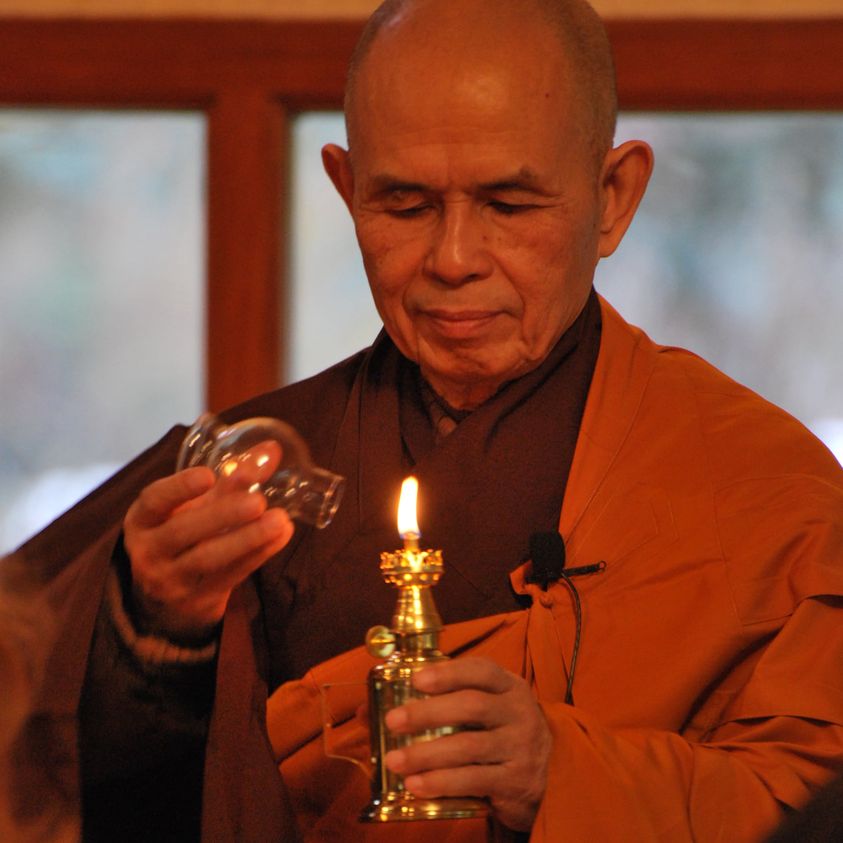
Gaylon Ferguson

If you have ever gone on a diet, you know that most diets require some sort of intervention. Eating a bit less is not enough.

By and large, the same is true of meditative practice. Most types of meditation require the practitioner to undertake a program in the service of a goal. Whether a particular program aims to tame the unruly mind, cultivate equanimity, or foster compassionate wisdom, all require practitioners to make some changes in their attitudes and behaviors, replacing one set of habits with another. And most prescribe specific techniques, such as repeating a meditative verse, contemplating a Zen koan, of “labeling” mental phenomena as they arise.

In his new book Welcoming Beginner’s Mind (Shambhala, 2024), the veteran dharma teacher Gaylon Ferguson proposes a fresh alternative to those traditional methods. As Ferguson notes in his introduction, meditative practice is based, at least in part, on the premise that something is amiss—or missing—in one’s life as it presently is. Meditation supplies a remedy.

By contrast, Ferguson offers a practice premised on the belief that “welcoming is our true nature.” Just as we welcome friends, relatives, and sometimes strangers into our homes, we can do the same with the present conditions of our lives, however auspicious or adverse. We can welcome rather than resist them. Beyond that, we can also welcome ourselves, however selfish or altruistic, inferior or superior we perceive ourselves to be. Framing his discussion in the Ten Oxherding Pictures, a revered visual allegory depicting the Buddhist journey to awakening, Ferguson offers a synthesis of Zen and Tibetan meditative traditions, broadly dividing his sequential (but non-progressive) method into three distinct stages.

First among them is the Welcoming Exercise, the foundation for all that will follow. Instructing us to sit upright comfortably for three minutes, Ferguson invites us to “trust and taste whatever arises,” “the entire range of feelings, sensations, thoughts, perceptions, and concepts.” In contrast to mindfulness meditation, the objective is not to “be here now,” to pacify the mind, or “to change our experience, transforming ourselves from this to that.” Rather we are to be “guided by what we are sensing and feeling,” allowing our lives “to be as bitter or sweet as they are without manipulation.” In short, we are to practice what Shunryu Suzuki Roshi called “beginner’s mind,” a “basic openness” that he regarded as “the secret of meditation.”

In the second stage of this practice, the Natural Noticing Exercise, we are again directed to sit for three to five minutes, noticing “whatever we might notice: sights, sounds, smells, the temperature in the room, thoughts in the mind, sensations in the body, feelings in the heart.” This time, however, we are exhorted to be “curious about what we notice.” Rather than discipline the mind to remain on a single object, we deliberately allow it to roam.

As Ferguson readily concedes, the Noticing practice may appear superficial when contrasted with the deep contemplation characteristic of intensive meditative retreats. But its relative superficiality is consistent with its purpose, which is not to plumb ultimate reality but to explore “ordinary, conventional, dualistic mind.” In essence, it is “an appreciative inquiry into natural noticing itself.”

“Inquiring,” the third stage of the practice, joins “non-effort with effort” and enlists our innate curiosity in the service of contemplative inquiry.  As its primary tool, this exercise employs a familiar question from the Zen tradition: “What is this?” By repeatedly asking this question of images, thoughts, feelings, and sensations as they arise, we allow insights to emerge of their own accord. As Ferguson notes, this mode of inquiry has little in common with a police investigation or prosecutorial interrogation. Gentle in tone, it invites intimate feelings to surface and intuitive understanding to manifest, while also encouraging “the beginner’s mind of not-knowing” to arise and flourish.

In the Ten Oxherding Pictures, the practices of welcoming, noticing, and inquiring precede later stages of the journey to awakening, including “Forgetting the Ox” and “Being in the World.” In his concluding chapters, Ferguson gives due weight to those stages, while noting emphatically that all are to be understood not as means toward an end but as ends in themselves. All engender “beginner’s mind.” In this way the Ten Oxherding Pictures and Ferguson’s method differ from such Western analogues as John Bunyan’s Pilgrim’s Progress or William Hogarth’s Industry and Idleness, which illustrate progressive steps toward a desired moral destination.

Longtime practitioners of Zen and Vipassana (“insight”) meditation will recognize elements of those practices in Ferguson’s formulation.  In several ways, the Welcoming Exercise recalls the Soto Zen practice of shikantaza (“just sitting”), and the Inquiring exercise bears a strong family resemblance to Vipassana practice. But the presence of those contributing elements takes nothing away from Ferguson’s wise, original, and accessible synthesis. On the contrary, his unconventional method is a worthy addition to the growing body of confluent practices that constitute Western Zen.

Photo: Gaylon Ferguson

Read Full Post »

aaron-burden-y02jEX_B0O0-unsplash

If we wish a houseplant to flourish, we provide it with water, nutrients, and light. We set it near a window. But should we wish the same for ourselves, for those we love, and for humanity in general, what are the counterparts of those necessary conditions? What practices, activities, and qualities of mind contribute to human flourishing?

In his timely new book The House We Live In: Virtue, Wisdom, and Pluralism, an ambitious endeavor to forge a pragmatic, “flourishing-based” ethic for our pluralistic, multicultural society, the Zen priest and psychologist Seth Zuihō Segall identifies multiple “domains of flourishing.” These include “relationships,” “accomplishment, “aesthetics,” social acceptance, “meaning,” and “whole-heartedness.” Exploring the last of those “domains,” Segall invokes a practice from the Soto Zen tradition.

Known as menmitsu-no-kafu and translated by Segall as “whole-heartedness,” this practice might most simply be characterized as giving full attention to whatever one is doing, be it driving, chopping vegetables, or listening to a friend. But, as Segall explains, the practice also entails “exquisite, careful, considerate, intimate, warm-hearted, continuous attention to detail.” And, in contrast to those meditative practices prescribed for self-pacification and self-improvement, menmitsu is directed outward rather than inward: toward the benefit of others rather than oneself.

Traditionally, menmitsu is taught by Soto Zen instructors and practiced within the confines of a temple or Zen center. There, ordained monastics and committed Zen students learn to embody menmitsu as they engage in their everyday activities: “donning their robes, sweeping the walkways, refolding their bowing cloths, assembling and disassembling their eating bowls, lighting incense, and so on.” All are to be done with “exacting, meticulous attentiveness.”

 As Segall readily concedes, not all of us are “called to the same degree of attentiveness” or prepared to practice menmitsu in every aspect of our lives. At the same time, Segall suggests, “we could do well to take a page” from this integral dimension of Zen practice. Practiced in excess, menmitsu can look like OCD and feel like hypervigilance—and, if one is married, drive one’s spouse to distraction. But, practiced thoughtfully and with moderation, menmitsu can indeed enhance our lives and those of others around us.

For my own part, I have found it most productive to apply the principle of menmitsu primarily to those daily activities I most value and enjoy, including formal Zen meditation; studying and practicing the classical guitar; reading and re-reading great literary works; cooking; conversing with friends and family; and, most centrally, the craft and art of writing, which can embody menmitsu in at least three ways.

To begin with, the practice of literary menmitsu can begin with the choice to write with a pen or pencil rather than a keyboard. However archaic handwriting has become in the age of the iPad, writing by hand is not only a sensuous, intimate way of “getting the better of words,” as T.S. Eliot once put it. Handwriting also promotes precision of diction and meticulous attention to detail. “Writing maketh the exact man,” wrote Francis Bacon. And if that maxim is true of writing in general, it is even more so with respect to writing, slowly and deliberately, by hand. For decades, I required students in my literature courses to write daily précis and responses in their own hands on 4 x 6” index cards, as a way of precisely comprehending the poems and stories they were reading and forming their own interpretations. I was seldom disappointed.

Second, I have found that scrupulous observance of the time-honored conventions of English grammar, rhetoric, and usage sorts well with the practice of menmitsu. Evolved over many centuries and exemplified by such masters of English prose as Jonathan Swift, George Orwell, and Scott Russell Sanders, those conventions promote clarity, concision, eloquence, and force. Beyond the basic “rules” taught in English 101—the avoidance of dangling modifiers, comma splices, faulty parallelisms, and the like—literary menmitsu can be practiced by observing such fine points of usage as the difference between “anxious” and “eager” and such grammatical details as the use of the possessive pronoun before a gerund (“his running for president” rather than “him running for president”). Fussy as such distinctions may first appear, collectively they can make the difference between lucid, accessible prose and an indigestible verbal paella.

 Last and most important, literary menmitsu can be practiced by keeping one’s intended reader uppermost in mind. If I aspire to be “careful,” “considerate,” and “warm-hearted” when composing a poem or letter or essay, I can do my readers a favor by recalling the dictum attributed to Ernest Hemingway: “Easy writing makes damned hard reading.” Writing well, in my experience, is an exacting labor, not only of love but also of respect for the majesty, beauty, and ancestry of the English language and the sensibilities of one’s potential readers. A mode of “flourishing” rich in discovery, reach, and invention, the practice of literary art can also be an expression of compassion and a concrete, lasting embodiment of menmitsu.


Seth Zuiho Segall, The House We Live In: Virtue, Wisdom, and Pluralism (Equinox 2023), 102.

Photo: Aaron Burden

(more…)

Read Full Post »

North StarLast month, an Alfred State College student, who was working on a project concerning “spiritual life in the Alfred area,” contacted me to request an interview. Although I am hardly an authority on such matters, I agreed to speak with him. His questions, submitted in advance, struck me as serious and provocative. Foremost among them was the question, “Why do you think it is important for students to explore spirituality while in college?”

However well formulated, that question contains a debatable premise and an ambiguous abstraction. As it happens, I would concur with the underlying assumption: that exploring “spirituality” while in college is important. But I would note, first, that the abstract concept “spirituality” may or may not be linked to organized religion. Non-competitive swimming, for example, can be experienced as a meditative activity. Likewise cooking, writing, drawing, gardening, and other human pursuits. Second, I would suggest that “exploring spirituality” will be of limited value if it only involves adopting a set of beliefs but doesn’t integrate a regular practice into the practitioner’s daily round. With those qualifications in mind, I reinterpreted the question as, “What might be the benefits of exploring a spiritual practice during a student’s college years?” To that re-framed question, I offered three responses.

A Refuge

During my years of teaching at Alfred University, I was often aware of the pressures, emotional and intellectual, to which conscientious students were being regularly subjected. Most obvious were the academic pressures, especially on those whose scholarships were based on maintaining a high grade-point average. Many of those same students were working part-time jobs; most were juggling academic demands with social obligations and extra-curricular activities. Beyond that, all were navigating a path toward a promising but uncertain future. Along the way, they were responding to the multiple and sometimes conflicting expectations of their parents, their peers, their professors, and their fluid personal relationships. Little wonder that many suffered from chronic anxiety.

From all such pressures, a spiritual practice can provide a welcome refuge. In times of crisis, it can afford solace and support. And even on ordinary days, it can provide a young person with a “home from home,” as the Irish say, and a way of reconnecting with his or her inner life. Beyond personal restoration, a daily practice can also introduce the practitioner to the silence, the stillness, and the mystery at the heart of being. And over time, it can acquaint the dedicated practitioner with what the Zen priest Norman Fischer has called “that which is beyond [ourselves] and holds [us] in its embrace.”

A Path to Maturity

It is sometimes assumed that as we grow older, we become more mature. Comforting though it is, that assumption is not always borne out by experience. In most spiritual traditions, including Zen, it is understood that the qualities of a mature person do not magically manifest of their own accord. They must be cultivated. Among the most salient of those qualities are the strength to face difficult and sometimes painful realities; the courage to accept responsibility for one’s words, deeds, and even thoughts; the realism to acknowledge one’s personal, physical, and temperamental limitations; the empathy to temper egocentric desires with regard for other people’s feelings and needs; and the discipline to restrain hedonistic impulses in the service of the common good. These and other qualities of a mature person can be developed through regular, systematic spiritual practice. Attaining full maturity—becoming fully human—is a continuing challenge at any stage of life. To undertake a spiritual practice during one’s undergraduate years not only nourishes the practitioner’s evolving maturity. It can also provide a sound basis for future development.

A North Star

It is fair to say that American college students come from a wide variety of moral backgrounds. Their ethical training may have been narrow, strict, and rigid, on the one hand, or vague, lax, and virtually non-existent, on the other. A daily spiritual practice, if conducted in a spirit of openness and flexibility, can provide a moral compass somewhere between those extremes. Zen master Thich Nhat Hanh placed great importance on the ethical framework of Zen practice, which he often likened to a North Star. Rather than view the “precepts,” as they are called in Zen, as an inflexible code of conduct or a set of moral absolutes, he saw them as an ethical destination. By keeping the precepts firmly in mind as we speak, act, and make crucial decisions, we can stay on course toward that distant destination.

All the great spiritual traditions rest on moral foundations. By studying, absorbing, and thoughtfully interpreting those foundations, students can learn to respond to each new situation in a manner consistent with both the particulars of that situation and their deepest moral intentions. That, alone, is reason enough to “explore spirituality” during one’s college years, when life-decisions are being made, and untried graduates are poised to enter the wider world.

_______

Norman Fischer, Taking Our Places: The Buddhist Path to Truly Growing Up (Harper/SanFrancisco, 2003), 121.

Image: Polaris, by steviep87 CC

Read Full Post »

Pen 2 ps

To mark my most recent birthday my wife gave me a Conway Stewart fountain pen. Conway Stewart & Co., Limited, the most venerable name in British fountain pens, was founded in London in 1905. During the First World War, their handcrafted pens were used extensively by soldiers writing home from the front. During the Second World War, Winston Churchill enlisted a Conway Stewart pen to sign important wartime documents. More recently, Queen Elizabeth II and the Duke of Edinburgh were presented with Conway Stewart pens to commemorate their golden wedding anniversary. Known as the Wordsworth Shingle, my particular pen is a delight to hold and behold. And to a degree exceptional in this day and age, it affords what I would call the pleasures of inscription.

Foremost among those pleasures is the sensuousness of the experience: the sensation of the pen’s nib pressing against the page. Whether light or heavy, that pressure and its attendant sensations can be felt when using any writing instrument, but with a fountain pen they are far more varied, nuanced, and subtle. I would liken them to what I feel in my left-hand fingers when pressing the nylon strings of the classical guitar, sensations that vary according to the placement of the finger-tips and the string I’m pressing down. Placing (or, rather, misplacing) the finger-tip between the frets requires more effort and creates more tension than placing it next to the fret. The bass strings, being metal-wound, also require greater effort. (more…)

Read Full Post »

TNH bell

Years ago at a literary conference, I lent a book to a Japanese friend. A few days later, as the conference was ending, she returned the book, holding it with both hands and presenting it to me as if it were an offering. Silent, direct, and present-minded, her gesture filled the space between us. And though she was not a Zen practitioner, so far as I know, her action epitomized the practice of Zen.

In the early years of my formal Zen training, I learned to do everything—or almost everything—with two hands. No one taught me to do this. Rather I learned it through observing longtime Zen practitioners. Observation, of course, is one thing and performance another. And for a Westerner like me, the practice of using both hands to return a book or to hold and strike a bell, however conventional in East Asian cultures, felt foreign and unnatural.

(more…)

Read Full Post »

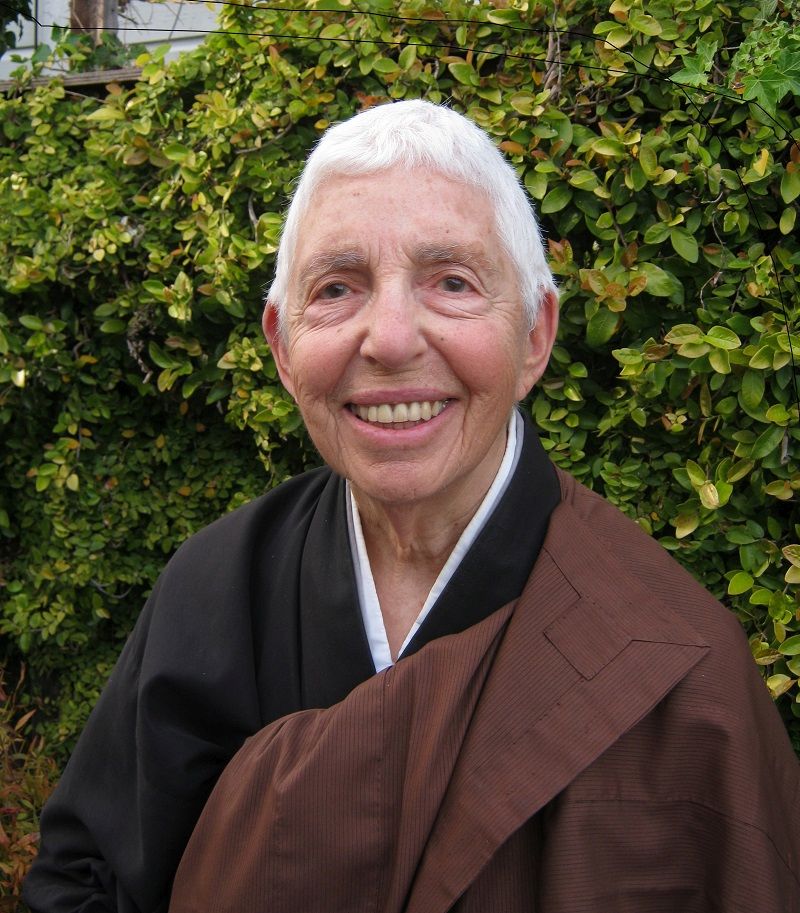
Katherine-Thanas-SCZC

“Recently,” writes the Zen teacher Sobun Katherine Thanas in her book The Truth of This Life (Shambhala, 2018), “I have come to realize that our work is to love the world just as it is.” The work to which she is referring is the practice of Zen meditation. “Loving the world as it is,” she goes on to say, “is being willing to be in the only world we know.”

At first blush, these statements may seem jarring. The world we currently know, if we keep abreast of the news, is a world of environmental peril, intractable racial conflict, political polarization, an unending pandemic, and, as of late, a dangerous and destabilizing Eastern European war. These and other social and political forces have inflicted enormous suffering on untold numbers of people, often through no fault of their own. A grudging acceptance of these realities is one thing. To propose that we love such a world is quite another. To the skeptical mind, Thanas’s advice may seem, at best, naïve, and at worst, culpably detached.

In fact, it is neither. Far from being out of touch, Thanas is acutely aware of the painful realities that many people are presently enduring. Invoking the First Noble Truth of the Buddhist tradition (“Life is suffering”), she acknowledges that “the reality of our life is fragile . . . and subject to changing conditions. Many of us are experiencing financial, psychological, emotional, and social insecurity.” But, as she also observes, once we have discovered that “it’s not in our power to make our lives safe and secure for ourselves and our families, we begin to become aligned with life as it is. Humility and maturity may arise.” We can further develop those qualities by meeting both the social reality and that of our inner lives with a clear and open mind, rather than one of reflexive, ego-driven resistance.

According to Zen teachings, most of us view the world through the lens of our ideas, if not our prejudices and ideologies. Thich Nhat Hanh often noted that our ideas of happiness—that we must acquire new possessions, for example, to be happy—impede us from enjoying or even noticing the sources of happiness immediately at hand. The practice of Zen, Thanas rightly observes, “is about penetrating the membrane of mentality that’s between us and our life. It’s meeting something beyond what the mind knows: meeting with our body, our senses, our skin, our ears. We accomplish this when we trust ourselves enough to drop off what the mind knows.” If we genuinely wish to realize what Thanas calls the “truth of this life,” we have first to set aside our abstract concepts—the “membrane of mentality”—and return to the evidence of our senses. Rather than treat the world as a set of problems, to which we bring our settled knowledge and fixed opinions, we can go beyond our views and meet present realities directly with “our body, our senses, our skin, our ears.”

As noted above, the world that Thanas urges us to encounter directly includes not only the external, objective world of public events and historical facts but “the actual life we have—our habits of mind, our desires, our disappointments, our fears, our embarrassments.” By contemplating these mental and emotional phenomena from the vantage point of a still and stable mind, we begin to understand the “dynamics of our mental life,” particularly the notion that “there is some better state of mind than ours.” Meeting our actual lives, intimately and fully through the practice of meditation, we can, in the words of Joseph Goldstein, open what is closed, balance what is reactive, and reveal what is hidden in the body, heart, and mind. And having identified those closeted, imbalanced, and hidden elements of our experience, we can endeavor to befriend rather than resist, ignore, or deny them.

The first fruit of a mature and disciplined Zen practice is a state of stillness and one-pointed concentration. Eihei Dogen, founder of the Soto Zen tradition, called it “unconstructed stillness.” In this state of mind, the self “receives,” as Thanas puts it, “its own freedom, its own contraction and relaxation, absorption and release.” Known in Zen as samadhi, this state is “the gift we give to the world, the gift we receive ourselves.” When we are in samadhi, whatever thoughts, feelings, and states of mind may occur are allowed to arise, abide, and disappear, without judgment or commentary. By cultivating samadhi, day after day, whether we are sitting in meditation, working, or performing routine household tasks, we can learn to accept what is, including and especially those things we cannot change, in a spirit of joy and delight. And over time, Thanas would add, we can come to love them, just as they are.

________

Sobun Katherine Thanas, The Truth of This Life (Shambhala, 2018), 78-81.

Joseph Goldstein and Jack Kornfield, Seeking the Heart of Wisdom (Shambhala,1987), 15-22.

Photo: Sobun Katherine Thanas (1927-2012).

Read Full Post »

THICH NHAT HANH

Thich Nhat Hanh

1926-2022

Back in December, my wife and I sent an electronic holiday card to our family members and friends, wishing them “happiness, peace, and equanimity” in the year to come. Ever the realist, one of our friends replied, “I’ll settle for equanimity.” I suspect he was not alone.

Equanimity is a central term in the lexicon of Zen. A translation of the Sanskrit word upeksha, the word refers to a quality of mental balance and emotional stability. Not to be confused with a neutral passivity or cold indifference, equanimity might better be likened to what Hemingway called “grace under pressure”: the ability to remain calm and composed under the most trying of circumstances. Equanimity is also the faculty that enables us to take the long, even-tempered view and to remain unmoved by praise or blame, desire or aversion. Although this quality of heart and mind may be more evident in some people than in others, from the standpoint of Zen teachings, equanimity is not an ingrained trait, which some people possess and others do not. Rather, it is a capacity anyone can acquire and systematically cultivate through well-established practices.

The most fundamental of those practices is zazen, or seated meditation. Although Zen literature abounds in special instructions and nuanced techniques, zazen itself is a simple practice. In essence it consists of sitting still and paying close attention to one’s breath, body, and awareness. In this respect, Zen practitioners doing zazen resemble non-practitioners sitting quietly and enjoying their early-morning coffee, aware of their thoughts, bodies, and immediate environment.

Yet there are two crucial differences. Ideally at least, zazen is both a non-judgmental and a non-reactive practice. However pleasant or unpleasant our feelings, thoughts, and bodily sensations may be, we refrain from judging them. If the room where we are sitting is uncomfortably cold, we note that fact but refrain from passing judgment. And should an uncharitable thought cross our minds, we refrain from reacting with an inner rebuke or external action. Instead, we note our transitory thought and return to our awareness of breath and posture. By such means, zazen engenders an attitude of mindfulness and non-reactivity. Rather than judge or try to fix what we encounter, we closely observe its arising and passing.

In similar fashion, sitting still and taking the “backward step” heightens our sense of impermanence. All things change, no matter how permanent they seem. We may know this already, but when practicing zazen, that knowledge becomes concrete and unignorable. Whether what arises is an anxious thought or a disturbing image, a memory from childhood or the fragment of a song, it’s gone before we know it. The contents of our minds are in constant flux. By experiencing this directly, we are reminded time and again that even the most troubling circumstances in our lives are also subject to change. “Long live impermanence!” Zen master Thich Nhat Hanh used to say. Not only can awareness of impermanence bring relief from fear and obsessive thinking. Over time, it can also foster the qualities of dignity and equanimity, which we can carry into our daily lives.

For those who might prefer a more direct approach, there is also a practice known as “equanimity meditation,” in which the qualities of balance and peace become objects of contemplation. This practice begins with reflection on the benefits of equanimity. We are asked to consider the gift an equanimous state of mind can bestow on those with whom we come into contact. We may also reflect on its long-term benefits for ourselves. The meditation proceeds to an inner recitation of such sentences as “May I learn to see the arising and passing of all nature with balance and equanimity,” or “May I be balanced and at peace.” In some lineages, the exercise may conclude with a “transfer of merit,” in which we transfer to a person or persons of our choice whatever merit we may have accumulated by doing this practice. Though more abstract than the practices described above, this verbal exercise, repeated daily, can strengthen our sense of balance and emotional well-being.

In Zen teachings, upeksha (equanimity) is known as one of the Four Immeasurable Minds: the “boundless” states of mind that practitioners vow to cultivate. The other three are maitri (loving-kindness), karuna (compassion), and mudita (sympathetic joy). Equanimity is sometimes regarded as the most important of the four, if not their very foundation. Without equamimity, it can be difficult to practice loving-kindness or compassion or to feel joy in someone else’s happiness. For Thich Nhat Hanh, upkesha also means “inclusiveness” and “non-discrimination”: the capacity to absorb whatever vicissitudes we encounter and to treat all sentient beings with equal regard. All things considered, one could do worse than settle for equanimity.

________

Detailed instructions for equanimity meditation may be found in Jack Kornfield’s A Path with Heart (Random House, 1993). See also Thich Nhat Hanh’s discussion of upeksha and the Four Immeasurable Minds in The Heart of the Buddha’s Teaching (Harmony, 1999).

Read Full Post »

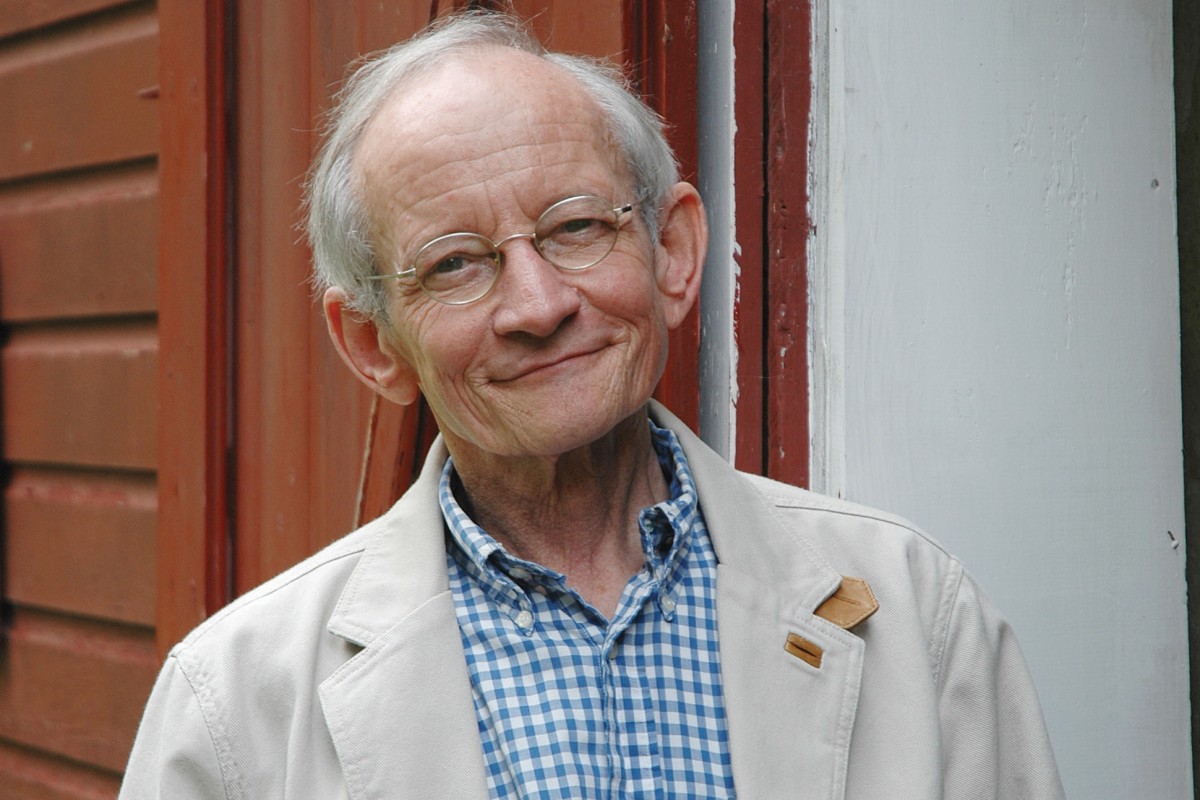
Ted Kooser

Ted Kooser

______

In Zen practice,” writes the Zen teacher Sobun Katherine Thanas, “we give attention to the details of our lives.” By paying close, sustained attention to the most ordinary details in our daily round, we train ourselves to abide in the present moment. Rather than sacrifice our present experience to a past that is already gone, a future that has not yet come, or abstract thoughts that may or may not reflect reality, we attend to the details of the matter at hand: the level of green tea in our measuring spoon, the temperature and volume of water to be added, the specific brewing time for that particular tea. By so doing, we fully engage in relative, historical time, even as we touch the timeless, absolute dimension of our experience.

No one understands this paradox more fully or articulates it with greater skill than the Midwestern poet Ted Kooser (b. 1939), who won the Pulitzer Prize for Poetry for his book Delights & Shadows in 2005 and served as US Poet Laureate from 2004-2006. Kooser is not a Zen practitioner, so far as I know, but by attending to the details of quotidian life, no matter how mundane, he returns the reader, time and again, to the immediacy of the present moment. And in their acute awareness of impermanence and interdependence, as revealed by such common or discarded objects as curtain rods, enameled pans, and Depression glass, his poems often embody the essence, if not the customary forms and rituals, of Zen practice.

A vivid example may be seen in the title poem of Kooser’s collection Splitting an Order (2014). In this gentle poem, set in a diner, the narrator observes an old man cutting his cold sandwich into two equal parts. It pleases the narrator to watch him

                                  keeping his shaky hands steady

by placing his forearms firm on the edge of the table

and using both hands, the left to hold the sandwich in place,

and the right to cut it surely, corner to corner,

observing his progress through glasses that moments before

he wiped with his napkin, and then to see him lift half

onto the extra plate that he asked the server to bring,

and then to wait, offering the plate to his wife

while she slowly unrolls her napkin and places her spoon,

her knife, and her fork in their proper places,

then smooths the starched white napkin over her knees

and meets his eyes and holds out both old hands to him.

A more ordinary situation it would be difficult to imagine: an elderly married couple having lunch in a diner. Yet Kooser endows this everyday situation with the glow of heightened attention, both on the part of the husband and wife and on that of the observant narrator.

The couple are splitting a plain roast-beef sandwich, perhaps to economize or because neither needs to eat a whole one. To accomplish this division, the husband must steady his shaky hands, a challenge he readily overcomes. By dividing the sandwich “surely” and diagonally, he ensures that the resulting portions will be exactly equal. Meanwhile, his wife carefully unrolls the napkin enclosing her knife, fork, and spoon. These, too, become objects of meticulous attention.

Even as the husband and wife are taking their time and paying attention to the details of their humble repast, the narrator is doing the same. His unswerving observation, recorded in a single complex but graceful sentence, not only mirrors that of his subjects toward the actions they are performing. It also establishes a tone of caring, even for common, unexceptional things, and implicitly bestows moral and aesthetic value on a scene that might otherwise have been dismissed as banal. The true significance of the scene becomes apparent in the poem’s closing lines, where the husband’s offering his wife her half of their sandwich completes his act of fairness, solicitude, and kindness. She in turn exhibits an attitude of openness and gratitude.

Shizen ichimi, an old Zen saying reminds us: “Poetry and Zen are one.” Although the former depends on fresh language, the latter on silent contemplation, both rely on wholehearted attention to concrete, particular detail. By stopping and looking deeply, both reveal the hidden dimension of human experience, the currents of interdependence and impermanence that underlie the most commonplace of human interactions. And, though they do so in very different ways, both, in the words of the poet Patrick Kavanagh, “snatch out of time the passionate transitory.”

_____________

Sobun Katherine Thanas, The Truth of This Life: Essays on Learning to Love This World (Shambhala, 2018), 69.

Ted Kooser, Splitting an Order (Copper Canyon, 2014), 9.

Patrick Kavanagh, “The Hospital,” Collected Poems (Norton, 1964), 153.

Photo: Ted Kooser

Read Full Post »

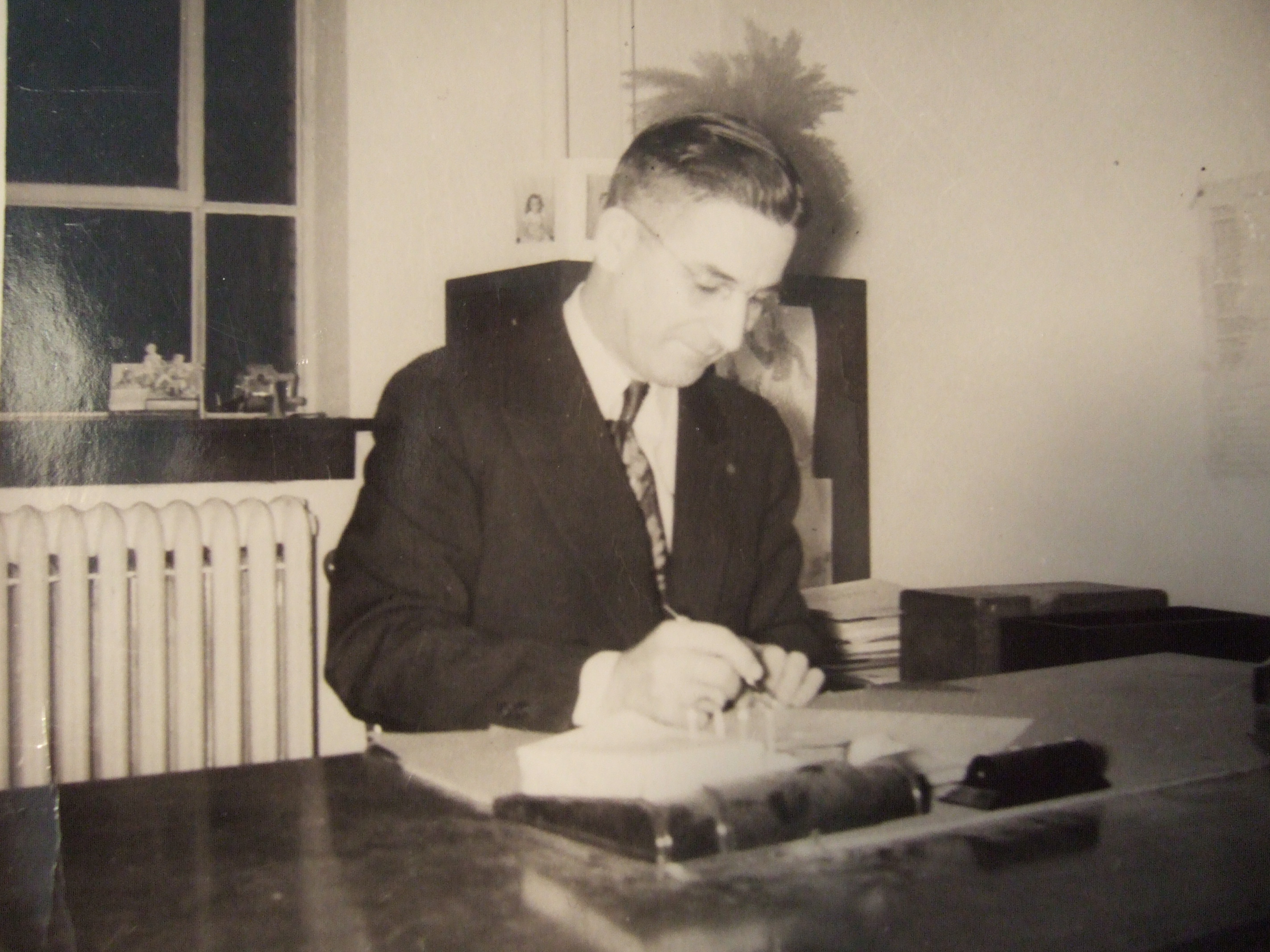
5. Marion Howard at his desk, Longfellow School

“All composite things,” declares the Diamond Sutra, “are as a star at dawn, a bubble in a stream, a dewdrop, a flash of lightning.” I am often reminded of those verses when I summon memories from my childhood. From my present vantage point, the images, names, and places that constitute those memories sometimes resemble fragments from a dream or dispatches from a foreign land.

Such is my memory of Longfellow Elementary School in Clinton, Iowa (pop. 27,000), my scenic hometown on the banks of the Mississippi River. I attended Longfellow School from the ages of seven to eleven. Situated on Iowa Avenue, a quiet residential street, and facing the First Church of God, this two-storey brown-brick building bespoke a reliable solidity and an austere sobriety. Erected in 1927, the building housed some thirty classrooms. Together with its spacious playground and baseball diamond, it occupied a city block. To the vulnerable schoolchildren who approached this imposing edifice, it presented a formidable if not forbidding aspect.

Not so for me, however. To this day I remember the school fondly and intimately, not only because it was there that I learned to read, write, and do arithmetic—and to hold my own with the playground bullies—but also because my father, Marion C. Howard (1905-1971), was the school’s principal. Far from being an alien, oppressive institution, Longfellow School felt like a second home. (more…)

Read Full Post »

(more…)

Read Full Post »

« Newer Posts - Older Posts »