Feeds:
Posts
Comments

Posts Tagged ‘Ted Kooser’

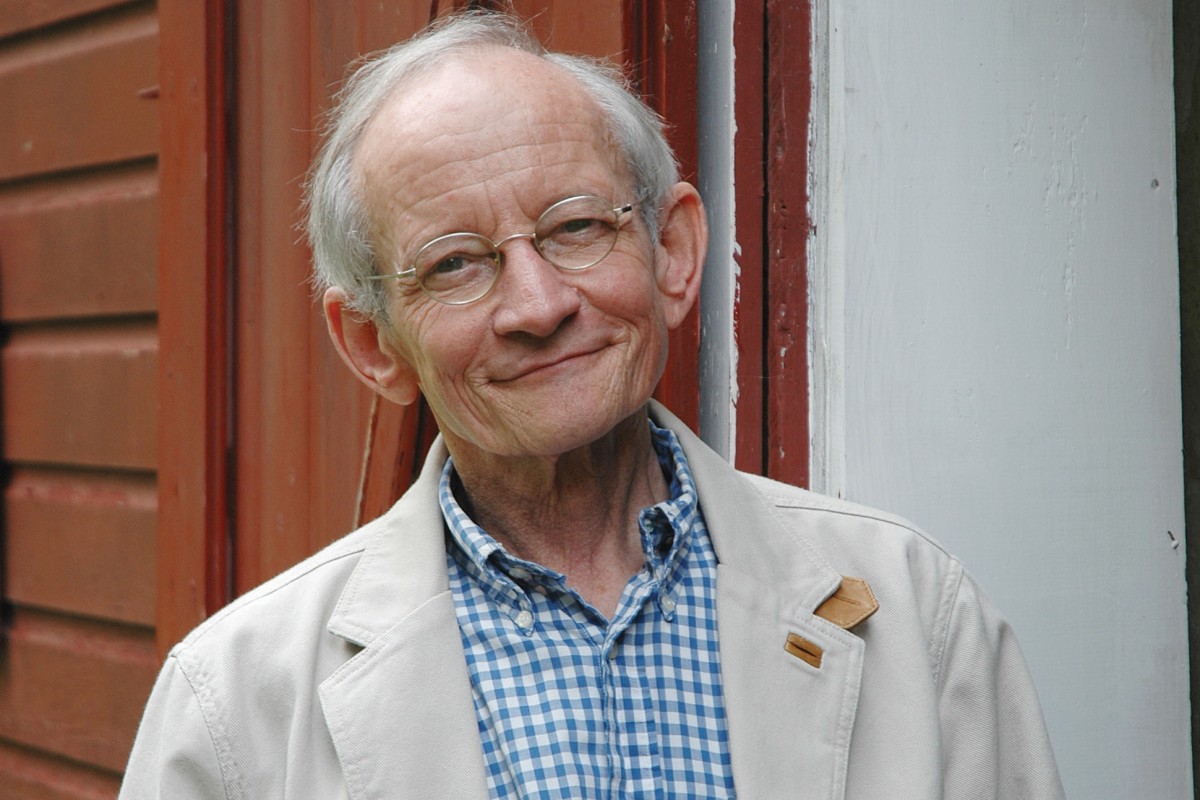
In the opening lines of his poem “Gauze,” Ted Kooser, a former Poet Laureate of the United States, asks a provocative question: “Can a man in his eighties, with cancer, / be happy?” In the remaining lines, he provides a tentative answer:

                        It seems that he can, cutting

            yesterday’s gauze dressing in pieces

            to scatter over the grass for the wrens

            who’ve come back again after another

            long winter and are building their nests

            in his birdhouses built with old boards

            that he salvaged in happiness, which he

            hammered together in happiness too.

If Kooser’s response to his own question sounds surprising, even startling, it is probably because it runs athwart conventional assumptions. In contemporary Western culture, old age is not commonly regarded as a time of exceptional happiness. On the contrary, it is often characterized as a kind of sunset: a time of loss, regret, physical indignity, and relative incapacity. Likewise, a critical, if not incurable, disease would seem incompatible with a general mood of happiness. Kooser’s pivotal use of the verb seems suggests that even he cannot quite believe what he is experiencing.

            From the vantage point of Zen teachings, however, Kooser’s experience of happiness amidst adverse conditions is not all that unusual. It seems entirely plausible. This is because Zen teachings sharply distinguish between external events and our internal responses. The former are often well out of our control. The latter are often a matter of choice, however conscious or unconscious.

            Usually, this distinction is framed as the difference between pain and conditioned suffering. Pain is what happens to us. Conditioned suffering is what we inflict upon ourselves through our reactions and responses, as when we catastrophize without sufficient evidence or engage in fearful speculation. Classical Buddhism likens the pain attendant to harsh external conditions to an arrow piercing our bodies. Our negative, conditioned responses are like a second arrow shot into the open wound.

            With respect to aging, anyone of a certain age can confirm that the first arrow and its impact are all too real. Beyond the maladies already mentioned, there may be cognitive impairments, the risk of taking a life-altering fall, or the eventual need for joint replacements, to name a few. These and other infirmities can make the lives of elderly people challenging, to say the least.

            At the same time, we have a choice. We can deny, resist, exaggerate, or otherwise worsen our afflictions.  Or we can acknowledge them, seek treatment, and, if possible, accept them for what they are. If the former response is akin to the second arrow, the latter affords at least a possible end to conditioned suffering.

            With respect to illness and disease, true acknowledgment and acceptance may be a far more complex and difficult matter. And it is also an individual one, dependent on temperament, overall health, and many other variables. For those with high pain thresholds and a cultivated tolerance for the uncertain and the unknowable, it is one thing. For those with neither, it is quite another.

            What Ted Kooser’s poem distinctively reflects is an open and curious but realistic sensibility discovering, as if for the first time, that happiness can co-exist with the realities of aging and the presence of a serious illness. It is not as if he is fully accepting either. Rather, he is implying that what Zen teachings would call contentment is ultimately not determined by externally imposed conditions. Its sources are within.

            For Kooser those sources would appear to include the pleasures of making and making do with what is at hand; the sense of being an integral part of nature rather than merely an outside observer; the exercise of imagination in returning a manufactured, disposable fabric to the natural world; and, not least, the neighborly company of wrens, one of the most comely and sonorous of North American birds.

Read the full text of “Gauze” in Raft (Copper Canyon Press, 2024), Ted Kooser’s most recent book.
Read Full Post »

Ted Kooser

Ted Kooser

______

In Zen practice,” writes the Zen teacher Sobun Katherine Thanas, “we give attention to the details of our lives.” By paying close, sustained attention to the most ordinary details in our daily round, we train ourselves to abide in the present moment. Rather than sacrifice our present experience to a past that is already gone, a future that has not yet come, or abstract thoughts that may or may not reflect reality, we attend to the details of the matter at hand: the level of green tea in our measuring spoon, the temperature and volume of water to be added, the specific brewing time for that particular tea. By so doing, we fully engage in relative, historical time, even as we touch the timeless, absolute dimension of our experience.

No one understands this paradox more fully or articulates it with greater skill than the Midwestern poet Ted Kooser (b. 1939), who won the Pulitzer Prize for Poetry for his book Delights & Shadows in 2005 and served as US Poet Laureate from 2004-2006. Kooser is not a Zen practitioner, so far as I know, but by attending to the details of quotidian life, no matter how mundane, he returns the reader, time and again, to the immediacy of the present moment. And in their acute awareness of impermanence and interdependence, as revealed by such common or discarded objects as curtain rods, enameled pans, and Depression glass, his poems often embody the essence, if not the customary forms and rituals, of Zen practice.

A vivid example may be seen in the title poem of Kooser’s collection Splitting an Order (2014). In this gentle poem, set in a diner, the narrator observes an old man cutting his cold sandwich into two equal parts. It pleases the narrator to watch him

                                  keeping his shaky hands steady

by placing his forearms firm on the edge of the table

and using both hands, the left to hold the sandwich in place,

and the right to cut it surely, corner to corner,

observing his progress through glasses that moments before

he wiped with his napkin, and then to see him lift half

onto the extra plate that he asked the server to bring,

and then to wait, offering the plate to his wife

while she slowly unrolls her napkin and places her spoon,

her knife, and her fork in their proper places,

then smooths the starched white napkin over her knees

and meets his eyes and holds out both old hands to him.

A more ordinary situation it would be difficult to imagine: an elderly married couple having lunch in a diner. Yet Kooser endows this everyday situation with the glow of heightened attention, both on the part of the husband and wife and on that of the observant narrator.

The couple are splitting a plain roast-beef sandwich, perhaps to economize or because neither needs to eat a whole one. To accomplish this division, the husband must steady his shaky hands, a challenge he readily overcomes. By dividing the sandwich “surely” and diagonally, he ensures that the resulting portions will be exactly equal. Meanwhile, his wife carefully unrolls the napkin enclosing her knife, fork, and spoon. These, too, become objects of meticulous attention.

Even as the husband and wife are taking their time and paying attention to the details of their humble repast, the narrator is doing the same. His unswerving observation, recorded in a single complex but graceful sentence, not only mirrors that of his subjects toward the actions they are performing. It also establishes a tone of caring, even for common, unexceptional things, and implicitly bestows moral and aesthetic value on a scene that might otherwise have been dismissed as banal. The true significance of the scene becomes apparent in the poem’s closing lines, where the husband’s offering his wife her half of their sandwich completes his act of fairness, solicitude, and kindness. She in turn exhibits an attitude of openness and gratitude.

Shizen ichimi, an old Zen saying reminds us: “Poetry and Zen are one.” Although the former depends on fresh language, the latter on silent contemplation, both rely on wholehearted attention to concrete, particular detail. By stopping and looking deeply, both reveal the hidden dimension of human experience, the currents of interdependence and impermanence that underlie the most commonplace of human interactions. And, though they do so in very different ways, both, in the words of the poet Patrick Kavanagh, “snatch out of time the passionate transitory.”

_____________

Sobun Katherine Thanas, The Truth of This Life: Essays on Learning to Love This World (Shambhala, 2018), 69.

Ted Kooser, Splitting an Order (Copper Canyon, 2014), 9.

Patrick Kavanagh, “The Hospital,” Collected Poems (Norton, 1964), 153.

Photo: Ted Kooser

Read Full Post »