Feeds:
Posts
Comments

Posts Tagged ‘Buddhism’

Welcome home

Gaylon Ferguson

If you have ever gone on a diet, you know that most diets require some sort of intervention. Eating a bit less is not enough.

By and large, the same is true of meditative practice. Most types of meditation require the practitioner to undertake a program in the service of a goal. Whether a particular program aims to tame the unruly mind, cultivate equanimity, or foster compassionate wisdom, all require practitioners to make some changes in their attitudes and behaviors, replacing one set of habits with another. And most prescribe specific techniques, such as repeating a meditative verse, contemplating a Zen koan, of “labeling” mental phenomena as they arise.

In his new book Welcoming Beginner’s Mind (Shambhala, 2024), the veteran dharma teacher Gaylon Ferguson proposes a fresh alternative to those traditional methods. As Ferguson notes in his introduction, meditative practice is based, at least in part, on the premise that something is amiss—or missing—in one’s life as it presently is. Meditation supplies a remedy.

By contrast, Ferguson offers a practice premised on the belief that “welcoming is our true nature.” Just as we welcome friends, relatives, and sometimes strangers into our homes, we can do the same with the present conditions of our lives, however auspicious or adverse. We can welcome rather than resist them. Beyond that, we can also welcome ourselves, however selfish or altruistic, inferior or superior we perceive ourselves to be. Framing his discussion in the Ten Oxherding Pictures, a revered visual allegory depicting the Buddhist journey to awakening, Ferguson offers a synthesis of Zen and Tibetan meditative traditions, broadly dividing his sequential (but non-progressive) method into three distinct stages.

First among them is the Welcoming Exercise, the foundation for all that will follow. Instructing us to sit upright comfortably for three minutes, Ferguson invites us to “trust and taste whatever arises,” “the entire range of feelings, sensations, thoughts, perceptions, and concepts.” In contrast to mindfulness meditation, the objective is not to “be here now,” to pacify the mind, or “to change our experience, transforming ourselves from this to that.” Rather we are to be “guided by what we are sensing and feeling,” allowing our lives “to be as bitter or sweet as they are without manipulation.” In short, we are to practice what Shunryu Suzuki Roshi called “beginner’s mind,” a “basic openness” that he regarded as “the secret of meditation.”

In the second stage of this practice, the Natural Noticing Exercise, we are again directed to sit for three to five minutes, noticing “whatever we might notice: sights, sounds, smells, the temperature in the room, thoughts in the mind, sensations in the body, feelings in the heart.” This time, however, we are exhorted to be “curious about what we notice.” Rather than discipline the mind to remain on a single object, we deliberately allow it to roam.

As Ferguson readily concedes, the Noticing practice may appear superficial when contrasted with the deep contemplation characteristic of intensive meditative retreats. But its relative superficiality is consistent with its purpose, which is not to plumb ultimate reality but to explore “ordinary, conventional, dualistic mind.” In essence, it is “an appreciative inquiry into natural noticing itself.”

“Inquiring,” the third stage of the practice, joins “non-effort with effort” and enlists our innate curiosity in the service of contemplative inquiry.  As its primary tool, this exercise employs a familiar question from the Zen tradition: “What is this?” By repeatedly asking this question of images, thoughts, feelings, and sensations as they arise, we allow insights to emerge of their own accord. As Ferguson notes, this mode of inquiry has little in common with a police investigation or prosecutorial interrogation. Gentle in tone, it invites intimate feelings to surface and intuitive understanding to manifest, while also encouraging “the beginner’s mind of not-knowing” to arise and flourish.

In the Ten Oxherding Pictures, the practices of welcoming, noticing, and inquiring precede later stages of the journey to awakening, including “Forgetting the Ox” and “Being in the World.” In his concluding chapters, Ferguson gives due weight to those stages, while noting emphatically that all are to be understood not as means toward an end but as ends in themselves. All engender “beginner’s mind.” In this way the Ten Oxherding Pictures and Ferguson’s method differ from such Western analogues as John Bunyan’s Pilgrim’s Progress or William Hogarth’s Industry and Idleness, which illustrate progressive steps toward a desired moral destination.

Longtime practitioners of Zen and Vipassana (“insight”) meditation will recognize elements of those practices in Ferguson’s formulation.  In several ways, the Welcoming Exercise recalls the Soto Zen practice of shikantaza (“just sitting”), and the Inquiring exercise bears a strong family resemblance to Vipassana practice. But the presence of those contributing elements takes nothing away from Ferguson’s wise, original, and accessible synthesis. On the contrary, his unconventional method is a worthy addition to the growing body of confluent practices that constitute Western Zen.

Photo: Gaylon Ferguson

Read Full Post »

aaron-burden-y02jEX_B0O0-unsplash

If we wish a houseplant to flourish, we provide it with water, nutrients, and light. We set it near a window. But should we wish the same for ourselves, for those we love, and for humanity in general, what are the counterparts of those necessary conditions? What practices, activities, and qualities of mind contribute to human flourishing?

In his timely new book The House We Live In: Virtue, Wisdom, and Pluralism, an ambitious endeavor to forge a pragmatic, “flourishing-based” ethic for our pluralistic, multicultural society, the Zen priest and psychologist Seth Zuihō Segall identifies multiple “domains of flourishing.” These include “relationships,” “accomplishment, “aesthetics,” social acceptance, “meaning,” and “whole-heartedness.” Exploring the last of those “domains,” Segall invokes a practice from the Soto Zen tradition.

Known as menmitsu-no-kafu and translated by Segall as “whole-heartedness,” this practice might most simply be characterized as giving full attention to whatever one is doing, be it driving, chopping vegetables, or listening to a friend. But, as Segall explains, the practice also entails “exquisite, careful, considerate, intimate, warm-hearted, continuous attention to detail.” And, in contrast to those meditative practices prescribed for self-pacification and self-improvement, menmitsu is directed outward rather than inward: toward the benefit of others rather than oneself.

Traditionally, menmitsu is taught by Soto Zen instructors and practiced within the confines of a temple or Zen center. There, ordained monastics and committed Zen students learn to embody menmitsu as they engage in their everyday activities: “donning their robes, sweeping the walkways, refolding their bowing cloths, assembling and disassembling their eating bowls, lighting incense, and so on.” All are to be done with “exacting, meticulous attentiveness.”

 As Segall readily concedes, not all of us are “called to the same degree of attentiveness” or prepared to practice menmitsu in every aspect of our lives. At the same time, Segall suggests, “we could do well to take a page” from this integral dimension of Zen practice. Practiced in excess, menmitsu can look like OCD and feel like hypervigilance—and, if one is married, drive one’s spouse to distraction. But, practiced thoughtfully and with moderation, menmitsu can indeed enhance our lives and those of others around us.

For my own part, I have found it most productive to apply the principle of menmitsu primarily to those daily activities I most value and enjoy, including formal Zen meditation; studying and practicing the classical guitar; reading and re-reading great literary works; cooking; conversing with friends and family; and, most centrally, the craft and art of writing, which can embody menmitsu in at least three ways.

To begin with, the practice of literary menmitsu can begin with the choice to write with a pen or pencil rather than a keyboard. However archaic handwriting has become in the age of the iPad, writing by hand is not only a sensuous, intimate way of “getting the better of words,” as T.S. Eliot once put it. Handwriting also promotes precision of diction and meticulous attention to detail. “Writing maketh the exact man,” wrote Francis Bacon. And if that maxim is true of writing in general, it is even more so with respect to writing, slowly and deliberately, by hand. For decades, I required students in my literature courses to write daily précis and responses in their own hands on 4 x 6” index cards, as a way of precisely comprehending the poems and stories they were reading and forming their own interpretations. I was seldom disappointed.

Second, I have found that scrupulous observance of the time-honored conventions of English grammar, rhetoric, and usage sorts well with the practice of menmitsu. Evolved over many centuries and exemplified by such masters of English prose as Jonathan Swift, George Orwell, and Scott Russell Sanders, those conventions promote clarity, concision, eloquence, and force. Beyond the basic “rules” taught in English 101—the avoidance of dangling modifiers, comma splices, faulty parallelisms, and the like—literary menmitsu can be practiced by observing such fine points of usage as the difference between “anxious” and “eager” and such grammatical details as the use of the possessive pronoun before a gerund (“his running for president” rather than “him running for president”). Fussy as such distinctions may first appear, collectively they can make the difference between lucid, accessible prose and an indigestible verbal paella.

 Last and most important, literary menmitsu can be practiced by keeping one’s intended reader uppermost in mind. If I aspire to be “careful,” “considerate,” and “warm-hearted” when composing a poem or letter or essay, I can do my readers a favor by recalling the dictum attributed to Ernest Hemingway: “Easy writing makes damned hard reading.” Writing well, in my experience, is an exacting labor, not only of love but also of respect for the majesty, beauty, and ancestry of the English language and the sensibilities of one’s potential readers. A mode of “flourishing” rich in discovery, reach, and invention, the practice of literary art can also be an expression of compassion and a concrete, lasting embodiment of menmitsu.


Seth Zuiho Segall, The House We Live In: Virtue, Wisdom, and Pluralism (Equinox 2023), 102.

Photo: Aaron Burden

(more…)

Read Full Post »

In the spring of 1998, at a meditative retreat in Burlington, Vermont, Zen master Thich Nhat Hanh offered some basic instructions for seated meditation. “Just sit there,” he said. “Don’t try to become someone else.”

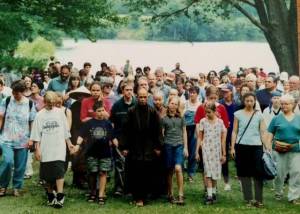
A year later, in Brownsville, Vermont, I attended a subsequent retreat conducted by Thich Nhat Hanh. On an August afternoon, I sat outdoors with “Thay,” as we called him, and a dozen others, drinking herbal tea. A gentle monk in his early seventies, he wore the earth-brown robes of his Vietnamese order. Now and then, he lifted his cup with both hands and took a sip of tea. At that time, Thich Nhat Hanh was already a figure of international renown. Describing him as an “apostle of peace and non-violence,” Dr. Martin Luther King had nominated him, in 1967, for the Nobel Peace Prize. Yet, on that August afternoon, his silent presence seemed as humble as it was peaceful. Well established in the present moment, he was the very embodiment of his own advice. He showed no sign of wanting to be anywhere or anyone else. (more…)

Read Full Post »

« Newer Posts