Feeds:
Posts
Comments

52. Looking deeply

According to the fifth-century Indian sage Bodhidharma, one of the founders of the Zen tradition, Zen is a mode of inquiry “not dependent on words and letters.” It is a practice of direct seeing, based on direct experience. Language in general and conceptual language in particular can come between our minds and the realities of this world. We can mistake the word moon for the moon itself.

Yet, as Zen master Thich Nhat Hanh, author of more than sixty books, affirms, “Writing is a practice of looking deeply.”* Through the act of writing, as through the practice of meditation, we can become intimate with our lives. We can stop and look deeply into what is occurring, and as the poet Eavan Boland once put it, we can fully “experience our experience.”  In these ways, as in many others, the parallel practices of meditative inquiry and meditative writing share a common purpose. And in the works of the greatest contemplative writers—Thomas Merton, Rainer Maria Rilke, Elizabeth Bishop, Matsuo Basho, to name a few—the two practices are so closely allied as to be one and the same.

That is certainly true of the Irish Nobel laureate Seamus Heaney (b. 1939), whose poems and essays bear the marks of a meditative temperament. And in his poem “Personal Helicon,” he offers an illuminating metaphor for the process of “looking deeply,” even as his poem enacts that process.

The title of Heaney’s poem alludes to Mount Helicon, the sanctuary of the Muses in Greek mythology. By association, it also alludes to the Hippocrene spring, the legendary source of poetic inspiration, which was situated on Mount Helicon. Yet at first glance the poem appears to be a fond sketch of childhood, set in rural County Derry and centering on the poet’s early fascination with wells. “They could not keep me from wells,” Heaney declares in his opening stanza. “I loved the dark drop, the trapped sky, the smells / Of waterweed, fungus and dank moss.” In subsequent stanzas, he recalls particular wells in the Northern Irish countryside, including one “so deep you saw no reflection in it,” and a shallow well in a ditch, which “fructified like any aquarium.”

In his closing stanzas, however, Heaney turns from fond reminiscence to mature reflection on his life’s work:


Others had echoes, gave back your own call

With a clean new music in it. And one

Was scaresome, for there, out of ferns and tall

Foxgloves, a rat slapped across my reflection.


Now, to pry into roots, to finger slime,

To stare, big-eyed Narcissus, into some spring

Is beneath all adult dignity. I rhyme

To see myself, to set the darkness echoing.


In the first of these stanzas, Heaney acknowledges both the childhood pleasure of hearing echoes in a well and the not-so-pleasant experience of seeing a rat in the water. Understood figuratively, the image of the rat suggests foul and frightening aspects of the self and the world, revealed by the process of looking deeply. And in the closing stanza, he likens that process to the act of writing, which allows him both to see himself and to evoke what he has elsewhere called “the mysterious otherness of the world.” Like the child’s voice echoing in a well, the mature poet’s rhymes conjure the dark unknown. They create a state of mind known to literary analysts as “negative capability” and to Zen practitioners as “Don’t-know mind” or the mind of “not-knowing.”  Abiding with confidence and courage in that state, the poet and meditative practitioner are open to infinite possibilities.

Not everyone can write a poem with the depth and precision of “Personal Helicon.” But anyone with pen and paper can enlist the act of writing as a tool of meditative inquiry. As the American poet William Stafford once remarked, writing is “one of the great free human activities,” which anyone can pursue, whether as a literary vocation or as a vehicle for “looking deeply.” Please try it for yourself.

____________________________________

*Thich Nhat Hanh, The Heart of the Buddha’s Teaching (Parallax 1998), 83.

Seamus Heaney’s reading of “Personal Helicon” may be heard at:

http://www.ibiblio.org/ipa/poems/heaney/personal_helicon.php

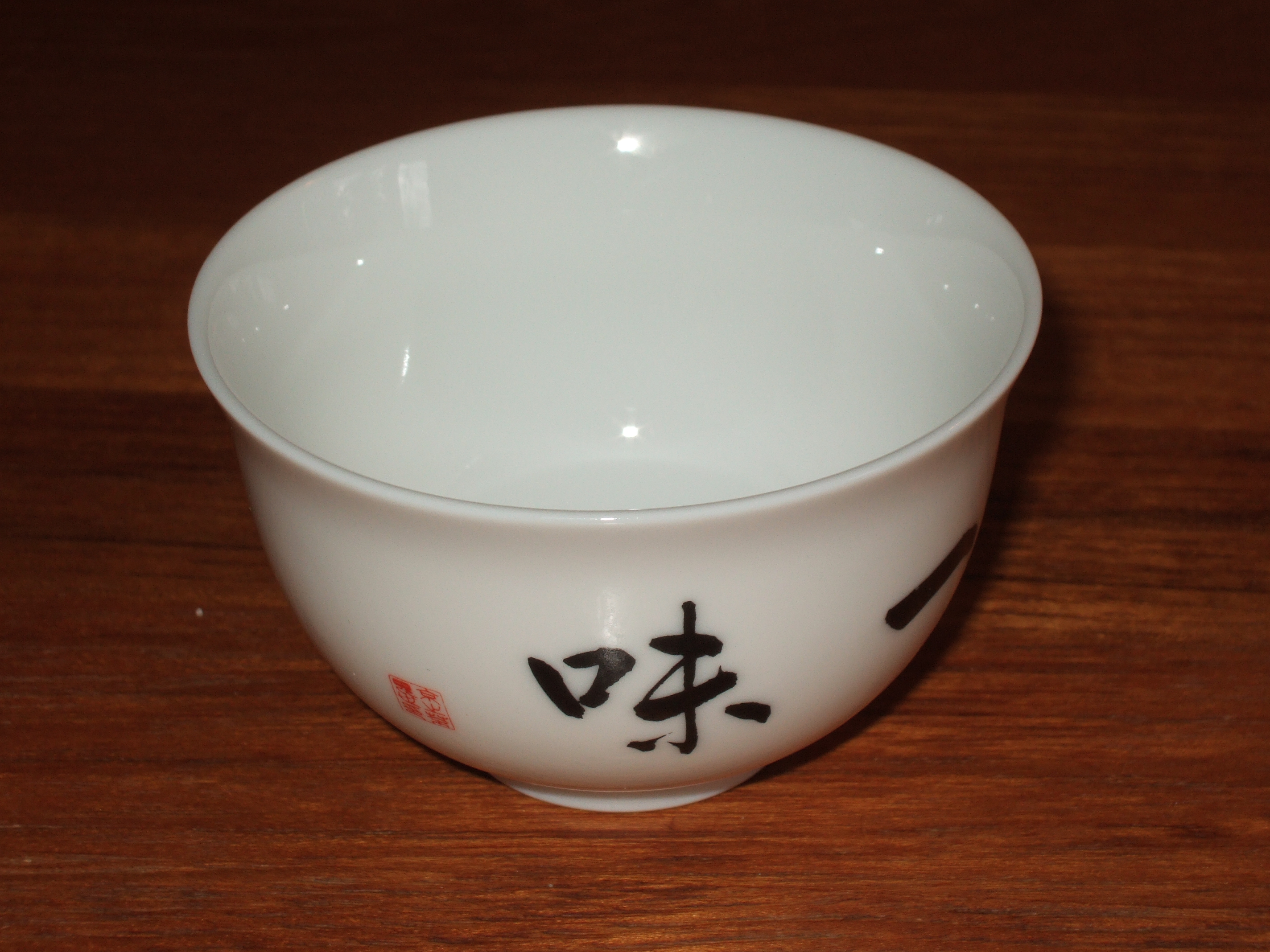
As I pick up my teacup on this cold winter morning, I’m remembering the story of the Zen student who asked Shunryu Suzuki, author of Zen Mind, Beginner’s Mind, why the Japanese make their teacups so thin. Being so delicate, the cups are easily broken.

“It’s not that they’re too delicate,” Suzuki Roshi replied, “but that you don’t know how to handle them. You must adjust yourself to the environment, and not vice versa.”

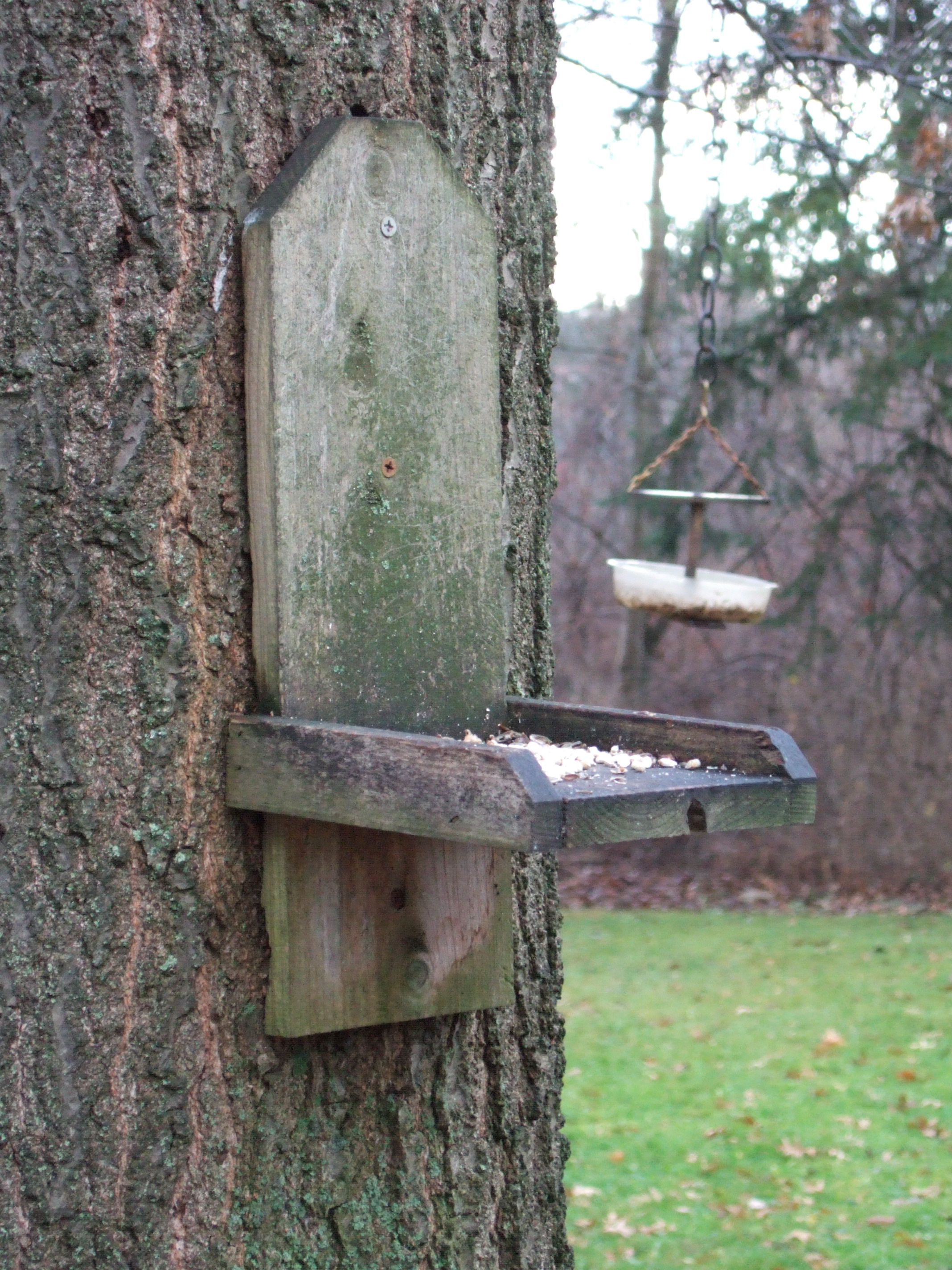
Suzuki’s Roshi’s point is well taken. We must adjust to our surroundings.  However, if you are living in Western New York in the month of January, you may be feeling a little resistance to Suzuki’s wisdom. It is not so difficult to adjust to one’s environment when, as now, a lean female cardinal is coming and going from our feeder, her orange beak and tan feathers catching the early-morning light. But it is not so easy when your driveway is filled with snow, the sidewalks are icy, and you’re already sick of scarves and parkas. Here in Alfred, New York, we know how to handle such conditions, but that doesn’t mean we like them.

Yet the significance of the student’s question and Suzuki’s response transcends the question of adjustment. What the story vividly illustrates is the way in which preconceptions—in this instance, that teacups should be sturdy and equipped with handles—influence and often govern our perceptions. And it also exemplifies the resistance that many of us bring to the unknown, whether the new or foreign object be a Japanese teacup or an all-electric car.

For a more immediate example, please pause and consider any preconceptions that you might have brought to the reading of this column. Perhaps you expected something other than what you’ve encountered—a discussion of meditative methods, for instance, or an explanation of satori. Or, conversely, perhaps what you have so far read accords with your expectations, and you are more or less satisfied. In the first instance, you might choose to read something else; in the second, you might choose to read on.

There is, however, another option, which is to examine your expectations and your present response in the light of awareness. Looking closely into both, you can discern your assumptions, your fixed ideas, and the judgments they’ve engendered. And you can become aware of those mental processes, even as they are arising, continuing, and passing away.

In The Four Foundations of Mindfulness, a core text for Zen students, awareness of this kind is called “mindfulness of the mind in the mind.” That somewhat cumbersome phrase refers to awareness of mental phenomena in the very moment when they are occurring. Such awareness is not the same as discursive thinking. Rather, it is a kind of effortless seeing, its object in this case being the thoughts that cross our minds. In contrast to fear, worry, and resistance, open awareness liberates the mind, both by illuminating our mental processes and by revealing the empty, or ephemeral, nature of mental events.

Such awareness cannot be awakened by an act of will. There is no switch to turn it on. However, it can be cultivated through the practices of sitting and walking meditation. And when it occurs, it can be felt in the mind as a spacious receptivity and in the body as a subtle shift of orientation—a shift from the confines of the head to the expansiveness of  the hara, the body’s center of gravity, situated in the lower abdomen. Viewed from the standpoint of the hara, even the most destructive thought loses much of its power.

Shinge Roko Sherry Chayat Roshi, Abbot of the Zen Center of Syracuse, has likened this felt shift from thinking to awareness to an expectant mother’s experience of her baby “dropping” into the pelvis shortly before birth. In this instance, however, the baby is the mind itself, as it settles into awareness, fully cognizant of whatever is occurring. In that silent, open space, habitual thoughts and self-protective judgments can be recognized for what they are and nothing more. And even a traditional Japanese teacup, however breakable or difficult to handle, can be appreciated as something useful, beautiful, and new.

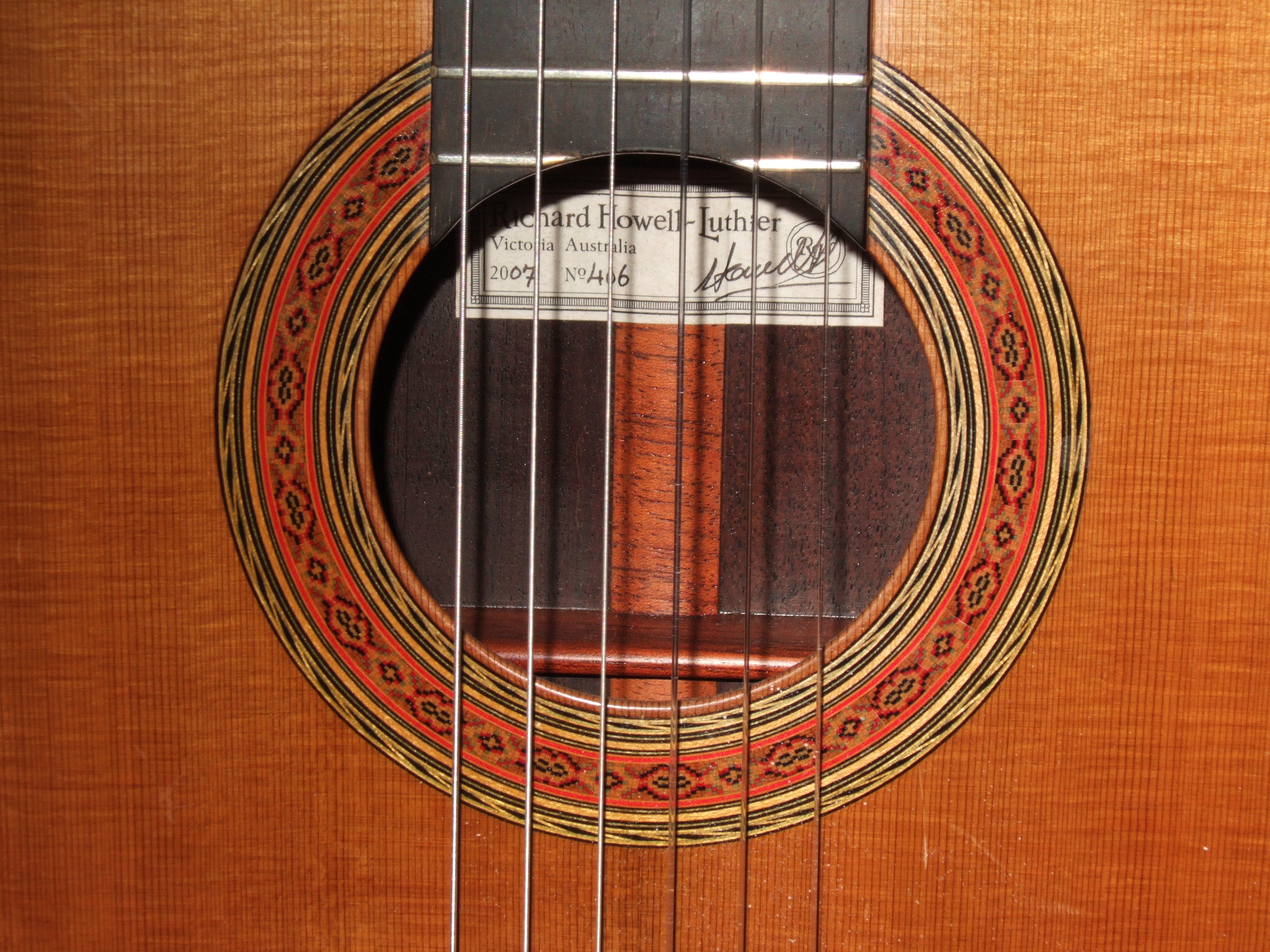
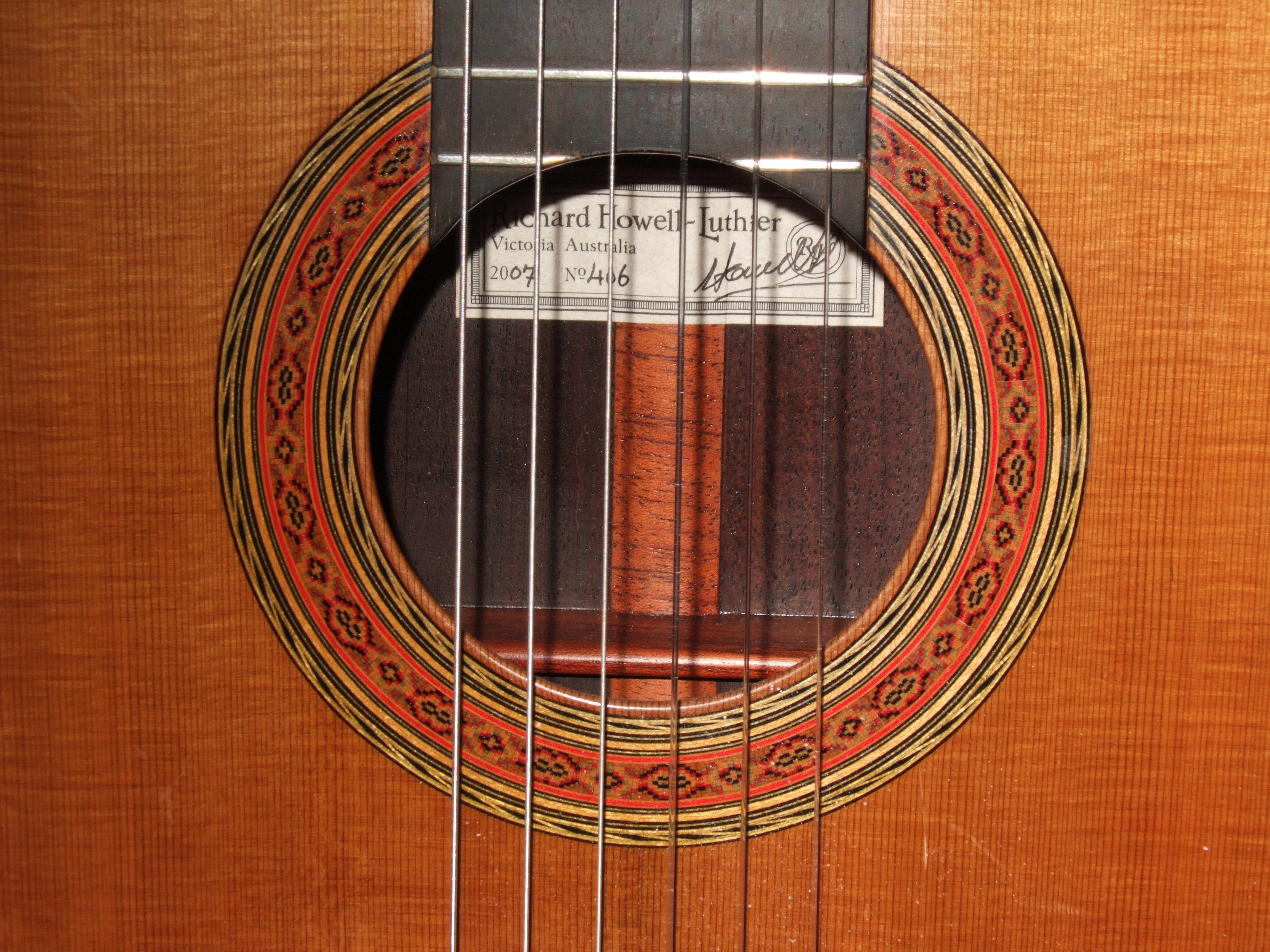
Richard Howell guitar 2007

If you enjoy listening to the classical guitar, you may be familiar with the Prelude from J.S. Bach’s Prelude, Fugue and Allegro (BMV 998), one of the most beautiful pieces in the standard repertoire. Composed for lute or harpsichord in the so-called “broken style” (style brise) of the French Baroque, the Prelude consists largely of arpeggiated chords. Played evenly and deliberately, the successive notes create an impression of wholeness, as though the chords’ original order had been restored.

Twenty-five years ago, I performed the Prelude in a master class at an international guitar festival in Toronto. The class was conducted by David Russell, then a rising star and now a concert artist of the highest distinction. Seated before me were some fifty guitarists and guitar teachers from around the world. To perform in such a setting was both exhilarating and daunting, not least because my audience had intimate knowledge of the piece I was playing. Interpretive felicities would not go unnoticed, but neither would mistakes.

Despite the stressful circumstances, I turned in a creditable performance. When I had finished, and the polite applause had died down, David Russell offered his critique.

To begin with, my tone had been inconsistent. I needed to work on that. Moreover, I had played the piece rather metrically, almost metronomically. I could allow myself and the music greater freedom. And most important, I had come down too hard at the ends of phrases. To avoid that unfortunate tendency, I might regard the last notes of phrases not as points of emphasis but as points of destination. “Think of them as arrivals,” David suggested.

Given the character of the Prelude, David Russell’s suggestion, however astute, was difficult to put into practice. Composed in 12/8 meter, the Prelude is marked by unceasing forward movement. With the exception of one long pause near the end, the score contains no moments of repose, no half notes, whole notes, or fermatas. If there are to be points of rest—points of arrival—the performer must consciously put them in. Or rather, the performer must be sensitive to natural, if reclusive, moments of repose.

In twenty-five years of playing the Prelude, I have never forgotten the principle articulated by David Russell. And over the years, I have seen how that principle may be applied in situations well beyond the bounds of musical interpretation, namely the practice of meditation and the conduct of everyday life.

With respect to meditation, Zen master Thich Nhat Hanh recommends that as we sit in stillness, we silently recite the verses, “I have arrived / I am home / In the here / And in the now,” letting these phrases accompany our inhalations and exhalations. More simply, we can inwardly recite the words “Arrive / home” and “Here / now” while breathing in and out. In that way, we counter the pressure, so prevalent in our culture, to be always on the move, always en route to somewhere else.

This practice is both pleasant and nourishing, and over time it can become an integral part of the daily round. Even the most hectic day contains moments of potential repose, in which we can cultivate a sense of arrival. And as with musical performance, we can honor those points of rest without losing our general momentum. By doing so, we may discover a hidden but inherent order, a rhythm akin to natural breathing. And we may also discover that even under the most anxious circumstances, it is possible to stop and collect ourselves before making our next move. Indeed, it is essential to do so, lest the life we’ve been given become little more than a shapeless, graceless succession of sixteenth-notes, played without meaning at breakneck speed.

____________________________

Per-Olov Kindgren’s rendition of the Prelude may be heard at http://www.youtube.com/watch?v=JDhv2f2mweE, Jan Depreter’s  at http://www.youtube.com/watch?v=LMXpCyS0We4 , and Julian Bream’s at http://www.youtube.com/watch?v=Fdi54PBPYC8.  David Russell plays the Prelude, Fugue, and Allegro on David Russell Plays Bach (Telarc 2003).

If you are near-sighted, as I am, you may have found that you can sometimes see nearby objects more clearly by taking off your glasses. Or, to put it another way, in the absence of your glasses, the inherent closeness of those objects becomes more apparent. What was supposed to enhance your vision was actually imposing a veil between yourself and the coffee cup in front of you.

One of the aims of Zen practice is to recognize such veils and, if possible, to remove them. According to Zen teachings, direct experience of the world—or what the Zen-trained teacher Toni Packer calls “fresh seeing”—is the one reliable basis for knowledge, understanding, and whatever wisdom we might acquire. Books and teachers may guide us, confirm what we have seen, or place our perceptions in an enabling context. But we must see things for ourselves. In Zen practice we cultivate direct seeing and a sense of intimacy, both with ourselves and with the world around us. Whatever stands in the way is to be set aside, or subjected to scrutiny, or cut asunder.

Of the conditions conducive to direct seeing, none is more important than the silence of meditation. “Only when I am quiet for a long time / and do not speak,” writes the poet Jane Hirshfield, “do the objects of my life draw near.” Elaborating her theme, she imagines that the proximate objects in her life, among them scissors and spoons and a blue mug, are deliberately keeping their distance from her. Even her towels, “for all their intimate knowledge,” are hesitant to come close. They are kept away by speech and thought, which separate self and other, the ego-centered mind and the things of this world. Only in those rare, egoless moments when she glimpses “for even an instant the actual instant” do the objects of her life draw near. At such moments, she fancifully suggests, each object emits a “sigh of happiness,” knowing that she has joined “their circle of simple, passionate thusness,” void of habitual, me-centered thought and the separation it imposes. (1)

Such intimacy is indeed a source of happiness. Conversely, a sense of separation can engender a deep and chronic suffering. In her essay “Touching Fear” Toni Packer addresses that reality:

“I’m never free of fear,” some people say, implying that there should be a state of mind and body that is free of fear. How can we possibly be free from fear when we live in the conditioned mode of the me-story most of the time? We’re deeply programmed to believe in this separate me by inaccurate language and by growing up in a world of other mes, all of whom think of and experience themselves as separate entities. . . . With separation inevitably goes fear and pain. (2)

Elsewhere, Packer quotes a questioner who asked, “Why does this me-ness, this self-centered feeling, arise when we realize that it causes such a painful sense of separation? How did it ever start in the first place?” Packer admits that she doesn’t know, but she also suggests that “all of us can watch me-ness as it is arising from moment to moment. We can find out about it if we are really deeply interested and curious.” (3)

Perhaps we can. And perhaps over time we can also discover ways to release ourselves from the me-centered tyranny of dualistic thinking, which places images and concepts between ourselves and the objects in our lives. By sitting still and not speaking, if only for the space of an hour, we can permit those objects to draw near, and we can rejoin what the poet Mary Oliver has called the “family of things.”(4) By taking off our conceptual glasses, we can see the world afresh, and see our place within it.

_____________

(1) Jane Hirshfield, Only When I Am Quiet and Do Not Speak,” Given Sugar, Given Salt (HarperCollins 2001), 23.

(2) Toni Packer, The Wonder of Presence (Shambhala 2002), 59

(3) Packer, 82

(4) Mary Oliver, “”Wild Geese,” Dream Work (Atlantic Monthly Press 1986), 14.

48. Weathered wood

In our culture, new is usually considered better. And where so-called home improvements are concerned, that is often the case, especially if the new item is a high-efficiency furnace or a forty-year roof or an energy-saving kitchen appliance. But sometimes the situation is more complex than that, the effect more problematic.

Recently we installed new vinyl windows in our home. In contrast to the fifty-year-old relics they replaced, the new windows bring a soft, expansive light into our darker rooms. Gone are the small panes and splintered mullions. Gone, too, are the uncaulked cracks and loose-fitting frames that let out heat. Our house feels tighter now, and our carbon footprint will almost certainly be smaller.

Yet with this welcome change has come an unexpected loss. Clean and efficient though they are, our new windows lack a quality that was palpably present in the decrepit pine windows they replaced. In American parlance that quality is sometimes called “character,” and it is said to reside in such objects as weathered deck chairs, antique tools, and Willie Nelson’s battered guitar. Our rattling old windows, such as they were, had character; our new vinyl windows, whatever their environmental virtues, do not.

In Japanese culture, the quality I’m describing is known as sabi, and it has an integral connection to the practice of Zen. Often linked with wabi, which connotes simplicity and a life free of materialistic striving, sabi once meant “loneliness” or “solitude.” In modern usage, it means the quality of being old, worn, and faded—and all the more beautiful for the wear and tear. The architect Tadao Ando defines the quality in this way:

Sabi by itself means “the bloom of time.” It connotes natural progression—tarnish, hoariness, rust—the extinguished gloss of that which once sparkled. It’s the understanding that beauty is fleeting. .  . Sabi things carry the burden of their years with dignity and grace: the chilly mottled surface of an oxidized silver bowl, the yielding gray of weathered wood, the elegant withering of a bereft autumn bough.*

Noting that sabi “transcends the Japanese,” Ando finds it in “an old car left in a field to rust, as it transforms from an eyesore into a part of the landscape.” This, he suggests, might be considered “America’s contribution to the evolution of sabi.”

Beyond the aspect of age, the word sabi also connotes imperfection. Rooted historically in the tea ceremony, the aesthetic of sabi developed in the sixteenth century as an indigenous reaction to the expensive teaware imported from China. In contrast to the brilliant colors and ostentatious perfection of Chinese wares and utensils, the tea masters Murata Shuko, Takeno Jo-o, and especially Sen no Rikyu (1522-1591) introduced such rough, imperfect objects as stoneware buckets and tea bowls produced by local craftsmen. In subsequent centuries, the aesthetic thus established extended to a general appreciation of imperfect objects, whether the object be a bamboo screen or a leaky vase. As the feudal baron Lord Fumai (1751-1819), himself the owner of a leaky vase, explained, “The furyu [sabi] of this  bamboo vase consists in the very fact of this leakage.”**

Yet if the objects that embody sabi are imperfect, it is not because they were poorly made. Nor is their imperfection a sign of neglect. On the contrary, as Tadao Ando remarks, “wabi-sabi is never messy or slovenly,” and an unmade bed or a room cluttered with junk is not an expression of sabi. Objects that possess sabi do so because they are visibly in the process of breaking down and reverting to the state of nature. Their imperfection is a mark of their impermanence. To contemplate sabi is to be reminded of the emptiness from which all things come and to which they will return. It is also to be reminded of the dynamic web of life, in which energies are constantly being exchanged, and new forms are coming into being.

The aesthetic of sabi and the practice of Zen are branches of a single cultural tree, and they have much in common. In both, a heightened awareness of impermanence draws us closer to the evanescent beauty of the present moment.  In both, the pathos of things going in and out of existence mingles with a sense of infinite possibility. And in both, the realization that all things are transitory prompts us to value and care for our lives.

_______________

*Tadao Ando, “What is Wabi-Sabi?”   http://nobleharbor.com/tea/chado/WhatIsWabi-Sabi.htm

**Daisetz T. Suzuki, Zen and Japanese Culture ( Princeton 1970), p. 326.

See also Leonard Koren, Wabi-Sabi for Artists, Designers, Poets, & Philosophers (Berkeley: Stone Bridge Press, 1994).

2009_1114ABHVISIT20070004

Patience, we are told, is a virtue. As a child growing up in eastern Iowa, I heard that bromide more than once. However, as an adolescent I learned about patience not from listening to Methodist sermons or elders’ proverbs but by spending time with an exceptionally patient man.

His name was Sven Jorgensen, and he was the co-owner of Eble and Jorgensen Office Supply, where I worked after school, on weekends, and in the summers. Unlike Fred Eble, a former Navy Seabee and a tense, frenetic striver, Sven exuded steadiness and calm. Wiry, high-strung Fred dealt with the public and could often be found in the front of the store, filling out orders or talking on the phone. Thick-set, sedentary Sven worked quietly at his table in the back room, cleaning and repairing typewriters. Nearby was a photo of Sven and his dog Walt in a flat-bottomed fishing boat. Like his owner, Walt looked stable and relaxed.

To everyone in town, Sven Jorgensen was known as Speed. Speed Jorgensen. He acquired that name at the age of fourteen, when he barreled down a steep hill on his bike, rode into a pile of frozen leaves, and flew over the handlebars. He hadn’t realized that the leaves were frozen. Ever after, all physical evidence to the contrary, Sven would be known as Speed. It was a lifelong joke, played by the world on a slow-moving Swede.

At Eble and Jorgensen’s I sometimes waited on customers, made deliveries, or stocked shelves, but much of the time I worked in the back room, where dirty or broken typewriters waited to be restored. With his big Swedish hands Speed would carry them, one by one, to his table, where he put them in a deep tray half-filled with solvent. There he would clean their typebars with a solvent-soaked toothbrush, adjust their springs, replace broken or tarnished keys. When he was finished, even the most abused machine would function smoothly and look as good as new.

Much of the time, Speed worked silently, as did I, but sometimes we chatted as we worked. Or rather, I talked and Speed listened, offering advice when advice was sorely needed. Once, when I had manged to deliver rubber cement rather than duplicating fluid to an office, nearly precipitating a crisis, Speed sharply admonished me to be more attentive. On another occasion, when I was enumerating my father’s faults, Speed remarked, without looking up, that my father was a very nice man. And once, when I repeated a mean-spirited joke I’d heard at school, he told me in so many words that my joke was not very funny. I would not repeat it again.

In his unchosen role as friend and mentor, Speed taught partly by precept but mostly by example. What he exemplified was not only patience but also the virtue of slowing down, even when typewriters needed to be cleaned or supplies delivered. Working slowly but productively at his table, or pausing in his work to offer kind advice, he provided vivid proof that life could be lived at a slower pace, allowing time to look more deeply and act more wisely.

The pace at which Sven Jorgensen lived and worked is also the pace of meditation. “Do you have the patience to wait,” asks Lao-Tzu in the Tao Te Ching, “till your mud settles and the water is clear? / Can you remain unmoving / till the right action arises by itself?” And in his book Meditation as Contemplative Inquiry, the physicist Arthur Zajonc observes that “hurrying is antithetical to the required tempo of meditation”. Elaborating that point, he notes that “the tempo of meditation is the same as that of artistic attention; it is the rhythm of poetry. Speed hides all subtlety; and reality is subtle.” *

Which of us isn’t in a hurry? Although my son once referred to me as his slow-moving dad, I too can get in a rush, lose all patience, and miss the subtleties of experience. If I need a retardant, I can find it in the image of Lao-Tzu, writing immortal poetry in his mountain retreat. Or, closer to home, I can call back the memory of Speed Jorgensen at his table, patiently scrubbing an ink-filled “o,” or winding a cloth ribbon on a spool, or calmly wiping a well-worn platen.

___________

* Arthur Zajonc, Meditation as Contemplative Inquiry (Lindisfarne, 2009), 98.

46. Chazen ichimi

2009_1031ABHVISIT20070017

Hohryu Kyusu

For at least eight centuries the practice of Zen has been closely linked to the consumption of green tea. In 1191 the Zen monk Eisai returned to Kyoto from his studies in China, bringing a bag of tea seeds, which he planted in the temple garden. In 1211 he wrote Kissa Yojoki (The Book of Tea), Japan’s first tea book, extolling the healthfulness of green tea. Ever since, Zen practitioners have used green tea to nurture their bodies, soothe their minds, and keep themselves awake during their long hours of sitting. “Chazen ichimi,” declared the sixteenth-century tea master Sen Sotan:  “Zen and the taste of tea are one and the same”.*

Over the past two decades, health-conscious Americans have also brought green tea into their daily lives, but where taste is concerned, the reviews have been decidedly mixed.  “Would you drink green tea,” a skeptical friend once asked, “if you didn’t know it was good for you?” And another, whose taste in beverages runs to single-malt Scotch and a good Merlot, reported that he tried green tea and it tasted like pasteboard. If that is the taste of Zen, so much the worse for Zen.

If you too have tried green tea and found it not to your liking, that may be the end of the matter. However, if you already drink green tea but would like to enjoy it more, you can do so by making a small investment in equipment and by following a few time-honored instructions. With patience, care, and a little practice, you might find yourself enjoying a delicious, authentic cup of Japanese green tea.

First of all, you will need fresh tea. What is available in the supermarket or even in specialty tea shops is often anything but fresh. It may have been languishing in a tea bag or bin for a very long time. I order tea directly from Hibiki-an (www.hibiki-an.com), a  family-owned firm in Kyoto, and it arrives in a few days, sealed in a foil-lined bag. When I open the bag, the aroma of the unbrewed tea is itself enticing.

Second, you will need a kyusu, an earthenware teapot designed expressly for brewing green tea. For the price of a coffeemaker you can buy a kyusu online, and it’s well worth the expense. The distinguishing features of the kyusu include its hollow side handle and its interior mesh filter, which covers the opening of the spout. In contrast to the familiar infuser, the latter feature allows the tea leaves to open and to float freely in the water, releasing their flavor.

Third, you will need the softest, purest water you can find. Hibiki-an recommends Evian, Rocky Mountain, and other bottled waters. Here in Western New York, I use Chemung Spring Water, and it has proved equal to the task.

Fourth, you will need to pay attention to the temperature and the brewing time. On most mornings I drink a refreshing Sencha tea, which is brewed at 176 degrees Fahrenheit for sixty to eighty seconds. Other teas require other temperatures and brewing times. At first, you will need to use a thermometer and to watch the time very carefully. Later on, you can dispense with the thermometer, and you can adjust the prescribed time to suit your taste.

To prepare two cups of Sencha tea, you will need a kyusu and three small teacups. To brew the tea, please follow these instructions:

–Boil the water, let it cool for a minute, and pour it into the kyusu.  When the water has cooled for another minute, pour it into two of the three cups. Drain any remaining water from the kyusu.

–Next, pour the water back and forth among the three cups. This process heats the cups and further cools the water. It also allows the water to oxygenate, which improves the flavor of the tea.

–Check the temperature. When it is around 176 degrees, add a tablespoon of loose Sencha tea to the heated kyusu and pour in just enough water to cover the leaves. Replace the lid, and wait for twenty seconds, letting the leaves absorb the water. Then add the rest of the water, and brew for a minute or slightly longer.

–Now pour the tea alternately into two of the cups, and offer one to your guest. Lifting your own cup with both hands, take time to inhale the aroma of the tea. Contemplate its provenance, its impermanence, and its beneficial influence on your mind and body. Then drink it slowly, with full attention, and enjoy the taste of Zen.

_____________________________________

*For further information, see Barry Briggs’ weblog  Go Drink Tea at http://www.godrinktea.com/. See also D.T. Suzuki, Zen and Japanese Culture (Princeton, 1993), pp. 269-314; Soshitsu Sen, Tea Life, Tea Mind (Weatherhill, 1979); and Kakuzo Okakura, The Book of Tea (Stone Bridge Press, 2007).

45. Closing doors

DoorwaysThere are many ways to close a door. It can be done angrily or in haste. It can be done with infinite care. When Thich Nhat Hanh, then a young Vietnamese monk, visited the Trappist monk Thomas Merton at the Abbey of Gethsemani in Kentucky in 1966, Merton observed how his guest opened and closed the door. From that action alone, Merton later remarked, he could tell that Thich Nhat Hanh was “an authentic monk”.

Presumably, Thich Nhat Hanh closed the door quietly and with full attention, as his monastic training had taught him to do. In his book Zen Keys, he explains the purpose of that training:

The master can see if the student is or is not “awake.” If, for example, a student shuts the door noisily or carelessly, he is demonstrating a lack of mindfulness. Closing the door gently is not in itself a virtuous act, but awareness of the fact that you are closing the door is an expression of real practice. In this case, the master simply reminds the student to close the door gently, to be mindful. The master does this not only to respect the quiet of the monastery, but to point out to the student that he was not practicing mindfulness, that his actions were not majestic or subtle.*

Although he is articulating a general principle, Thich Nhat Hanh is also recalling a personal experience. As a sixteen-year-old novice, he closed a door with less than full attention, and his teacher called him back for a second try. That experience was, in his words, his “first lesson in the practice of mindfulness”.

In Zen practice the closing of a door is only one of some ninety thousand “subtle gestures,” each an expression of mindfulness. Symbolically, however, the opening or closing of a door has special importance, insofar as it signifies a moment of transition.  In his poem “Men at Forty” the American poet Donald Justice employs that traditional symbol, as he observes that “Men at forty / Learn to close softly / The doors to rooms / They will not be coming back to”. As they stand “At rest on a stair landing,” these newly middle-aged men “feel it moving / Beneath them now like the deck of a ship, / Though the swell is gentle.”**

In her book Making Friends with Death, Judith Lief employs the same symbol to describe the transitions in our lives:

Transitions are like doorways. When we open a door, we think we know what we will find on the other side, but we can never be sure. We do not know with certainty whether we will find a friend or an enemy, an obstacle or an opportunity. Without actually opening the door and walking through, we have no way of knowing. When we face such a door, we feel uncertain, vulnerable, exposed. Our usual strategies do not hold. We are in no-man’s-land. Transitions make us uncomfortable, and they are often accompanied by some degree of pain, but at the same time, they open us to new possibilities.***

Acknowledging that each moment of experience is a transition, “bounded by its own birth and death,” Lief reminds us that transitions often engender fear. Like Justice’s forty-year-olds on their moving decks, we feel uncertain and insecure. As a counter-measure, Lief urges us to pay close attention to all the transitions in our lives, however small, and to abide, if we can, in uncertainty, rather than retreat to what we know.  By so doing, we “begin to loosen our habitual fear of the unknown and undefined”.

For many of us, that noble goal is not so easily attained. It is one thing to learn, as Thich Nhat Hanh did, how to close a door with full attention. It is another to learn how to witness and accept transitions, whether they be from youth to middle age, working life to retirement, robust health to chronic illness, a stable marriage to sudden widowhood. But, in truth, the two kinds of learning are of a piece, and the one is training for the other. By learning to be mindful of the “ninety thousand subtle gestures,” we cultivate an ability to cope with the not-so-subtle changes that befall us. By learning to close an actual door with full awareness, we strengthen our capacity to pass, with grace and affirmation, through the wider doorways that lie ahead.

_________________

*Thich Nhat Hanh, Zen Keys (Thorsons 1995), 29

**Donald Justice, New and Selected Poems (Knopf 1995), 76

***Judith L. Lief, Making Friends with Death (Shambhala 2001), 15

44. A mighty wave

2009_1003ABHVISIT20070007One afternoon in August I waded into the ocean at Dewey Beach, Delaware. Under the hot sun, the waist-high breakers crashed against me. To steady myself, I adopted a T’ai Chi stance, keeping my center of gravity low. Wading just behind me was my wife, Robin, who is sometimes quite excitable.

“Oh, my God!” Robin exclaimed.

Thinking that she had seen something unusual on the beach—a three-legged dog, perhaps—I  looked over my shoulder. The next thing I knew, I was lying flat on my back in the water, looking up at the blue sky. A mighty wave had struck me down.

However startling, my experience was not uncommon. Nor is it unusual, in these times, for people who thought they were on a steady footing to be knocked flat by an unexpected force, whether the mighty wave take the form of a lost job, a foreclosed home, or a frightening diagnosis. When such things happen, of what use is the practice of Zen?

If you have tried meditation and found it foreign or difficult or boring, your answer might well be “very little.” But as a longtime practitioner, I would suggest three ways in which Zen and other forms of meditation can help us cope with adversity.

First and most obvious, meditation steadies the mind. That is particularly true of the concentrative forms of meditation, which include concentration on the breath, an image, or a mantra. Even a few minutes of concentrative meditation can leave the practitioner feeling calmer, steadier, and more in control. The effect may be temporary, but over time this form of meditation, diligently practiced, engenders stability of mind. In Zen teachings, meditative stability is likened to that of a mountain, which remains immovable in all kinds of weather.

Beyond the cultivation of stability, meditative practice tends to promote a realistic outlook. Having trained ourselves, day after day, in seeing the impermanence of all conditioned things, we are not so surprised when something that appeared to be permanent proves otherwise. Having learned to be present without expectations, we are better prepared for the unexpected.  And having cultivated an openness to all experience, pleasant and painful, we can deal more realistically with the latter when it comes our way. So it was with Darlene Cohen, the author of several books on living with chronic pain, who had practiced Zen for six years before she was diagnosed with crippling rheumatoid arthritis. “I turned toward the disease,” she explains, “and its impact on my body/mind as a mindfulness practice”.*

In keeping with the realism that daily practice encourages, Zen meditation can also help us see that what occurs is often not so personal as it first appears. In a well-known Zen story, a man is rowing his boat on a lake when a fog sets in. He continues to row, maintaining his course as best he can. Then, suddenly and unexpectedly, another vessel crashes into his. Furious, he curses. “You fool!” he yells into the fog. “Look what you’ve done to my new boat!” But moments later, he discovers that the other boat is empty. What happened simply happened.

The point of that story is not that we have no responsibility for the damage we cause or incur. We do. But what the story illustrates—and what meditative practice teaches—is that much of our suffering is self-inflicted. We cannot always control what happens to us, but through continuing practice we can recognize the role that egoistic delusion plays in our responses. It is enough to have one’s brand-new boat damaged by another. To assume, reflexively, that the circumstances were personal only adds to one’s distress.

In my own case, a mighty wave struck me down, not because Providence, Fate, or some other force had singled me out, but because I was in a certain place at a certain time, and I wasn’t paying attention. As it happened, I was listening to my wife, which under most other circumstances would have been a good thing to do.

————-

*Quoted in Buddhadharma (Fall 2009), 47

2006_0702CB0008During my thirty-eight years as a teacher of literature and writing, I read and corrected thousands of papers, essays,  poems, and stories. Understandably, most of those words have long been forgotten. Now and then, however, a phrase coined by a student will arise out of memory, for reasons I can seldom explain.

That happened recently, as I recalled a phrase from a student’s poem. Nor sullied by conjecture, is what she wrote, some thirty years ago. And though I can’t recall the specific context, I find myself dwelling on the phrase itself, partly because its two main words, uncommon at the time, have grown increasingly rare, and partly because the phrase has a bearing on the practice of Zen.

Derived from the same root as “soil,” the word sully means “to pollute, defile, stain, or tarnish”. Shakespeare uses the word often, as in A Winter’s Tale , where Leontes abhors an act that would “Sully the purity and whiteness of [his] sheets,” or in Sonnet 15, where the forces of Time and Decay threaten to change his youthful subject’s “day of youth to sullied night”. In his first soliloquy, Hamlet expresses the wish that his “too too solid flesh might melt, / Thaw, and resolve itself into a dew”. Scholars are still uncertain whether Shakespeare wrote “solid” or “sullied.” The former is more consistent with the images of melting and thawing, but the latter is the more evocative.

Conjecture is also an arresting word. If it’s used at all nowadays, its context is usually formal or academic. A conjecture is an educated guess. Or a not-so-educated guess. Or, as defined by the American Heritage Dictionary, an “inference based on inconclusive or incomplete evidence”. The root of the word is the Latin jacere, which means “to throw”. Combined with the prefix con, which here means “together,” the word’s origins evoke an image of something hastily constructed—something thrown together, often with more ingenuity than concrete evidence. For examples, we need only watch cable news, particularly in the months before an election, or when a celebrity has been charged with a crime, or when someone has gone missing.

Such are the meanings of sully and conjecture, taken singly. But what might their combination mean, as the phrase relates to Zen meditation? What, exactly, might be sullied by conjecture, and by whom?

Imagine, if you will, that just as you are falling asleep, the village siren sounds its alarm. You wake, a little groggy. Is someone’s house on fire?  Has someone been in a serious accident? Or has someone burned a bag of popcorn in a microwave and set off a smoke alarm?

Those are conjectures, prompted by a sound. What is actual is the sound itself—its spiraling crescendo, its long sustained note, its sinking into silence. The rest is fabrication, the work of the ever-thinking mind.  And what is being sullied, as it were, is pure awareness, in this instance awareness of a sound. Lost in conjecture, we may scarcely hear that sound—or be fully aware of the thoughts and feelings it has just aroused.

To cultivate pure awareness is a primary aim of Zen meditation. Hindering that awareness are the ego’s ceaseless machinations, which include not only conjecture but also expectation, speculation, fantasizing, and escape into abstract thought. All of these mental activities, habitual and sometimes obsessive, distract us from seeing and hearing what is going on, within and around us. Yet with practice it is possible to live in full awareness much of the time, including a real-time awareness of the mind’s insididous deceptions. And though the odds are against it, it is possible to cultivate the concomitant of that awareness: a clear and balanced mind, unhindered by fear and unsullied by conjecture.