Feeds:
Posts
Comments

Everyday ceremonials

cleanliness-in-zen-buddhism-1

Around the time I began writing these essays, now more than sixteen years ago, I also wrote a poem by the same title:

ONE TIME, ONE MEETING

Picking up the phone to call my son,
I entertain the thought that every act,
No matter how familiar or banal,
Might be construed as unrepeatable
And all of life as ceremonial.
What could be less formal than the feel
Of yet another handset in the hand
Or, beneath my fingertips, the cool
Resistance to the punching-in of numbers?
And what could be more normal than hello,
Spoken by a voice I couldn’t fail
To recognize, despite the poor connection,
The fading in and out across the miles?
And yet to entertain that counter-thought,
To see each action and its consequence
As marvelous and not to be repeated,
Suffices to enlarge this conversation
Beyond the casual or circumstantial,
The morning’s headlines and the evening’s news,
As though just now the truth of things had spoken.

                        (From Leaf, Sunlight, Asphalt, Salmon Poetry, 2009)

As longtime readers of this column may recall, “one time, one meeting” is a translation of the Japanese phrase ichigo ichie. Historically associated with the tea ceremony, the phrase is also a motto for Zen practitioners. It reminds us that in truth, if not always in appearance, every moment of our lives is unprecedented and unrepeatable. As such, it is worthy of our full attention, however habitual or mundane it may seem.

That is the central theme of the poem. But rereading it after many years, the line I find most arresting is “And all of life as ceremonial.” That line envisions a hypothetical (and highly unlikely) state of affairs and should not be read too literally. But the notion of “all of life” being ceremonial invites deeper consideration.

“We don’t stand on ceremony,” I recall a new acquaintance saying, as my first wife and I arrived at her home for a Christmas party. Our hostess’s intention, I assume, was to put us at ease. At the same time, the tone of her greeting was declarative and almost boastful.  It reflected and even championed the casual, informal, and individualistic ethos of American culture. And if that was the character of our society four decades ago, it is even more so now.

Ceremonies have their place and their purpose. Weddings, funerals, graduation exercises, church services, and the like mark certain occasions as special and sometimes historic. Whether religious or secular, they bear an aura of the sacramental. At the same time, those of a skeptical nature sometimes view such ceremonials as hollow, archaic forms and little more. As seen from that perspective, public ceremonies function largely to preserve a tradition, elevate the institutions that sponsor them, and preserve existing hierarchies of status, money, and power. Ceremonies are the province of cultural and economic elites. And though they may console, honor, inspire, and otherwise benefit the ordinary people who attend and value them, they may have little to do with the conduct of their daily lives.

Not so in Zen practice. In Zen monasteries, temples, and practice centers around the world, the most familiar chores and tasks, whether they be washing windows, vacuuming cushions, or sweeping steps, are carried out in silence and in ways both ritualistic and ceremonial. And for committed lay practitioners, the attitude underlying this practice extends well beyond the precincts of the zendo and into the activities of everyday life.

In The Little Book of Zen Healing, Paula Arai, a longtime Zen practitioner, observes that “by consciously approaching an action with presence and purpose, you can ritualize any act to be a healing activity.” That may sound like a daunting challenge, best left to advanced practitioners, but it is quite the opposite. As simple as it is efficacious, anyone can learn to do it.

If you would like to experience the practice for yourself, choose a familiar task, perhaps one you perform every day. Take three deep but natural breaths, following them from start to finish.

Now reflect on the nature of the task at hand. Consider its relationship to present conditions, including the environment, the season, and the time of day. If the task involves a tangible object, such as the cotton T-shirt you are folding or the hand-crafted ornament you are hanging on the tree, take a minute to contemplate its constituent materials and the labor that went into its making. Then give the task your full attention, as though you had nothing else to do and nowhere else to go.

Undertaken with this attitude, onerous chores can become dignified acts of attention. Personal and household maintenance, which can occupy so large a space in our daily lives, can be transformed into a venue for insight and understanding. And over time, if you persist, this venerable practice can foster greater appreciation of the gifts of nature, closer alignment with things as they are, and a profound and lasting equanimity.

_____

Paula Arai, The Little Book of Zen Healing, (Shambhala 2023), 107

Hosts & guests

Tea master“Receive a guest,” advised the Zen master Soyen Shaku (1860-1919), “with the same attitude you have when alone. When alone, maintain the same attitude you have in receiving guests.”


Zen masters’ pronouncements are often enigmatic, but this one is particularly baffling. For one thing, it seems to blur, if not collapse, the distinction between social and private conduct. What we do and say when hosting a guest may be very different from our speech and behavior when no one is in earshot and no one is watching. And rather than liberate our minds, as Zen teachings purport to do, Shaku Roshi’s admonition seems unduly restrictive. When we are alone and things go awry, the words we choose to express our frustrations may be impermissible in public discourse. And conversely, the constraints we impose upon ourselves when entertaining guests may be irrelevant to the ways we dress, speak, and act when home alone.

Yet if Shaku Roshi’s advice may be puzzling to a Western sensibility, it becomes more intelligible if understood in the context of traditional Japanese culture in general and the formal tea ceremony in particular. In that venerable ritual, traditionally conducted in a tea hut, both host and guest have prescribed roles to play. The host must assemble and arrange such essentials as a Zen slogan for the hanging scroll in the alcove, seasonal flowers, and sweets to accompany the tea. And his or her physical movements throughout the ceremony must be orchestrated down to the last detail. Little wonder that tea masters train for many years to perfect their exacting art.

On the other side of the host-guest equation, guests are expected to observe the conventional protocols. Before entering the tea hut, they cleanse their mouths in water from a stone basin. Entering, they pass through a low door, requiring even the most self-important guest to assume a posture of humility.  Once inside, guests are to bow when appropriate, to assume a kneeling posture as they prepare to be served, and to express appreciation for the beauty of the tea bowls. Together, these ritualized interactions, performed within the muted setting of the tearoom, generate an atmosphere consistent with the four principles governing the formal tea ceremony: Respect, Purity, Harmony, and Tranquility.

Such an atmosphere is as rare as it is desirable, and the conditions by which it is created may well be unique to its place and occasion. But the attitudes underlying the Way of Tea, derived primarily from the Zen tradition, may be cultivated anywhere and at any time, whether one is sitting alone in zazen (seated meditation), or hosting a public event, or having a few friends over for dinner and conversation.

Chief among those attitudes is the practice of continuous attention, which encompasses both the one-pointed attention of zazen and what is sometimes called “soft eyes”: the panoramic vision required of quarterbacks, equestrians, and soldiers on reconnaissance. Just as the tea master meticulously attends to the processes of brewing and serving tea, committed Zen practitioners strive to remain mindful throughout the day, whether they are sitting in zazen, chopping vegetables, or raking leaves. And whether they are alone or in company is largely irrelevant. Although the objects of attention will differ, the quality of attention will remain the same.

Second, Zen practitioners are encouraged to remain open to whatever is presently occurring, within and without. “Include everything,” a traditional Zen slogan, encapsulates this aspect of the practice. Contrary to popular belief, Zen is not a practice of splendid isolation. Nor is it a practice of detachment. Rather, practitioners endeavor to welcome the whole of their experience but to do so with an attitude of non-attachment. Thoughts, sensations, and feelings are allowed to arrive, endure, and dissipate on their own. Practitioners may arrive at important insights, which they can act upon at a later time. But while engaged in zazen, they aspire to a state of stillness, silence, and non-judgmental awareness. “Everything” may indeed be included, but it is not to be judged, reacted to, or pursued.

Third and last, Zen practice fosters an attitude of non-separation. “We are here,” wrote the Venerable Thich Nhat Hanh, “to awaken from the illusion of separateness.” Rather than view the self as separate and apart from other people, groups, and cultures, Zen teachings urge awareness of the web of interconnectedness that unites the individual with the larger human family. In similar fashion, practitioners are encouraged to treat the natural world with reverence and respect, rather than as a resource to be ruthlessly exploited.

As twenty-first century Westerners, we live in a culture far removed from medieval Japan. But in a time when sustained attention, openness, and awareness of interdependence are often in short supply, there is much to be learned from the custom of serving and receiving tea in an atmosphere of tranquility and respect. And whatever the historical and cultural distance, there is much to be said for treating both ourselves and others as honored guests.

Yamada Koun

“The practice of Zen,” declared Yamada Koun Roshi (1907-1989), “is the perfection of character.” To those accustomed to thinking of Zen as a means of “living in the present” or relieving stress, that stark pronouncement may come as a surprise. In any event, it merits and rewards a closer look.

To begin with, Yamada Roshi was speaking of a process, not a fait accompli. Specifically, he was referring to what are known in Zen as the paramitas, or the Perfections of Wisdom: a set of virtues that are both a focus of daily practice and an essential foundation for its long-term aims. In Zen parlance, the paramitas are the vessels that “carry” practitioners to the “other shore” of full awakening. In the Rinzai Zen tradition in which I was trained, there are six such Perfections: generosity, ethical conduct, patience, joyful effort, meditation, and wisdom. Together with other qualities of heart and mind, including compassion, sympathetic joy, and equanimity, the Perfections comprise the ethical infrastructure on which Zen practice is based.

But how, exactly, can the central practice of Zen, namely zazen (seated meditation), contribute to the perfection of character? How can sitting quietly while following one’s breath, watching and releasing thoughts, or contemplating a koan further the development of character? And how can the “non-action” of zazen, as distinguished from virtuous actions in the world, foster the perfection of character? Of the many ways in which this can occur, I would single out three for special attention.

The backward step

In a classic text of the Soto Zen tradition (the Fukanzazengi  or Principles of Seated Meditation), Eihei Dogen (1200-1253), founder of that tradition, characterizes the practice of zazen as taking “the backward step” that “turns the light inward.” What that light illuminates, among other things, is the ever-changing states of our bodies, minds, and hearts. Our physical sensations, especially those to do with respiration; our present state of mind, whether agitated or tranquil, angry or at ease; our heart’s intentions, whether malicious or benevolent; our thoughts, however fleeting or obsessive—all are revealed to the mindful observer. Where before there were only sensations, thoughts, and feelings, now there is also awareness of those phenomena. Awareness of this kind can transform our character, insofar as it reveals what was hidden, even from ourselves. In this respect, zazen resembles the practice of prayer, in which petitioners humbly articulate their needs, longings, regrets, gratitude, and more, while seeking to atone for past misdeeds. And like the practice of prayer, zazen can nourish and advance the development of character.

Response rather than reaction

In many situations in everyday life, such as driving a car or riding a bike, it is imperative that we react instantaneously to whatever has suddenly arisen. Seeing an unaccompanied child crossing the street, we hit the brakes without hesitation. But in many other situations, such as a parent-child conflict or a domestic argument, even a moment of reflection prior to speaking or acting can make the difference between a destructive reaction and a constructive response.

By its very nature, zazen fosters the latter. The practice of sitting still and not reacting to internal or external stimuli strengthens a precious mental faculty, namely the ability to respond to unwelcome circumstances in a spirit consistent with the paramitas. By not reflexively reacting but wisely responding to such challenging affronts as insults, inflammatory remarks, and false accusations, we create opportunities to align our responses with our deepest values. We actively cultivate kshanti paramita (patience). And over time, this measured, disciplined response to adversity can deepen and fortify character.

Humility

Although Zen meditation is sometimes misconstrued as a self-centered practice, its net effect is to heighten practitioners’ sensitivity to what Paula Arai, in The Little Book of Zen Healing (Shambhala, 2023), calls “the extensive matrix of connections we all share.” That heightened sensitivity enables us to interact “with present conditions from a perspective that moves in rhythm with the circling of stars, seas, life, bones, stones, stars.” In other words, the practice of zazen reminds us not only of the interdependence of the human family but also of non-human forces larger than our ordinary selves. As Arai notes, that broadened awareness can bring relief from anxieties, insecurities, and suffering generally. And for some practitioners, it can feel like being embraced by a higher power, over which the personal self has little or no control. By so doing, zazen can reinforce our sense of humility, one of the essential components of what we in the West call character.

To be sure, Zen meditation is not for everyone. Nor is it common in our fast-paced contemporary culture. As the Zen teacher Nelson Foster observes, “Sitting silently for long hours, reciting old Asian texts, studying koans—these are hardly common behaviors in the West.” More’s the pity, I might submit, if so simple, accessible, and enjoyable a practice can indeed equate with the gradual perfection of character.


Paula Arai, The Little Book of Zen Healing: Japanese Rituals for Beauty, Harmony, and Love (Shambhala, 2023), 88, 106.

Nelson Foster, Storehouse of Treasures: Recovering the Riches of Chan & Zen (Shambhala, 2024), 31.

Photo: Yamada Koun Roshi

No front or back

Foster Lake Crosby

Few words in the English language are as multidimensional in meaning or as laden with emotion as the word integrity. Derived from the Latin integer, the English word integrity has three distinct, established meanings. In its most common usage, integrity is synonymous with honesty, incorruptibility, and fidelity to a set of principles and values. It is another word for character. But integrity can also refer to the soundness of a structure, as when speaking of the structural integrity of a building or a car. And last, integrity can refer to the wholeness and completeness of an entity, be it a poem or play or novel, as when Aristotle describes a well-made Greek tragedy as depicting “one action and the whole of it.”

In his essay “Putting Integrity Back into Integrity,” the Zen teacher Nelson Foster simplifies this complex confluence of meanings by dividing it into two primary domains: the private and the public. Two halves of a whole, these two versions of integrity differ sharply in perspective, context, and implications. And though they sometimes overlap, they can also be at cross purposes, if not diametrically opposed

“To thine own self be true /” King Claudius’s chief minister, Polonius, advises his son Laertes in Shakespeare’s Hamlet, “And it must follow, as the night the day, / Thou canst not then be false to any man.” According to this view, the essence of integrity is fidelity to one’s thoughts and feelings at any given moment. Maintain that fidelity, and your speech will flow naturally from whatever animates your heart and mind. That your present words may flatly contradict what you expressed years—or days—before is of little consequence. The important thing, in contemporary American parlance, is to “speak your truth,” whatever its fallout or its impact on others. “A foolish consistency,” wrote Ralph Waldo Emerson in his classic essay “Self-Reliance” (1841), “is the hobgoblin of little minds.” Consistent or otherwise, what matters most in this view is the heart’s truth, fearlessly expressed. Little wonder that this concept of integrity has prevailed in American culture since Emerson’s time, grounded as we are in the tenets of individual autonomy and freedom.

In stark contrast, the public version of integrity places the highest value on consistency, which is to say, on keeping one’s promises and being true to one’s word. According to this view, whatever private thoughts or personal sentiments we might harbor, the criteria by which our integrity will and should be judged are the alignment of our words with our deeds, the constancy of our public record, and our proven capacity to “stay the course,” even when confronted with adversity or changing conditions. Integrity in this sense tends to inspire trust, in a way that the private version of integrity cannot. And though we may embrace the ideal of being true to ourselves when it is ourselves we are being true to, we hold our public officials to a quite different standard. “Flip-flopping” earns no points with potential voters and may even be regarded as a disqualifying trait in a candidate for public office.

Foster’s analysis is useful and illuminating. If nothing else, it highlights the depth and complexity of a concept most of us take for granted. But as Foster subsequently explains, in authentic, long-term Zen practice, the duality of private and public gradually disappears. Over time, the daily practice of zazen (seated meditation) reveals, beyond all doubt, the causal connection between ego-centered, unwholesome thoughts and potential harm to others and oneself. And in mature Zen practitioners, who have learned to release such thoughts and to refrain from nurturing destructive states of mind, there is eventually no need to hide one’s inner life or construct an acceptable public persona. As an old Zen saying has it, in the realized masters there is “no front or back”: no ulterior motives or hidden agendas to be concealed, no deceitful public image to preserve. Transparent to themselves, Zen masters of the likes of Thich Nhat Hanh are also transparent to the world. Their integrity, in the original sense of unity, completeness, and wholeness, can be intuitively felt as well as rationally surmised.

Like most discussions of integrity, Foster’s is framed in ethical terms. He is mainly concerned with right and wrong. But it bears mentioning that integrity can also have a profoundly aesthetic dimension. There are few sights uglier, in my estimation, than bald-faced hypocrisy, conscienceless corruption, and shameless perfidy, whether those qualities of character—or the utter lack of it—appear in the public or the private sphere. Conversely, genuine integrity is a thing of beauty. If moral depravity calls to mind a stagnant cesspool, true integrity resembles a clear lake on an autumn day. Radiant and unruffled, it reflects things as they are.


Nelson Foster, Storehouse of Treasures: Recovering the Riches of Chan & Zen (Shambhala, 2024), 49-62

Photo: Foster Lake, Alfred, New York. Photo by Stephen Crosby.

Enough is enough

thoreau-house

One evening a few months ago, my wife and I went out to dinner with a couple of friends. I ordered Shepherd’s Pie, one of my favorite comfort foods. “There you go,” our server chirped, as she handed me an oversized plate, heaped high with ground beef, onions, mashed potatoes, carrots, and peas. The volume of this miniature Everest (which reminded my wife of the mashed-potato scene in the movie Close Encounters of the Third Kind) far exceeded what I would have served myself at home. Yet over the next half hour or so, absorbed in conversation, I consumed every bit of it, accompanied appropriately by a pint of Guinness. And when, a few hours later, I didn’t feel so good, I had little doubt as to the cause of my distress. For reasons both understandable and regrettable, I had ignored my intuitive sense of how much was enough.

In the Zen tradition, the ability to recognize appropriate limits and live within them is known as chisoku (Ch. zhizu), which literally means “know enough.” In his book Storehouse of Treasures: Recovering the Riches of Chan and Zen (Shambhala, 2024), the Zen teacher Nelson Foster examines this principle in detail, tracing its origins in ancient Chinese texts. As Foster explains, chisoku “doesn’t refer to having adequate knowledge but rather to knowing how much—how little—is enough.” And like loving-kindness, compassion, empathy, and other wholesome qualities of heart and mind, chisoku can be actively developed through meditative practice. In Foster’s words, we can consciously “cultivate an acceptance of life within limits,” should we choose to do so.

Unfortunately, as Foster duly acknowledges, the venerable practice of chisoku runs sharply against the grain of modern, consumer-oriented societies, where we are aggressively encouraged to want more than enough: more living space, more comfort, more convenience, more efficiency, more power, wealth, and social status. To be sure, there is a countervailing strain in Western culture: a desire for simplicity, for modest but sufficient living conditions, and for a way of life marked not by conspicuous affluence but by humility and environmental awareness. In American culture, the locus classicus of this collective longing is Henry David Thoreau’s Walden (1854), its ruling icon Thoreau’s cabin on Walden Pond. Contemporary manifestations can be observed in the “tiny-house” and “simple-living” movements, in off-the-grid, self-sufficient housing, and in community-based and eco-friendly markets and gardens. But those laudable endeavors must contend with powerful commercial interests in general and advertising in particular, which relentlessly urge us to want more than we need and to consume at a rate and to a degree that is both unnecessary and unsustainable. Whether the product being marketed is a time-saving kitchen device, a softer disposable diaper, the latest smart phone, or central, “energy-efficient” air-conditioning, we are implored at every turn to exceed our actual needs.

The ancient Chan texts teach otherwise. As the most famous of those texts, the Tao Te Ching, puts it, “No offense exceeds that of greediness, / no disaster exceeds that of not knowing enough / and no fault brings on grief like covetousness.” Conversely, the conscious cultivation of “knowing enough” can relieve fear and anxiety, and over time its effects can be transformative. Beyond “food, shelter, clothing, and medicine,” which classical Buddhism views as foundational to human well-being, the practice of chisoku offers a path to lasting satisfaction and a sense of profound contentment. “Just secure a heartmind of ease,” asserts one of the “capping phrases” used in Zen training, “and everywhere brings delight / you don’t weigh the morning market against the cloudy mountain.” Or, as the Japanese poet and Zen priest Daigu Ryokan, who lived alone in a thatched-roof, mountainside hut for thirteen years, declared, “Desire nothing, and you’re content with everything.”

The practice of chisoku is integral to Zen teachings, and it is strictly enforced in Zen monastic training, where monks and nuns are admonished to take only as much rice as they need and to eat every grain they have taken. But the underlying principle of recognizing limits and being gratefully content with what one already has is hardly unique to Zen. Similar teachings and practices can be found in other spiritual traditions, including the Confucian, the Islamic, the Hindu, and the Judeo-Christian. Likewise, the wisdom literature of secular, literary culture abounds in Western versions of chisoku. Foster quotes with relish an English proverb that first appeared in print in Thomas Malory’s poem Morte d’Arthur (c. 1450): “Enough is as good as a feast.”

Reflecting on that proverb, I’m reminded of a remark by a former colleague who had recently retired, a fellow professor who had loved his job and had for decades performed it with distinction. Asked by a reporter how he felt, he replied, “Enough is enough”—and expressed no regrets whatsoever.


Nelson Foster, Storehouse of Treasures: Recovering the Riches of Chan and Zen (Shambhala, 2024), 152, 156, 168.

Photo: A replica of Thoreau’s cabin on Walden Pond, Walden Pond State Reservation.

Always beginning

Kennelly photo

In June 2009 I attended a poetry reading in the storied Abbey Theatre in Dublin, Ireland. The featured reader was Brendan Kennelly (1936-2021), one of Ireland’s most beloved poets. As I was waiting for the event to start, I chatted with the Irishwoman sitting next to me, noting that Kennelly enjoyed widespread popularity as well as a high standing in the Irish literary community. “Ach,” she replied, “half the women in Ireland are in love with Brendan Kennelly.”

When the poet took the podium a few minutes later, it was easy to see why. A handsome man in his early seventies, whose professorial demeanor seemed incongruous with his boyish face, he emanated a gentle charm. And though his serious manner was leavened by understated humor, he also conveyed an impression of a sensitive temperament chastened by harsh experience. Decades earlier, his marriage had ended in divorce—a casualty, he believed, of his excessive drinking. A few years later, he had undergone heart bypass surgery, which had left him vulnerable and frail.

In a voice at once tender and resonant, Kennelly recited, often by heart, a rich variety of his lyric poems, whose wide range of subjects included a pig-slaughtering in rural Ireland, Oliver Cromwell’s reign of terror, “a singing girl who is easy in her skill,” and the losses attendant to old age, as exemplified by his father. By turns lyrical and satirical, his explorations of time, love, history, the mysteries of religion, and other traditional themes were darkened by a tragic view of life but brightened by their vernacular diction, their spirit of freshness, and their capacity to make the ordinary an object of wonder. Ironically but aptly, Kennelly ended his reading with one of his most celebrated poems, simply titled “Begin.”:

            Begin again to the summoning birds

            to the sight of the light at the window

            begin to the roar of morning traffic

            all along Pembroke Road.

In these opening lines, whose nuanced music is heightened by internal rhyme (“begin / again”; “sight / light”), Kennelly evokes the experience of awakening in the city. The pleasant sound of birds mingles with the sound of traffic on one of Dublin’s busier thoroughfares. Both are greeted with an attitude of openness and acceptance.

A similarly inclusive tone colors the next few lines, which pair the imagery of morning and beginning with their natural opposites:

            Every beginning is a promise

            born in light and dying in dark

            determination and exaltation of springtime

            flowering the way to work.

Just as the previous lines included both birdsong and the noise of urban traffic, these encompass a full spectrum of human experience and feeling. Beginnings and endings, light and darkness, promises and their outcomes, the pleasures of early morning and the daily grind of work—all are welcomed into the narrator’s non-judgmental awareness. And in the lines that follow, Kennelly widens his generous vision to include Dublin City itself:

            Begin to the pageant of queuing girls

            the arrogant loneliness of swans in the canal

            bridges linking the past and future

            old friends passing though with us still.

In a balanced sentence inflected by assonantal and slant rhyme (“girls / future,” “girls / canal / still”), Kennelly envisions the spectacle of girls waiting for the bus as a pageant and the bridges over the river Liffey as links between the past and future, the living and the dead. And a moment later, his poem takes another surprising turn:

            Begin to the loneliness that cannot end

            since it perhaps is what makes us begin,

            begin to wonder at unknown faces

            at crying birds in the sudden rain . . .

These arresting lines posit a possible motive behind the continuing will to begin. They suggest that a solitary’s longing for human connection may underlie the drive to return to the external world in all its multiplicity and to view its everyday realities in a spirit of awe. And they also prepare us for the poem’s eloquent close:

            Though we live in a world that dreams of ending

            that always seems about to give in

            something that will not acknowledge conclusion

            insists that we forever begin.

Reflecting on the art of poetry, Kennelly once remarked that “the more familiar we become with certain poems, the stranger they are. This is also true of certain people, streets, rooms, voices, cliffs, cats, dogs, roads, hills, beaches. True, in fact, of almost everything to which one pays attention. Not to pay attention is to let familiarity become boredom, to stifle the innate strangeness of people and things.”

The attitude expressed in that reflection bears a strong resemblance to what the Zen priest Shunryu Suzuki famously called “beginner’s mind.” “In the beginner’s mind,” wrote Suzuki in Zen Mind, Beginner’s Mind, “there are many possibilities; in the expert’s mind there are few. . . . The most difficult thing is always to keep our beginner’s mind.” Although he was not a Zen practitioner, Brendan Kennelly demonstrated a rare ability to do just that. Little wonder that the memory of his delightful, profoundly affecting reading has stayed with me to this day.

——

To watch and listen to Brendan Kennelly reading “Begin” and other poems, visit https://vimeo.com/5091398.

Falling blossoms


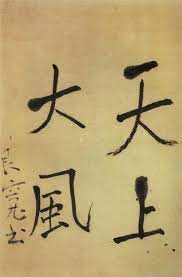
Sky Above, Great Windsdfdd

As I was walking up North Main Street in Alfred, New York a few weeks ago, I stopped to look at a row of Cleveland pear trees spanning two front yards. The trees were in full bloom. Their brilliant white blossoms caught the late-morning light.

A week later, those blossoms had fallen. Only the green leaves remained. I was reminded of a haiku by the Zen master, poet, and calligrapher Daigu Ryokan (1758-1831):

            Falling blossoms

            Blossoms in bloom are also

            falling blossoms

As Kazuaki Tanahashi, Ryokan’s biographer and translator, has noted, this haiku “presents the Zen paradox that flourishing is no different from withering.”* Flourishing and withering are two distinct phases in the life cycle of blossoming trees, but the two are one in the stream of life.

If Ryokan’s haiku embodies the paradox of non-duality, it also represents the principle of impermanence, one of the fundamental tenets of the Zen tradition. Ryokan entered a Zen temple at the age of sixteen and was ordained as a monk two years later. Through his rigorous Zen training and his intensive study of Japanese classical poetry, he was well acquainted with the truth of impermanence, a truth harshly confirmed when his father, a prominent and prosperous local official, ran afoul of the ruling shogunate and committed suicide by drowning. Yet, for all his understanding of transiency, Ryokan could still be moved by fresh evidence of that inviolable law. On one occasion, as he was walking down a path at the foot of a mountain, he came upon “an ancient cemetery filled with countless tombstones.” The names on the tombstones were obliterated, the lives of the dead long since forgotten. “Choked with tears, unable to speak,” he took his staff and returned home.

Ryokan lived alone in a thatched-roof mountainside hut, having renounced the world of money, fame, and power. A mendicant monk, he often ventured into a nearby village, where his calm presence was said to confer an atmosphere of peace on the places and people he encountered. From time to time, he invited visitors to his hut for tea or sake, but for more than twenty years, he spent the bulk of his hours in silence and solitude, tending his garden, practicing zazen, and reading and writing poetry, companioned only by the natural world:

Only two in the garden,

plum blossoms at their peak

and an old man full of years

As vivid as it is immediate, this haiku presents one of many such impressions in Ryokan’s poems. Collectively these sensuous impressions register an uncommon intimacy with the sights, sounds, and smells of his natural environment. Whether he is noting a nightingale in the brush, frogs “chanting,” “plum trees reflecting the silver moon,” hail striking bamboo, wind in the pines, or a monkey’s cries from a distant valley, Ryokan’s imagery bespeaks a cultivated openness to what the dharma teacher Gaylon Ferguson has called the “redemptive fullness” of the natural world.* In contrast to our own ubiquitous consumerism, which views fulfillment as something to be acquired from the latest consumer product, Ryokan’s poems evoke an abundance not dependent on wealth or power:

Out-breath

and in-breath

proof that the world

is inexhaustible.

Yet for all his appreciation of natural abundance, Ryokan also demonstrated a capacity for non-attachment, not only to nature but also to human preconceptions of value and importance. His most famous haiku, composed after a thief broke into his hut and stole his meager belongings, expresses that quality of heart and mind:

The thief left it behind—

the moon

at the window

Just as this haiku reflects Ryokan’s non-attachment to material possessions, his observation that “blossoms in bloom are also / falling blossoms” attests to his freedom from conventional hierarchies of value, which prize blossoms in bloom far more than their fallen counterparts. In the language of Zen,  each exists in its “suchness” and its “dharma position,” independent of human yardsticks. Practicing non-attachment, Ryokan contemplates things as they are and not as the human mind, eager to impose its rankings on whatever it encounters, would have them be.

Which is not to say that Ryokan practiced “detachment” or a cold indifference to the world of human striving and suffering. On the contrary, in one of his most piercing haiku, he voices a complaint reminiscent of many a conscientious priest, minister, rabbi, or pastor:

Oh, that my priest’s robe were wide enough

to gather up all the suffering people

in this floating world

A confession of his personal limitations, this haiku also defines Ryokan’s moral character. Little wonder that this humble hermit-poet, who spurned both the careerism of the literary world and opportunities for temporal prominence in the Zen community, is now among the most treasured poets in the Japanese Zen tradition. “When we know one Ryokan,” wrote Daisetz T. Suzuki in his Zen and Japanese Culture, “we know hundreds and thousands of Ryokans in Japanese hearts.”


* Kazuaki Tanahashi, Sky Above, Great Wind: The Life and Poetry of Zen Master Ryokan  (Shambhala, 2012), 2.

*Gaylon Ferguson, Welcoming Beginner’s Mind (Shambhala, 2024), 173.

Photo: Calligraphy by Ryokan: “Sky Above, Great Wind.”

Welcome home

Gaylon Ferguson

If you have ever gone on a diet, you know that most diets require some sort of intervention. Eating a bit less is not enough.

By and large, the same is true of meditative practice. Most types of meditation require the practitioner to undertake a program in the service of a goal. Whether a particular program aims to tame the unruly mind, cultivate equanimity, or foster compassionate wisdom, all require practitioners to make some changes in their attitudes and behaviors, replacing one set of habits with another. And most prescribe specific techniques, such as repeating a meditative verse, contemplating a Zen koan, of “labeling” mental phenomena as they arise.

In his new book Welcoming Beginner’s Mind (Shambhala, 2024), the veteran dharma teacher Gaylon Ferguson proposes a fresh alternative to those traditional methods. As Ferguson notes in his introduction, meditative practice is based, at least in part, on the premise that something is amiss—or missing—in one’s life as it presently is. Meditation supplies a remedy.

By contrast, Ferguson offers a practice premised on the belief that “welcoming is our true nature.” Just as we welcome friends, relatives, and sometimes strangers into our homes, we can do the same with the present conditions of our lives, however auspicious or adverse. We can welcome rather than resist them. Beyond that, we can also welcome ourselves, however selfish or altruistic, inferior or superior we perceive ourselves to be. Framing his discussion in the Ten Oxherding Pictures, a revered visual allegory depicting the Buddhist journey to awakening, Ferguson offers a synthesis of Zen and Tibetan meditative traditions, broadly dividing his sequential (but non-progressive) method into three distinct stages.

First among them is the Welcoming Exercise, the foundation for all that will follow. Instructing us to sit upright comfortably for three minutes, Ferguson invites us to “trust and taste whatever arises,” “the entire range of feelings, sensations, thoughts, perceptions, and concepts.” In contrast to mindfulness meditation, the objective is not to “be here now,” to pacify the mind, or “to change our experience, transforming ourselves from this to that.” Rather we are to be “guided by what we are sensing and feeling,” allowing our lives “to be as bitter or sweet as they are without manipulation.” In short, we are to practice what Shunryu Suzuki Roshi called “beginner’s mind,” a “basic openness” that he regarded as “the secret of meditation.”

In the second stage of this practice, the Natural Noticing Exercise, we are again directed to sit for three to five minutes, noticing “whatever we might notice: sights, sounds, smells, the temperature in the room, thoughts in the mind, sensations in the body, feelings in the heart.” This time, however, we are exhorted to be “curious about what we notice.” Rather than discipline the mind to remain on a single object, we deliberately allow it to roam.

As Ferguson readily concedes, the Noticing practice may appear superficial when contrasted with the deep contemplation characteristic of intensive meditative retreats. But its relative superficiality is consistent with its purpose, which is not to plumb ultimate reality but to explore “ordinary, conventional, dualistic mind.” In essence, it is “an appreciative inquiry into natural noticing itself.”

“Inquiring,” the third stage of the practice, joins “non-effort with effort” and enlists our innate curiosity in the service of contemplative inquiry.  As its primary tool, this exercise employs a familiar question from the Zen tradition: “What is this?” By repeatedly asking this question of images, thoughts, feelings, and sensations as they arise, we allow insights to emerge of their own accord. As Ferguson notes, this mode of inquiry has little in common with a police investigation or prosecutorial interrogation. Gentle in tone, it invites intimate feelings to surface and intuitive understanding to manifest, while also encouraging “the beginner’s mind of not-knowing” to arise and flourish.

In the Ten Oxherding Pictures, the practices of welcoming, noticing, and inquiring precede later stages of the journey to awakening, including “Forgetting the Ox” and “Being in the World.” In his concluding chapters, Ferguson gives due weight to those stages, while noting emphatically that all are to be understood not as means toward an end but as ends in themselves. All engender “beginner’s mind.” In this way the Ten Oxherding Pictures and Ferguson’s method differ from such Western analogues as John Bunyan’s Pilgrim’s Progress or William Hogarth’s Industry and Idleness, which illustrate progressive steps toward a desired moral destination.

Longtime practitioners of Zen and Vipassana (“insight”) meditation will recognize elements of those practices in Ferguson’s formulation.  In several ways, the Welcoming Exercise recalls the Soto Zen practice of shikantaza (“just sitting”), and the Inquiring exercise bears a strong family resemblance to Vipassana practice. But the presence of those contributing elements takes nothing away from Ferguson’s wise, original, and accessible synthesis. On the contrary, his unconventional method is a worthy addition to the growing body of confluent practices that constitute Western Zen.

Photo: Gaylon Ferguson

aaron-burden-y02jEX_B0O0-unsplash

If we wish a houseplant to flourish, we provide it with water, nutrients, and light. We set it near a window. But should we wish the same for ourselves, for those we love, and for humanity in general, what are the counterparts of those necessary conditions? What practices, activities, and qualities of mind contribute to human flourishing?

In his timely new book The House We Live In: Virtue, Wisdom, and Pluralism, an ambitious endeavor to forge a pragmatic, “flourishing-based” ethic for our pluralistic, multicultural society, the Zen priest and psychologist Seth Zuihō Segall identifies multiple “domains of flourishing.” These include “relationships,” “accomplishment, “aesthetics,” social acceptance, “meaning,” and “whole-heartedness.” Exploring the last of those “domains,” Segall invokes a practice from the Soto Zen tradition.

Known as menmitsu-no-kafu and translated by Segall as “whole-heartedness,” this practice might most simply be characterized as giving full attention to whatever one is doing, be it driving, chopping vegetables, or listening to a friend. But, as Segall explains, the practice also entails “exquisite, careful, considerate, intimate, warm-hearted, continuous attention to detail.” And, in contrast to those meditative practices prescribed for self-pacification and self-improvement, menmitsu is directed outward rather than inward: toward the benefit of others rather than oneself.

Traditionally, menmitsu is taught by Soto Zen instructors and practiced within the confines of a temple or Zen center. There, ordained monastics and committed Zen students learn to embody menmitsu as they engage in their everyday activities: “donning their robes, sweeping the walkways, refolding their bowing cloths, assembling and disassembling their eating bowls, lighting incense, and so on.” All are to be done with “exacting, meticulous attentiveness.”

 As Segall readily concedes, not all of us are “called to the same degree of attentiveness” or prepared to practice menmitsu in every aspect of our lives. At the same time, Segall suggests, “we could do well to take a page” from this integral dimension of Zen practice. Practiced in excess, menmitsu can look like OCD and feel like hypervigilance—and, if one is married, drive one’s spouse to distraction. But, practiced thoughtfully and with moderation, menmitsu can indeed enhance our lives and those of others around us.

For my own part, I have found it most productive to apply the principle of menmitsu primarily to those daily activities I most value and enjoy, including formal Zen meditation; studying and practicing the classical guitar; reading and re-reading great literary works; cooking; conversing with friends and family; and, most centrally, the craft and art of writing, which can embody menmitsu in at least three ways.

To begin with, the practice of literary menmitsu can begin with the choice to write with a pen or pencil rather than a keyboard. However archaic handwriting has become in the age of the iPad, writing by hand is not only a sensuous, intimate way of “getting the better of words,” as T.S. Eliot once put it. Handwriting also promotes precision of diction and meticulous attention to detail. “Writing maketh the exact man,” wrote Francis Bacon. And if that maxim is true of writing in general, it is even more so with respect to writing, slowly and deliberately, by hand. For decades, I required students in my literature courses to write daily précis and responses in their own hands on 4 x 6” index cards, as a way of precisely comprehending the poems and stories they were reading and forming their own interpretations. I was seldom disappointed.

Second, I have found that scrupulous observance of the time-honored conventions of English grammar, rhetoric, and usage sorts well with the practice of menmitsu. Evolved over many centuries and exemplified by such masters of English prose as Jonathan Swift, George Orwell, and Scott Russell Sanders, those conventions promote clarity, concision, eloquence, and force. Beyond the basic “rules” taught in English 101—the avoidance of dangling modifiers, comma splices, faulty parallelisms, and the like—literary menmitsu can be practiced by observing such fine points of usage as the difference between “anxious” and “eager” and such grammatical details as the use of the possessive pronoun before a gerund (“his running for president” rather than “him running for president”). Fussy as such distinctions may first appear, collectively they can make the difference between lucid, accessible prose and an indigestible verbal paella.

 Last and most important, literary menmitsu can be practiced by keeping one’s intended reader uppermost in mind. If I aspire to be “careful,” “considerate,” and “warm-hearted” when composing a poem or letter or essay, I can do my readers a favor by recalling the dictum attributed to Ernest Hemingway: “Easy writing makes damned hard reading.” Writing well, in my experience, is an exacting labor, not only of love but also of respect for the majesty, beauty, and ancestry of the English language and the sensibilities of one’s potential readers. A mode of “flourishing” rich in discovery, reach, and invention, the practice of literary art can also be an expression of compassion and a concrete, lasting embodiment of menmitsu.


Seth Zuiho Segall, The House We Live In: Virtue, Wisdom, and Pluralism (Equinox 2023), 102.

Photo: Aaron Burden

Continue Reading »

And yet, and yet

ISSA 2

In 1973, the writer and Zen practitioner Peter Matthiessen and the field biologist George Schaller undertook an expedition to the High Himalayas in hopes of sighting the elusive snow leopard. Before departing for the Tibetan Plateau, Matthiessen consulted with his Zen teacher, Eido Shimano Roshi, at Dai Bosatsu Zendo. Drawing upon a fundamental Zen teaching, Eido Roshi advised his student to “expect nothing.” By adopting that attitude, Matthiessen would enable himself to be open and attentive to whatever he encountered. Rather than regard his expedition as a means to an end, he might treat the experience as an end in itself.

Eido Roshi’s advice may well have been sound, given Matthiessen’s slim chances of sighting so rare a creature as the snow leopard. As a guideline for living, however, “expect nothing” might best be viewed as a wise maxim to bear in mind rather than a practical motto to live by. We human beings, it’s fair to say, are hardwired not only to expect but also to hope for and fear specific outcomes. Should we attempt to banish our expectations, we are more than likely to fail. As a realistic alternative, however, we can resolve to take note of our expectations as they arise, acknowledging both their presence and their largely speculative nature. And we can endeavor to remain cognizant, moment by moment, of the ongoing tension between the time-honored wisdom of Zen and the recalcitrant realities of human nature.

Nowhere is that tension more concisely expressed than in this haiku by the Japanese poet and Buddhist priest Kobayashi Issa (1763-1828):

             tsuyu no yo wa

             tsuyu no yo nagara

             sari nagara

                        –

            The world of dew

            is only the world of dew –

            and yet, and yet

The first two lines of this haiku allude to a central tenet of the Buddhist tradition, articulated in these verses from the Diamond Sutra:

            Think in this way of all this fleeting world:

            As a star at dawn, a bubble in a stream,

            A dewdrop, a flash of lightning in a summer cloud,

            A flickering lamp, a phantom, and a dream.

Through a concentration of metaphors, these verses remind us that all conditioned things are subject to change. All are impermanent. What we may conventionally view as solid and lasting is no more permanent than morning dew. The image of a “world of dew” evokes this foundational premise of the tradition in which the poet-priest Issa was trained.

“The world of dew” also reflects a cardinal principle of Japanese art and poetry.  According to this principle, known as mono no aware, the transience of the things of this world is both a locus of their pathos and a source of their beauty, whether those transient things be cherry blossoms, bubbles in a stream, or our own brief existence on this planet. Beautiful, ephemeral things are moving and beautiful because they are transient. A visual artist as well as a poet, Issa was steeped in Japanese cultural traditions, and as his haiku demonstrates, his aesthetic was deeply aligned with the convention of mono no aware.

But Issa was also a husband and father who had experienced profound losses in his life, including the deaths of his first wife, several of his children, and, shortly before writing the present haiku, the loss of his two-and-a-half-year-old daughter to smallpox. Introducing his haiku in his travel journal The Springtime of My Life, he recounts that devastating experience:

Her mother clutched her cold body and wailed. I knew her heartbreak but also knew that tears were useless, that water under the bridge never returns, that scattered flowers are gone forever. And yet nothing I could do would cut the bonds of human love.

In popular iconography, Japanese Zen is sometimes viewed as a meditative version of samurai culture: a practice marked by “detachment” and the stoic repression of feeling. Contrary to that popular conception, authentic Buddhist practice—and the Zen-based practice of haiku—foster direct engagement with external realities, particularly the realities of impermanence and death. Rather than turn away, practitioners are admonished to make those realities objects of contemplation. At the same time, the practice also encourages continuous awareness of (and non-attachment to) one’s changing moods and feelings, however pleasant or painful they may be.

Hence the last line of Issa’s haiku. Occurring just after the “turning” characteristic of the haiku form, the repeated phrase “and yet” acknowledges the emotional dimension of his present experience: the upwelling of grief triggered by the death of a child. And though it leaves much unsaid, this repeated phrase leaves little doubt as to its meaning.

“The deepest feeling,” wrote the American poet Marianne Moore, “always shows itself in silence; / not in silence but restraint.” As silent and restrained as a poem can be, Issa’s haiku is all the more piercing for its reticence and all the more affecting for its restraint. If you would live wisely, it seems to say, expect nothing. And yet, and yet.

    —–

Image: Kobayashi Issa

Her mother clutched her body: Sam Hamill & J.P. Seaton, The Poetry of Zen (Shambhala, 2004), 172-3.

Marianne Moore,  “Silence,” in The Complete Poems of Marianne Moore (Macmillan, 1972), 91.